Monthly Archives: February 2017
Dusty Won’t Play
Oran Mor, Glasgow
6-11 November
Play, Pie, Pint (1pm)

Script:  Stagecraft: Performance:
 Dusty Won’t Play is an explosively brilliant start to Oran Mor’s 2017 Play, Pie & a Pint season. Completely sold out, I was forced to sit at the back of the room on the bar itself, which at least let me for the first time truly acknowledge the excellent acoustics of the theatre – I could hear everything in pinpoint precision. The play is the brainchild of literary legend Annie Caulfield, a composite blend of Dusty’s best tunes (sung with entrancing impeccability by Frances Thorburn) & Springfield’s fateful tour of South Africa in 1964. Donning a good blonde wig, slapping the eyeliner on thick & singing some cracking numbers, in 1964 Dusty was a rising star & was just about to reach international fame – tho’ not in a war she would ever have wondered growing up in the back streets of Ealing.
 The timing of this play is karmic: where Donald Trump in America is causing cultural schisms, so in 1964 apartheid & racial segregation were raging wildly in South Africa. Just as our speaker of the house, John Bercow, has stood up against Trump’s bullying, so did Dusty refuse to play to all-white audiences. The chief drama of the play revolves against the bullying of the SA authorities – house arrest, threatening behaviour – & Dusty’s resolve to stand in defiance against them. The music was brilliant: Springfield’s ‘band,’ The Echoes, consisting of Simon Donaldson & Kevin Lennon, played guitar & piano along to Thorburn’s miraculous, almost shamanic renditions of classic motown numbers – it was almost as if Dusty was back in the room. At only one point did the music blend with the theatre, when Dusty sang ‘You Don’t Own Me’ to an overheavy SA policeman (played also by Donaldson), but this little slice of cheese really set off the trimming-laden quarter-pounder served up alongside the pies & the pints. Brilliant.
Reviewer : Damian Beeson Bullen

An Interview With Gerry Lynch
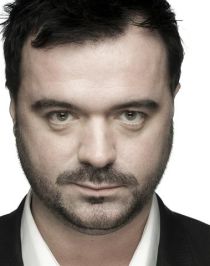 THE MUMBLE : Hi, Gerry, so how is the Dirt Under the Carpet project coming together?
GERRY : It’s coming together well (I hope!). Karen and Joyce are working very well together and we are discovering new things about the play and the characters every day. The play takes place in one setting but it crosses a few different time zones between the past, the present and limbo when Karen talks to the audience. Finding the transitions has been a bit tricky but I think we have cracked it!
THE MUMBLE : Can you tell us a little about the play?
GERRY : The show is transferring to Aberdeen after it opens in Glasgow, and it’s part of the Granite Noir Festival there and is a great thriller/mystery….apart from that I’m not giving anything away! No spoilers here!
THE MUMBLE :The playwright, Rona Munro, has had recent spectacular success with The James Plays. Dirt Under the Carpet is very different from an epic historical trilogy – how do you feel Rona has handled the change in tempo & scope?
GERRY :I would never even dare to make comment on how Rona has handled that. I’m not a writer. I can only talk about the experience of her plays from my own perspective as a director and actor. To me she is an absolute genius. The first play I directed was Iron by Rona and I kind of fell in love with her language and style and most importantly these amazing characters she writes. I know these people, I’ve met them, grown up with them. They mean something to me….I’m sure I sound like an absolute wanker there but it is true!
THE MUMBLE : How are your two actresess – Joyce Falconer and Karen Fishwick – getting on with their roles?
GERRY : Very well I think. They are finding some lovely stuff. Joyce has been very generous in helping Karen and I with the accent and she has a great presence on stage. Karen is wonderful, she is really making the part her own. She always finds something new in the character each time we rehearse and as a director that is a really exciting thing to watch. They are working very well together and creating a real, fully formed relationship between them. It’s quite a complex play and they are really making it work (don’t tell them I said that though!)

Joyce Falconer
THE MUMBLE : What emotions should next week’s PPPP (play, pie, pint, punter) expect to be stirred by Dirt Under the Carpet?
GERRY : I have no idea. I really don’t. It’s not my intention to try to make them feel anything. I’m really enjoying watching these two great actors work with a fantastic script and a great story. I hope we can do it justice. I can’t possibly predict what emotions it may stir up….
THE MUMBLE : What does the rest of 2017 have in store for Gerry Lynch?
GERRY : We transfer to The Lemon Tree and then after that I go back to acting and assistant directing The Lions Of Lisbon which will tour across Scotland. I’ve also got a monthly pub theatre by my company UnSub Actors that I’m setting up at the Citz (hopefully) where we will do staged readings of some classic Scottish plays. We also have workshops set up with Kahleen Crawford, Danny Jackson a new writing workshop with Philip Howard and Martin McCormick, a theatre workshop with Gareth Nichols, a workshop with Shakespeare’s Globe and Mike Alfreds, and hopefully a Shakespeare workshop with Lu Kemp and Liz Lochead. Apart from that I’m just going to go up the road to see my 2 wee boys and my beautiful Ginger wife Marianne X
***********
Dirt Under The Carpet will be playing at the Oran Mor
Feb 13-18th (1PM)
An Interview with Satinder Chohan

THE MUMBLE : Have you been to Scotland before?
SATINDER : When I had just started writing for theatre, I was accepted on a residency at the Traverse Theatre in Edinburgh. It was a beautiful baptism – developing my play ‘Lotus Beauty’, lodging, meeting and chatting with other writers and discovering exciting Edinburgh – perhaps most memorably when I decided to scale Arthur’s Seat and not even a quarter of the way up, got knocked over by the blustery winds and slid right back down the hill on my very muddy backside! I’d love to spend more time in Scotland. As a huge Liverpool fan, Kenny Dalglish is a hero – my sister and I supported Scotland (and Brazil of course) in the 1982 World Cup. We still have Scotland’s World Cup song ‘We Have a Dream’ on 7” vinyl! So Scotland has always been close to my footie and political heart and I’m so proud the play is touring there.
—
THE MUMBLE : What was the original idea or story that sparked Made in India?
SATINDER : I was applying for the Adopt A Playwright award and was inspired by a shocking article about a white middle class English woman who paid an Indian village surrogate to birth her baby. (My play!) The woman described her surrogate as a ‘vessel’. With my Indian village roots, the surrogate could have been any number of my female relatives or if my parents hadn’t emigrated to the UK, even me. The story was loaded with so much conflicting emotion, culture and politics, I knew I had to write a play around the situation, to explore and understand its fertile terrain. I submitted the idea, won the award, began writing the play. I think the story also chimed because there had been instances of altruistic egg donation in my community. So I had always wondered about the generosity of one woman towards another in those situations, wondered what drove a woman to offer her eggs to another, to have a baby for another, without payment. So commercial surrogacy in which both strangers and payment were involved was fascinating to me.
—
THE MUMBLE : Why this play now? (Global and local relevance)
SATINDER : Globally and locally, we’re living in a time when there is a serious conflict between rampant financial markets and human morals – more often than not, morals are sacrificed for markets. Through market fundamentalism and the ‘commodification of everything’, everything is for sale in our neoliberal times including education, health, emotions, bodies…and women like these surrogates have to sell themselves to make a living, literally. When I began the play, commercial surrogacy was rife in many countries. During the writing process, India, Nepal, Thailand and Cambodia introduced surrogacy bans. In India, the ban feels like a nationalist reaction against global neoliberalism and a right-wing government trying to realign India with traditional family values – altruistic surrogacy is allowed but only for childless Indian couples – not gay people, singles or foreigners. Yet it is also a nationalism that has raised questions about the reproductive freedoms of women and use of reproductive techniques in these countries. So the play and surrogacy itself is a topical lens through which our changing global and local political landscape is filtered. It’s a compelling story about gender, economics, reproductive technology and ethics that continues unfolding across nations in the real world outside.
—
THE MUMBLE : The play is set in Gujurat – is that your native state & how did you end up in the UK
SATINDER : My family is actually from Punjab, which neighbours Gujarat in India. But as in Gujarat, commercial surrogacy was big business in Punjab too.
I was born and brought up in Southall, West London, widely known as ‘Little India’ or ‘Little Punjab’, with all its Indian and Pakistani shops and restaurants, gurdwaras, mandirs and mosques. So I consider myself a Punjabi Londoner more than anything else! My grandparents came to the UK from Punjab in the late 1950s and my parents in the late 1960s. We’ve lived in Southall ever since.
—
THE MUMBLE : Can you tell us how you got involved with Tamasha & the Belgrade Theatre
SATINDER : After my first play ‘Zameen’, I began developing a new play ‘Lotus Beauty’, set in an Asian beauty salon, with Tamasha. Later, Tamasha’s then Artistic Directors Sudha Bhuchar and Kristine Landon-Smith nominated me for the Adopt A Playwright Award, which I won with the idea for ‘Made in India’. Fin Kennedy was actually on the interview panel and during my Adopted Year, became my (exceptional) mentor/dramaturg as I began writing the play. In a serendipitous turn of events, he later became the new Artistic Director at Tamasha and took the play with him, where we continued developing the piece. It’s now his first main production as Tamasha’s Artistic Director and it feels so fitting we’ve come full circle back to Tamasha with it. Belgrade Theatre came on board as co-producers later on. We’ve just enjoyed a fantastic run of the play in Coventry with them – such an excellent, supportive place for new writing.
THE MUMBLE : Tamasha is unusual in having a playwright as Artistic Director, what does this bring to the creative process?
SATINDER : It brings a highly talented individual to the creative process – an Artistic Director, playwright and dramaturg rolled into one! It’s a supremely skilled all-rounder who can focus on the smallest detail in the text, while keeping an eye on the bigger picture of a possible production. It helped the process hugely that Fin is a writer too. He easily understood my creative objectives, obstacles and was always quick to suggest a wealth of dramatic solutions. As a writer, he could help me shape the drama much more effectively than I could alone as he could easily understand the play I was trying to write and help me work out the best possible way of writing it.
—
THE MUMBLE : How have you worked together, as two writers, to develop the play?
SATINDER : From the beginning of our 15 plus drafts (!), I would write a draft and then we would have the most brilliant, searching, synergistic dialogues about the play that went on for hours! From talking about the play itself, to character details, surrounding issues, transactions, politics, neoliberalism, reproductive technologies, infertility and so on…It would take a couple of days to all process but was massively helpful in moving onto the next draft. We did this intermittently for about three years – discussion, draft, feedback, discussion, draft, feedback etc. During my Adopt A Playwright Award year, we also had three rehearsed readings and another reading and intensive workshop later, so other vital feedback from directors and actors also pushed the play on dramatically. About a year and a half ago, when I thought I was finally finished with the play, the Indian government decided to ban surrogacy. That decision upended a lot of the play and so we had to reshape the story, which took a few more discussions and drafts, expanding and contracting til the final distilled version of the play! After director Katie Posner came on board, Fin took a step back. For the last few drafts of the play, Katie and I have been drafting and discussing together, although thankfully, Fin continues to feedback into that process too. I’ve just learnt so much from my work and all those creative discussions with him – it’s been an intensive, invaluable process and an incredible experience working with him.
—
THE MUMBLE : What do you hope the audience will leave the theatre thinking, feeling, wanting to do?
SATINDER : I hope the audience will be emotionally affected by the play because while it’s about surrogacy, it’s also about the bigger interconnected neoliberal world we live in. In the UK, we’re all privileged Westerners and consumers who rely on marginalised workers all over the world to provide the material stuff of our lives. In that power dynamic, we are the ones who can afford to blank out who those people/workers are and what their lives are actually like. I hope this play is a small reminder of the people who inhabit those worlds, their lives and struggles, who create and build our worlds from afar. Even though commercial surrogacy is a very complicated issue, I don’t think it’s right that we live in a world where a village woman delivers a baby for a more affluent woman for money. The surrogate should not be so financially disadvantaged and socially neglected that she is driven to deliver babies for money. So I hope the audience thinks about the inequitable world we live in, the way that our consumer and materialistic, ‘everything is for sale’ lives and attitudes impact on less fortunate others in other parts of the world. I really hope some audience members might feel compelled to do something about those inequities in their own lives or the lives of less fortunate others.
—
THE MUMBLE : What advice do you have to aspiring young playwrights?
SATINDER : Choose another profession! Haha, I jest. For all its endless challenges, I’m glad I ended up here. It’s incredibly tough to survive as a writer, so I’d say, be patient, work hard, keep developing your voice and honing your work, keeping it true and honest. Also, find a paid job on the side that complements the writing because playwriting sure doesn’t pay. I’ve had to rely hugely on the generosity of family and friends to write – I don’t own a house, a car, material possessions, have kids – I’ve tried to streamline my life so that I live to write – but I’m an extreme example. If you simply have to write, you will find a way to make it work for you. Also, don’t compare yourself to other writers – everyone grows and develops as a writer at their own pace, in their own way, telling their own stories – you have to stay firmly on your own path, voice it and write it as strongly and uniquely as only you can.
MADE IN INDIA

 Mumble Theatre