Monthly Archives: August 2019
An Interview with Vinyl Encore
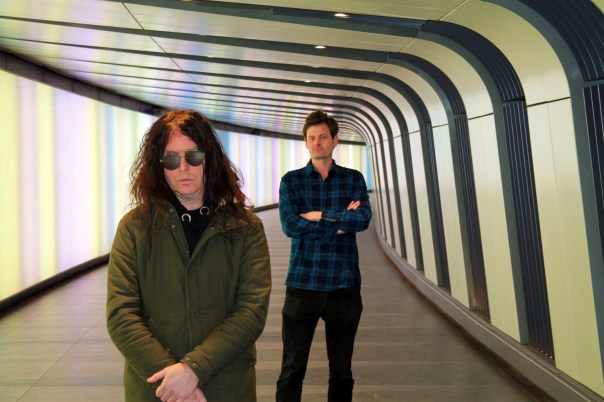
AW King & Paul Vitty have teamed up
& are bringing their rock & roll ride to the Fringe
Hello guys, first things first, where are you from & where are you at, geographically speaking?
Paul: AW is originally from Croydon, now living in Brighton. As a company were based in London, but I grew up and live in Luton. We’ve rehearsed in various locations, the majority of rehearsals were in Kings Cross but we’ve also spent a few days staying in Luton and then staying in Brighton, working on the play. It was really liberated at the end of the process to be out of the rehearsal studio and in a field in Luton or on the beach in Brighton running the show.
What for you makes a good piece of theatre?
Paul: For me it’s something that provokes a natural emotional reaction in me, whether it be a sudden smile comes on my face or I’m griped by the drama or emotion. I love plays that can take me on a range of emotions, especially where I’m talking about the characters afterwards. What people enjoy is very personal but I think a great piece of theatre leaves you talking about the characters and feeling that you’ve had a glimpse into their world and what to know more.
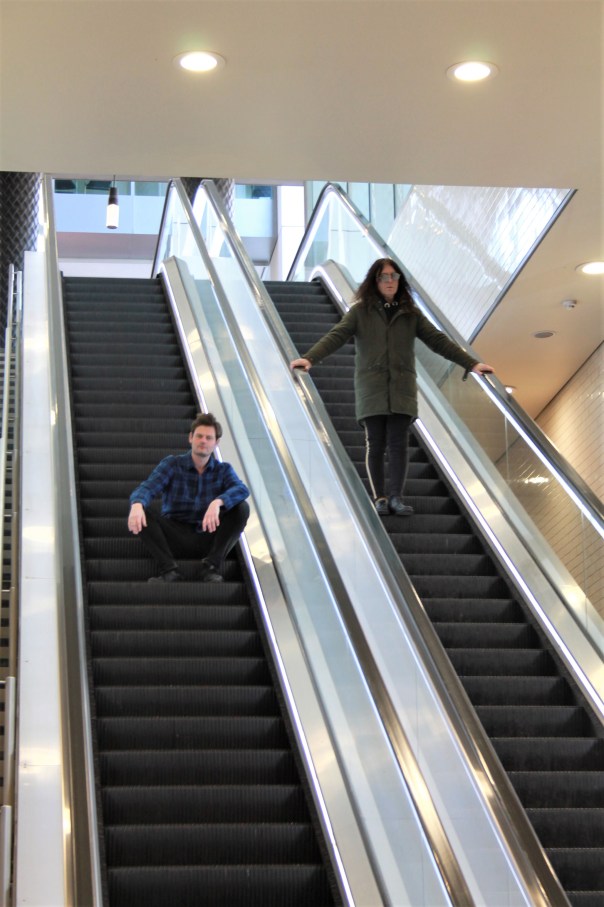
It’s been 30 years since you performed at the Fringe, how has its changed in that time?
AW: 30 years ago it was a rough and holy bonanza, which I wanted to do because I had a chance to play Falstaff for a second time. Since then it’s grown exponentially and seem people view it more as a potential media springboard. I played Edinburgh back in 1987. I played Falstaff in a James Bond Version of The Merry Wives of Windsor’ We came on to the Green Hornet theme tune. Two male members of the cast unexpected deserted the run and were replace by two female members who spoofed their performance.
In 2017 your Lipstick and Scones went down really well at the Fringe; can you tell us about the experience & its aftermath?
Paul: Lipstick and Scones was really loved by the audiences, though it didn’t attract reviewers, word of mouth really helped fill the seats. It had three powerful female leads and its wit and heart seemed to be have very warmly received. Afterwards it sold out at The Leicester Square Theatre. I was also commission to write a new version extending it to a full length play, it’s next due to be performed in Vienna, though I’d obviously love to also see the 90 minute version perform in the UK.
Where & when was Vinyl Encore conceived, & who has penned the script?
Paul: Having spent most of my career involved in productions with large casts, I was interested in doing a two-hander. Vinyl Encore was an idea I had at the back of my mind, AW is an incredible actor and both of us have often spoken about how challenging and cool it would be to joust on stage in a two-hander! At last years fringe in a conversation with the Director of The Space, Charles, I mentioned the idea. He really liked the sound of it which gave us the confidence to set about creating the show. My normal instinct was to sit down and write a script, but that wouldn’t have work for the story we wanted to tell. In many ways it evolved more like an album or piece of music then my usually theatrical process. We had to collaborate together bouncing ideas, trying thing out. The creative process has been integral for how the play has evolved.

What is the biggest obstacle you overcame while putting your show together?
AW: When Paul told me the idea I knew it the two of us together in it could be incredible. But we had to find a way to create to ensure it was truthful, we were clear we didn’t want it to become spinal tap and the opportunity to allow our ‘musical indifferences’ to run riot, we wanted it to be the story of two very real people. We had to establish a creative identity, you had to forget you were an actor and what I do and just do it.
Is Vinyl Encore a vehicle for old songs, or have they been composed especially for the play?
Paul: I hadn’t played guitar on stage for years, where AW has been involved in a number of bands. Our styles at times clash, and lyrically we’re quite different which fed nicely into the characters. In one of the early rehearsal I decided to bring an electric guitar along. Suddenly the atmosphere in the room changed, it became more raw and with the mischievous energy of rock n roll. AW had some lyric and I just improvised a tune. It was an incredible moment, we both look at each other and realise we could and should write all the songs. The song we created at that rehearsal it the first one we play in the show together, it’s unchanged from the first time we just spontaneously went into it, I think that gives the story a real authenticity.
How did you approach the role?
AW: For me Acting is about submerging into behavioral states and the rocks star persona is something I have genuinely inhabited by fronting bands and writing songs for year, hopefully I expanding on this and have developed the persona in a comic and human way.
How is director James Paul Taylor handling everything?
Paul: James has directed us both in previous project so he know how to push us and ensure we are at the top of our game. There’s a mutual respect between the three of us, which meant we could really say what we felt and take risks. Creatively we really wanted to put our heart and soul into the making it as good as it could be. It’s been a very unusual creation process, rather than having a script we have created it in the rehearsal room, James has been the calm one writing down what we’ve created allowing us to polish it and further explore the characters. He would describe himself as very non rock n roll so he’s been instrumental in guiding us to create a production that can be both poetic, raw and accessible. Though early on my natural instincts were to worry that the script was still being develop, it meant the story and characters really took on a life of their own!
You’ve got 20 seconds to sell the play to somebody in the streets of Edinburgh, what would you say?
AW: We will revive the rock n roller within you,tickle your funny bone and make your heart soar and dive
Vinyl Encore
theSpace @ Surgeons’ Hall
12th-17th August 18:05
19th-24th August 19:05

www.venturewolf.yolasite.com
An Interview with Ralf Wetzel
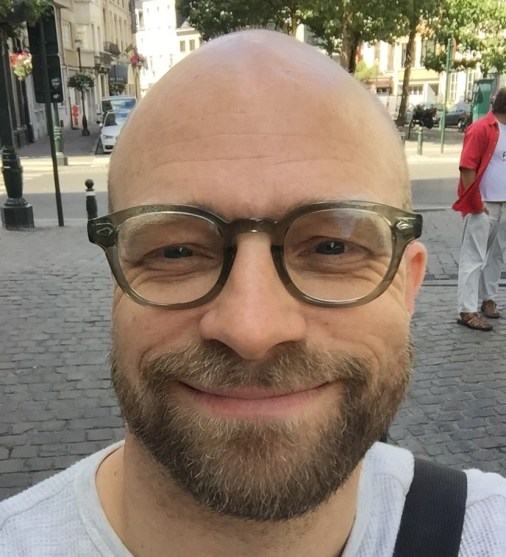
Who is the man behind the mask of ‘Absolutely Reliable’ – the Mumble went on a mission to find out
Hello Ralf, first things first, where are you from & where are you at, geographically speaking?
Hi Mumble, I am German, living in Brussels, Belgium.
Can you tell us about your training?
My training? Throughout the last 5 years, I went through a heck of different trainings in Clown & Mask work, improvisation theatre and acting. My main teachers have been Keith Johnstone (CA), Lee Delong (F), Shawn Kinley (CA), John Turner (CA), Inbal Lori (IR) and Kelly Agathos (GR) & Ben Hartwig (D). Aside of that I am a trained electrician and I have a PhD in Organization Theory.

With Lee Delong
What is it about performing in front of other people that makes you tick?
It’s a moment of intense connection. Especially clown work made me aware of how thrilling being totally in the moment and drawing a strong connection between the emotionality of the audience and my own can be. Your body is ‘on’ with every cell. It’s addictive.
Can you tell us about your day job?
I am a Professor of Applied Arts at Vlerick Business School, Belgium. I teach topics like leadership, communication skills, change management and Design Thinking. All of that I teach on the pillars of Applied Improvisation, Clowning, enriched by the experiences I made with Social Dance like Lindy Hop and Argentine Tango. I discovered the power of Performing Arts for non-artistic environments like business or politics around 5 years ago. And since then, I took mind-sets, methodologies and exercises from Performing Arts and employed it in my classroom and with my clients. With mind-boggling results and impact. In that sense, I have the immense privilege to do Arts every day. And given my originally rather technical engineering background, its sheer fun, exiting, transforming and fulfilling. Today I am someone very different compared to 5 years ago.
What does your perfect Sunday afternoon look like?
Oh. Having a cup of tea on my lap and staring out of the window for hours is all I need.
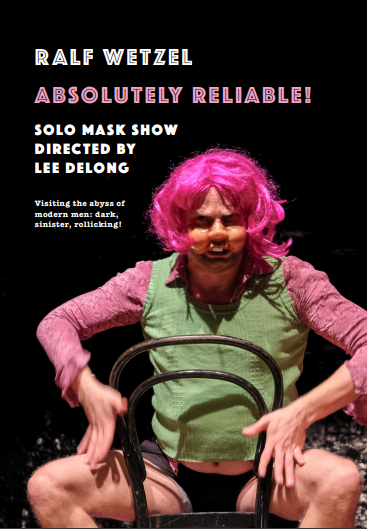
You’re performing at this year’s Edinburgh Fringe; can you tell us about the show?
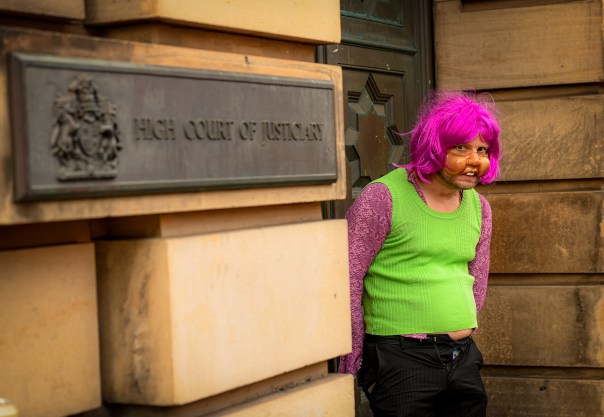
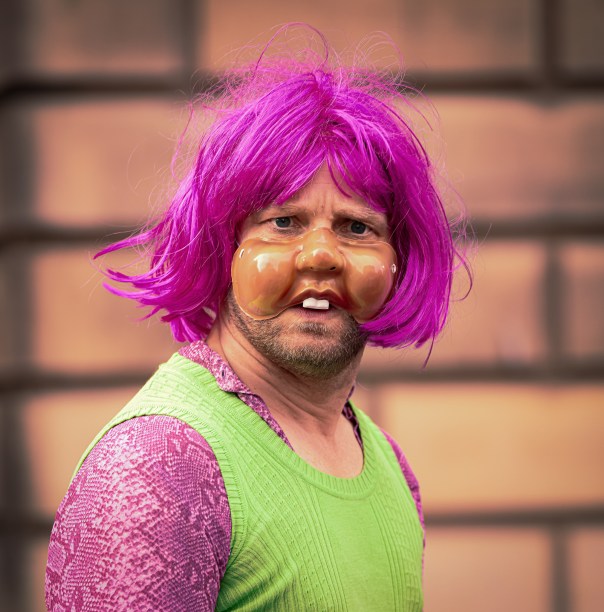
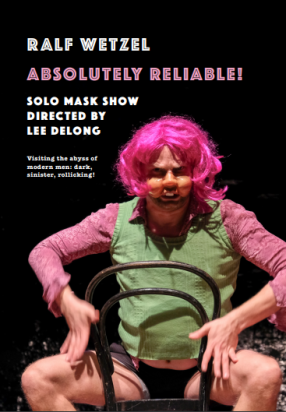
“Absolutely Reliable!” is a solo mask show, in which George, a middle aged, middle class and middle manager, desperately longs for love, attention, confirmation and proximity. He is just not prepared to deal with it when it materializes. He realizes that he has to invest, commit and display himself with his own emotions, and that’s not what he is remotely aware or capable of. So, his demons take over and throw him into a roller-coaster of love, desire, lust, fear, loss and death.
Where, when & why was “Absolutely Reliable” created?
It was actually created out of frustration. I was looking for improv and/or clown peers to start a troupe in Brussels and nothing was materializing. So I asked my clown teacher, award winning director and actress Lee Delong (Molieres 2019), whether she could imagine creating a solo clown show with me. And she could 😊 It all started when the mask which I am wearing in the show, hit me in one of her workshops. ‘You don’t chose a mask, the mask choses you’ mask people say, and that is what happened. As quick as I had it on my face, my full physicality changed, Ralf disappeared and someone else took stage. That was the moment when we said ‘okay’, let’s find out who this is. And so George appeared. Lee and myself worked several days together to get going. She provoked the mask and the character responded and revealed himself through my physicality. The scenes as they are appearing in the show are substantially based on those initial improvisations. The text I narrate is actually the slightly edited note of those improvisations. The show was produced through my body in combination with the mask, driven by the provocations and side-coaching of Lee.
What is the underlying message behind your show?
Ha! That’s difficult to say, since we didn’t sit down and said ‘Let’s do a show about XYZ’. We had the mask, we had the response of the character, my body and the improvised scenes. Lee then connected the different scenes and directed me in playing them. The mask certainly gave me permission to release deeply rooted inner fears and traumas as much as dreams and desires, that George displays and struggles with. But George is not me. The mask evokes things that are not me. And so the visible result is a meltdown of something which is me and something which is not. And mostly, I struggle with what is actually what. Given the topics of toxic masculinity and #metoo, George becomes a prototypical modern westernized man who is incapable to manage his emotions, to substantially open up to others, to make himself vulnerable. But overall, the message of the play is driven by the context in which you watch it. If you put the show into a different perspective, you see something different. We discovered that it’s like a prism. It will break light accordingly to how it is projected onto it. Masculinity is one angle, femininity might be another.
How are you finding working with director and co-writer Lee Delong?
It’s an experience that changed my life. Lee is extraordinary in how she sees the gold in the dust, she recognizes them in the smallest cues. She looks through your levels of fear and all your shields of protection, in a loving way. With decades of experience as actress, director and teacher, she challenges you to the bones and kicks your ass hard. But she knows exactly where your boundaries are, how far she can push. I feel challenged but safe in her hands at the same time. That allowed me a developmental journey throughout the last years far beyond my imagination. I had no idea how far that would go. And The result is amazing to me, every day.
You’ve got 20 seconds to sell the “Absolutely Reliable” to somebody in the streets of Edinburgh, what would you say?
“Absolutely Reliable!” is a surreal show about how fucked up modern men are. It displays the deep anxieties and despair of male, in a funny, off beat, striking and tender way. Those anxieties have hardly been displayed that openly.”
Absolutely Reliable
C venues – C cubed
Aug 11-12, 14-25 (22:00)
www.clownforlife.com
An Interview with Three Chairs & a Hat

Verity – ditched at her wedding, nagged by her mum, hates her job … and it’s only Monday. Nia Williams is bringing her new musical to the Fringe

Nia Williams – Writer and Musician
Hello Nia, so where are you from & where are you at, geographically speaking?
Nia: Hello! I’m originally from Cardiff and grew up in a Welsh-and-English world, with a bilingual family and education. I left Wales to study at Exeter University and have lived in a few places since, but I’m now based in Oxford.
Hello Saffi, so you’re playing the lead in Nia’s new musical, Verity – can you tell us a little about your training?
Saffi: Hello! Yes, I have just spent the last academic year training at Guildford School of Acting on their musical theatre foundation course. Prior to that I was at Abingdon and Witney College, studying Performing Arts, and have been a part of different theatre schools since the age of 6.
What is at about Musical Theatre that makes you tick?
Saffi: It’s everything! There is really nothing that can compare to the feeling of being on stage and performing. The butterflies as the house lights go down, the adrenaline as the curtain rises, and the feeling of pride and pure elation as you take your bow and see your family, friends and complete strangers in a standing ovation. But I think the thing that really makes it for me is the ability to stand on a stage and tell a story that can reach and affect hundreds of people you don’t know, and for those three hours or so everyone can escape the troubles of their own life and can lose themselves in the story. For me, that’s the real magic.
Can you tell us about your links to the English National Ballet?
Nia: I’m a freelance musician and writer, and part of my work is as an Associate Artist for the ENB. I work for their Engagement Department, delivering workshops based on their current ballet productions. That can involve going into schools or dance classes with a dance artist, but my main role is with the Oxford hub of the ENB’s Dance for Parkinson’s programme. It’s a wonderful project, giving weekly sessions for people with Parkinson’s Disease. I co-lead them with two dancers, and we use music, stories, characters and choreography from whichever work the ENB is performing, to build a workshop that helps participants move more freely, express themselves, project their voices and use their creativity. It really is magical, and one of the most rewarding parts of my job.

Saffi Needham – Verity
In a world where you can get entertainment ‘on demand’, what makes theatre special?
Saffi: The fact that you will never see the same show twice. Don’t get me wrong—we will work and rehearse every hour of every day to get the choreography right and make sure we are singing the right words, but performers are just human; things happen; a prop might break, someone might miss their cue—but as a performer you have to make it work. You can’t just yell ‘cut!’ and take five to fix the problems. Also, when you are in a theatre you get to decide what you see: you can decide where you want to look, what you want to focus on: there isn’t a camera making that decision for you. So you can make your own opinion, which will probably be completely different to the person sitting next to you. You also get to be there, with the people on stage, and personally I find myself much more invested and connected to the characters if they are real and standing in front of me. They’re not just a picture on a screen.
Who are Three Chairs & a Hat, & what is your role?
Nia: I created Three Chairs and a Hat to stage the musicals that I write. For years I’ve been harping on about wanting to have my own theatre company and do things my own way … and it suddenly occurred to me that I should stop moaning and do it! The name comes from my love of pared-down theatre that uses minimum props and set, maximum imagination. We’ve cheated a bit with Verity and used four chairs—but my other current musical, ‘Melody’, makes up for that by only using two!

You are performing in Verity at this year’s Edinburgh Fringe; can you tell us something about it?
Saffi: I don’t think excited is a big enough word! Verity is such a wonderful show, with amazing music and a relatable and touching story line. I feel incredibly lucky to be making my debut with such an incredible show and with such an awesome cast and creative team! All I hear about the Fringe is how amazing it is and how lucky I am to be going and I just can’t wait!
As the creator of Verity, how much of the show is fed by your own life experience?
Nia: You know, if you’d asked me that even a year ago, I would have made a joke of it and said ‘not much!’ Verity’s life is in a mess, she seems to be in a downward spiral, bored with her job, annoyed by her family, devastated by the events in her love life. But as we’ve been rehearsing for Edinburgh, I’ve thought more and more about the fact that Verity, as well as Eileen, the apparently dull PA in her office, both find the confidence to be themselves—or at least to begin that process. And in a way that’s what I’m doing with the development of my writing and Three Chairs and a Hat. It’s about that really tricky thing of taking your work seriously—not in a braggy or pompous way, just being prepared to say: ‘this is what I do, and it’s important to me’. For Verity, that’s about redefining herself after her disastrous wedding; for Eileen, it’s about acknowledging the importance of the work she already does. But I think it’s something that feeds into everyone’s life experience, in a way.

Verity is your fourth production; what have you learnt about Musical Theatre since your first musical, Daddy’s Girls?
Nia: I think one of the most important, and exciting, things that I’ve learned is how much a musical, or any piece of theatre, is the creation of everyone who takes part in staging it. It’s amazing to see the director, cast, technician, costume lead bring their own vision and ideas to the work—especially when they bring out things I’ve never really thought about myself. It’s quite moving when you find the courage to put your weird ideas out there, and then people buy into them, take them seriously, and build them into something more. It’s all part of the whole storytelling process, and I’m learning from it all the time.

Can you tell us about the rest of the cast & the dynamics between you all?
Saffi: The cast is one of the best things about this show. I came in later than the others, as I have been brought in for the Fringe, and to be honest when I started I was a bit worried that I was going to be a bit of an outcast, as they’ve been working on it together for a few years. But I couldn’t have been more wrong! I know it’s always said, but we really are like a family. Everyone is so lovely and supportive and crazy talented. I can’t wait to spend a week exploring Edinburgh and performing with these amazing people.
What is the biggest obstacle you overcame while putting your show together?
Nia: This comes back to your question about what I’ve learned about musical theatre. One thing I learned was: everything possible will go wrong—but keep going anyway! Since we first started putting the show together a few years ago we’ve had about seven changes of cast, for various reasons, some of them tragic, all of them to do with the unexpected curveballs of life. Three years ago one of the cast, my dear friend Becca Allison, died suddenly after contracting sepsis. I thought at the time that we would never stage Verity again, but Becca was always hugely supportive of and enthusiastic about my projects, and when Jenna Elliott joined the cast in that role she revealed that Becca had been her singing teacher and had first introduced her to musical theatre. It sort of seemed right—and Jenna has fitted in brilliantly with the rest of our fantastic cast.
You’ll know a good show when it’s happened, what are the special ingredients?
Saffi: Working hard, laughing lots, being a team and loving every second of it! Because if you as the performers love it then the audience will too… and I can promise you, we love performing this show!
You’ve got 20 seconds to sell the show to somebody in the streets of Edinburgh, what would you say?
Nia: Songs, laughs, calamities, some rude cocktails, a touch of online stalking and if all else fails, a picture of a cat!
Verity
The Space on the Mile
Aug 12-17 (16:50)
www.facebook.com/threechairsandahat
Hoichi the Earless
C Venues – south
Until the 10th of August (13.05)
Script:  Stagecraft:
Performance: S.O.D: 
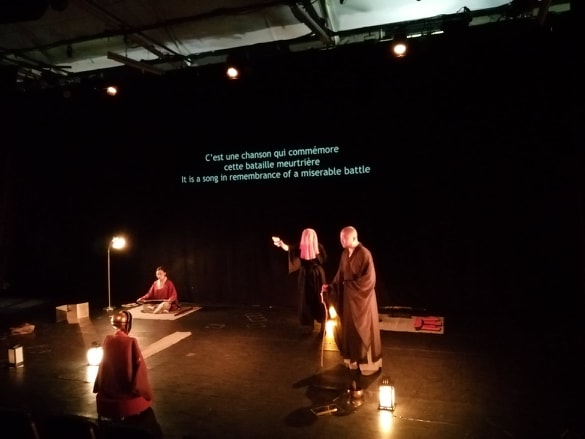
The best theatre at the Fringe, the most diverse especially, comes from C venues. Hoichi the Earless stood out of the program at once, a Japanese folk-tale I’d come across with some wonder during my studies into oriental literature. And now it was in Edinburgh! I just had to go! Created in Hong Kong, & Supported by HKADC and HAB Arts Development Fund, I was presented with a fusion of traditional Chinese Nanguan live music and songs, innovative storytelling and elegant physicality. On the black backdrop were projected subtitles in both English & French – a little lazy perhaps, there is such a thing as separation of the parts – but l soon managed to transcend that split-second of confused focus trying to find the English words, & settled down to my cerebral sauna of song & story.
The setting is the Amidaji Temple, where Haiki, an ascetic poet of sorts, lives there out of poverty. A samurai then gets involved & at some point Haiki gets his ears chopped off. That’s a basic summary of course, but I wasn’t there so much for the plot, more the scent-dripping cherry blossoms of oriental theatre – & it was done magnificently. We are completely transported to a far-off place in a distant age by a lady sat cross-legged on a mat, getting amazing sounds out of her lute & vocal chords. There is a man who played the male parts, & there is a lady who donned a hood & flew a will-o’-the-wisp across the stage, or donned the sable dress of the Samurai. Multiple roles.
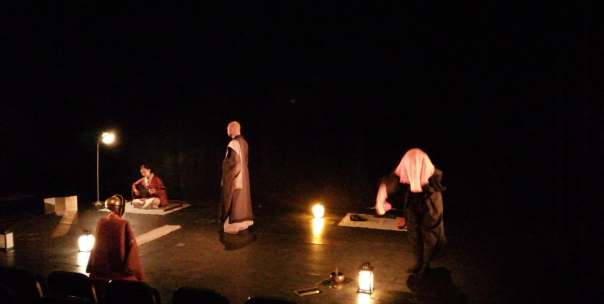
In the foreground we have lanterns & hither-ditherings about the stage. In the background, like a hungry rat, sniffs remembrances of the Battle of Dah-na-ura, of headless bodies floating in the sea, & other haunting visions of death & ghosts. Haiki himself is an amazing creation, essentially the golden masked mannequin torso of a terminator robot. This does not detract from the extreme escapism of the play, & it was wonderful to listen to a foreign language, rolling like waves across pebbles, projecting into drama as I sailed on an opiate carpet through the ribbony streams of Japanese culture & art.
Damian Beeson Bullen

Gun
Assembly Rooms – Front Room
Aug 9-13, 15-24 (17:10)
Script:  Stagecraft:
Performance: S.O.D:
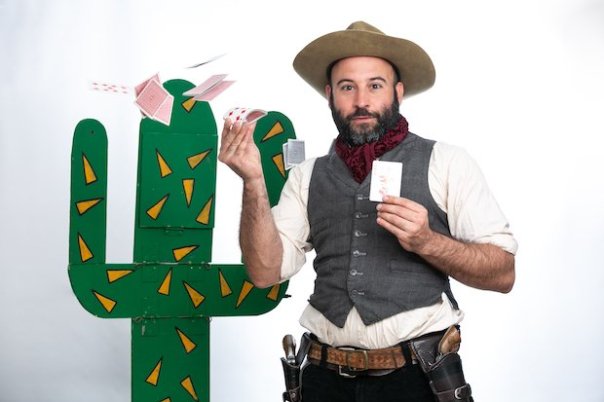
William Hartley has drifted from the Clever Peter troupe into the legendary life of a cowboy called Roscoe ‘Blackjack’ Porter. It is time for a daring full-length celebration of Hartley’s talents as he conjures twenty-five characters & every western catchphrase in the lexicon to shine a light on Roscoe’s flailing world. The main character, it seems, has been dragged through the cacti backwards, oppressed by desperate thoughts, but is still smiling. From him, like kaleidoscopic shards of light, the other 24 parts are played through accent deviations, slight costume changes, & a puppet shaped like a cactus. Of the many parts, Roscoe’s brother, John, is the most important figure for the plot, a plainly noble family-man sheriff, whose polar opposite Roscoe tells us; ‘Its funny how you can have the same ma, the same pa, & more or less the same upbringing, but one of you turns out to be a prissy dic£head.”
A lot of the familiarity-friendly action takes place in the Mucky Donkey salon, where its, ‘outside for shooting, inside for drinking,’ with a brothel upstairs. When Roscoe frequents the brothel later in the play, the results are quite eye-opening to say the least. On another occasion the gatling gun turns up one of its first ever historical outings to the line, ‘there are a million ways to die in the West, but this one is best,’ which was actually a brilliant, out-of-the-box inclusion, I loved that. As for the rest, yeah, its good, proper buzzin’ in places, but the speed of character changes & the minimum of trappings which Hartley uses to blur our receptors is just a tad tricky to follow at times. Gun is, in all essence, a western comic strip for adults, brought to life with a gallop like a cowboy chasing a prize steer.
Damian Beeson Bullen

Expanding the Mumbleverse

The Mumble remain dedicated to their role as
The most progressive publication at the Fringe
Every Sunday I like to go to Stockbridge & buy a couple of pounds of my favorite grapes, which arrive there from Mauritius that morning. Chomping on a juicy handful last Sunday, I began making my way up through the New Town, arriving in the York Place area where the trams are. This is Stand country, & a few years ago was the epicentre of laughter in the Fringe. These days its all a bit like a weekday wake & might as well be out in Fife, for there has been a seismic shift to one Edinburgh street in particular – the sloping, cobbled thoroughfare between the Cowgate & the Bridges that is Blair Street. This is the real epicentre of Fringe comedy these days; where comedians, punters & flyerers mingle in a smiling Sunset Strip.

Things evolve, & the stranglehold The Stand had on making people pay for ‘safe’ mainstream comedy has been utterly smashed by the innovations of the Free Fringe & its quality, liberty-laden shows. All things change – I mean I’m actually writing this article on a speech-to-text app walking through Holyrood Park on the way into town. So if Fringe comedy can evolve, what about the ancient art of reviewing. Think of those Greeks who first stepped down from the Dionysis theatre during the reign of Pesistratus, who had just observed the very first play there from its seats, who have been babbling opinions & critiques to each other as soon as they left the hilltop. Criticism is as old as the performance art it observes, so how does its own evolution fare in 2019?

Well, not that much really. Beyond the windows of Mumble Towers, the Fringe Press of 2019 seems an archaic institution – chained to amateur rules dished out by a hereditary feudal demense, & a narrow luddite marking system which, even if the stars are split into halves, can only ever give a ‘marks out of ten’ assessment. But half-stars are an ugly aesthetic, a deformed evolution of the species. Like Darwin says, it’s not the biggest or the fastest that survives, but the one that adapts. If the five-star marking system is not to go extinct, it must evolve from its primitive 5-point Ape, through the Homo Erectus 10-point system of halves, & into something more suitable for an increasingly sophisticated modern world.
The trained reviewer can actually feel a show’s quality as 1,2,3,4,5 within moments of the start. So what are the intangible spirits that provide such an esoteric sensastion. Since 2016, the Mumble had identified three factors in each of its genres. For Comedy, we had Material, Delivery & Laughs; while for Theatre we had Stagecraft, Script & Performance. This was an improvement on the old system, where now in essence a score was obtained between 1 and 15, the Neanderthal if you will. As the Mumble went into the 2019 Fringe, we were still using this system, but have finally recognized there was still a certain imprecision to the scoring.

The old system (R.I.P)
Under our old system, to obtain four stars, for example, a show needed to score 3.66 – which is simply closer to 4 than 3. The overall marks would then be described as a low four, a natural four or a high four. The eureka moment came the other day while sitting in two comedy shows. On one occasion I was the only one laughing, while at the other show the room was in uproar & I was sat stony-gilled. It was time to add that factor into the marking mix, the Room… how does a comedian play their audience, do they keep tickling funny bones like a comedy octopus, or is each viewer sat there playing on their phones.
Material:  Delivery: Laughs: Room:

A four-star Room at Gary G Knightley
The Room category in Comedy has a natural cousin in Theatre. I have called it S.O.D, with the first review to use it being published yesterday (before this article). Quick off the mark, the company sent me this email;
Dear Mumble
We have asked our wonderful PR company; we have asked the amazing Pleasance Press Office; we have asked the astonishing Head of Programming at The Pleasance – no one can help.
We are delighted by our review by the excellent Daniel Donnelly, but no one seems to know what S.O.D. stands for!Please can you elucidate?
Many thanks
(and I’ll get the prize for the first one home with the answer!)

The answer is, of course, Suspension of Disbelief. I know my poetry, & within Coleridge’s wonderful Biographia Literia, he elucidated on the driving phantasian spirit behind his co-creation of the Lyrical Ballads with Wordsworth. Its essence is the state of mind reached where there is, ‘a semblance of truth sufficient to procure for these shadows of imagination that willing suspension of disbelief for the moment, which constitutes poetic faith… awakening the mind’s attention from the lethargy of custom, and directing it to the loveliness and the wonders of the world before us.’ In modern lay terms its like switching off reality & becoming immersed in the production. Is that your mate Nigel before you? Do you see them behind the make-up, or are you lost in the drama & believe this drag-queen before you is the fabulous Nigella?
The introduction of another genome into the star system, the aforetitled Expansion of the Mumbleverse, seems wholly natural. Our planet is divided into four seasons, the main elements are still earth, fire, air & water. The four bodily humors were part of Shakespearean cosmology, inherited from the ancient Greek philosophers Aristotle, Hippocrates, and Galen. Ovid, in his Metamorphoses divided the Ages into Gold, Silver, Bronze, and Iron. Now the reviewing star system can also be divided into four harmonious parts. Marking-wise, to obtain those 4 stars, a show must now be awarded at least 3.75 points as opposed to 3.66. The overall marking goes like this
19-20 = 5 stars
15-18 = 4 stars
11-14 = 3 stars
7-10 = 2 stars
1-6 = 1 star
As cultural surveyors, The Mumble can now give a more detailed account of a show for both artist & potential audience member – its now a case of, “you need to sort your tiles out, pal, and there’s a bit of damp in your back bedroom – you’re wirings seen better days and of course you’re gonna have to update your boiler system, it’ll never pass the new laws.”
***
Damian Beeson Bullen
Wireless Operator
Pleasance Courtyard
July 31- Aug 26 (12.40)
Script: Stagecraft:
Performance: S.O.D:
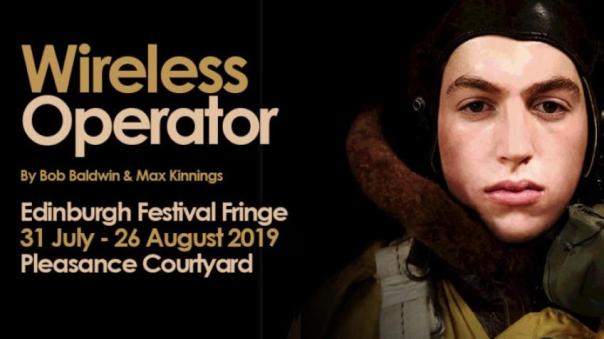
The flyer for this one-man show featured the face of John the Wireless Operator (Thomas Dennis) and was enough to prepare you for what would be a serious exploration of one aspect of World War 2 – a bombing mission. The story portrayed an actual mission carried out by the father, Bob Baldwin, who has co-written the piece with Max Kinnings. After a short wait in the wonderful Pleasance courtyard, we took our places in the small Below space. The seats were dominated by a contraption hung by bars from the ceiling, designed to effectively convey the claustrophobic feeling of being in the wireless operator booth of a WW2 bomber, sitting us right there alongside the crew. All this was aided by an excellent sound design which again increased the intimate feeling that you were really there, watching the entire plane and experiencing the perilous and terrifying action taking place in the sky.

In his authentic bomber jacket (these original ones were made very thick because of the freezing temperatures the crew had to endure), and combat uniform, Dennis certainly looked the part as he took us on the hellish journey into action. Although he was alone on the stage, we were nonetheless aware of the rest of the crew, on the in-com. We could hear their communications and I thoroughly believed in his emotional connection with them and their need for each other, as they joked to try and dispel fear.
There were feelings of regret as he became lost in memories, taking him out of the hellish action, which continued to wail and scream as the plane went through its paces, performing nosedives and terrifying manoeuvres under enemy fire. John never asked for sympathy from us, but he despaired of his decision to enlist and he had our serious sympathies anyway.
Somehow they landed in France to great relief. But distress attacked John once more, how could he face his little girl? How could he go on living after bombing innocent people? There was no way back, no way out, he couldn’t accept what he had just been through and what he had operated, what he was in part responsible for. This was a killer play that was messy; exposing guts, tears, humanity, responsibility and showcased the cruel irony of ordinary decent men having to go to war. But duty had to be done, he did not ask for our mercy but he sure as sure asked for God’s. Another absolute must see – a bit of a masterpiece actually!
Daniel Donnelly
The De Nova Super

Assembly George Square
July 31- Aug 26 (15.00)
Script: Stagecraft: Performance: S.O.D:
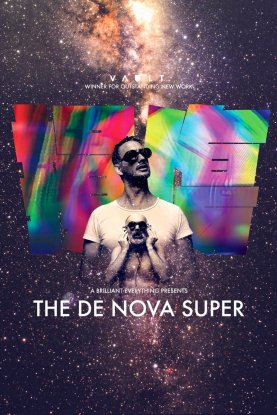
Two space explorers come across a derelict spaceship. It was meant to be the last hope to save Human existence from a dying planet. The explorers begin an attempt to get the ship working once more, and the first step is to make friends with the lonely A.I. which has been waiting for someone to save it. That’s the backstory to the De Nova Super, winner of the award for Outstanding New Work at last year’s VAULT Festival.
The De Nova Super is a unique and entertaining hour. The narrative is told through dance, music, lighting, props, make-up and the voice of the ship’s computer. It is just about as perfect a Fringe show as you can get, in that it is strange, yet easily accessible. The whole setting of is very well done, while the choreographed movement tells the story effectively. For me, the story could have been understood even without the narration from the ships A.I.. We were also given splashes of comedy to add inject a little fun into an otherwise dark story. My first thought when it ended was “That was awesome.”

The De Nova Super made me think about loneliness and whether I would go to space to save Humanity? If I left Earth and all the Humans to save them, I would be lonely… so it would be better after all to have company & just wait for the endtimes. It would be a lot better if we just worked together NOW to preserve our existence, rather than waiting until we are forced into outer space. Luckily, the Earth is not coming to an end, so we can see interesting shows such The De Nova Super – a sublimely entertaining way to get together with other humans and enjoy a unique piece of art.
Michael Beeson
BUY TICKETS
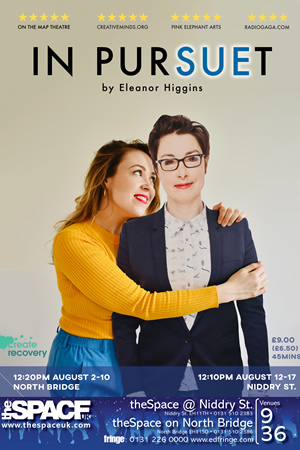
Eleanor Higgins: In PurSUEt
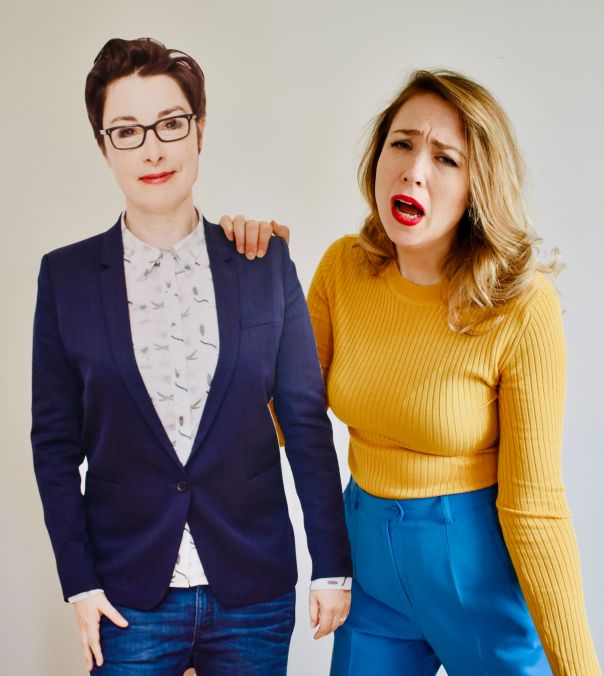
Can one become a fan of a superfan…
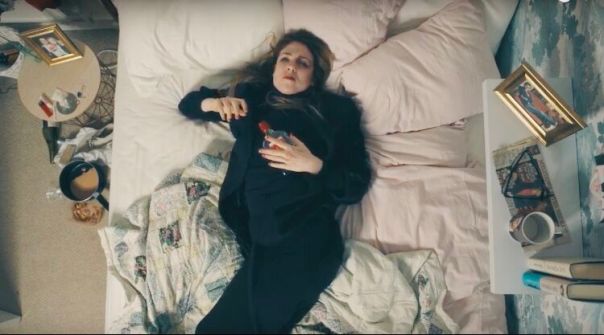
I caught a play the other day called In PurSUEt. The subject had intrigued me, a one-woman Fringe piece about celebrity stalking – Sue Perkins of all people, who I’m a fan of myself. I went along out of curiosity, & found myself being regaled by a charming young female actress, Eleanor Higgins, in total command of her chosen arena. Her play in its purest form is a contemporary conversation concerning mental health & addiction – something all of us can identify with somewhere in this fractured & difficult century.
Passion leads to obsession, from which often comes confused delusion. ‘I am fun, I am crazy, I light up a room… I am fine,’ Eleanor tells us, but she is clearly not fine. ‘Sue Perkins will be glad to have somebody like me as a girlfriend, thank you very much,‘ but of course she never will. Then Eleanor’s justifies her actions by comparing herself to Nancy Spungen, who bagged herself a Sex Pistol, before being (probably) killed by him in a New York hotel. Its not gonna end well really, is it?

We also witness Eleanor’s battle with substance misuse & her subsequent coping mechanisms, & thus we have a tender soul bared open to the world, emerging from the fabric of Eleanor’s night-fringed past as a massive monologue & memorial missive to the human maelstrom that flew desperately into her life. She had been brought near to the ultimate breakdown, but came back from the brink to a place where her energy seems calm. I wanted to get to know xxx a little more in person, so with pen & pad in hand I flagged her down after the play to answer a few questions about her personal paean to perkinsaphilia, & her subsequent personal redemption.
Hello Eleanor, first things first, where are you from & where are you at, geographically speaking?
Ha – well there’s an interesting one… We moved all over the country when I was a kid. I was born on the Isle of Wight, which I absolutely love. It’s gorgeous, peaceful and historical, full of dinosaur bones, beautiful beaches and archaeological treats. I am defiantly an island girl at heart. But moved to Suffolk when I was about seven and then up to Lancashire at 13 and then back down south in my late teens. I lived in New York for my early twenties. So I say home is where ever I lay my hat. But – for the last 10 years I’ve been in London, which is where I live currently.
When did you first develop a passion for theatre?
I’ve always been fascinated by human stories and relationships. Growing up I would watch films over and over, analysing every relationship, learning the lines of the characters and acting the parts out on my own. As a kid I’d force my family to watch me perform some random things I’d just come up with. I remember me and my brother created our own circus double act where we pranced about in leotards copying really dangerous acrobatics off the TV, we thought we were incredible. My first life-changing theatrical moment came when my mother took me to see Phantom of the Opera when I was about 10 or 11 years old. I sat in the audience being utterly transfixed, I couldn’t believe that people could do this as a job. I knew in my heart of hearts: this was what I was meant to be doing for the rest of my life. As soon as I was able to leave school and train in the profession I did. So at 16 I was out! Some might call this a bit of a risk – but my parents could see my commitment, I knew that theatre was where I belonged. It’s in my blood. My great grandmother was an opera singer and trained at the Royal Academy of Music – where I went on to train myself. I grew up on stage and around creators. When I moved to London at 18 to continue my training it really evolved. I was exposed to the wealth of theatre we have in our capital.
In a world where you can get entertainment ‘on demand’, what makes theatre special?
Theatre is always so special. It’s live and unpredictable. You have the added dynamic of the audience, and no two audiences are ever the same. The relationship between you and them is always something that fills me creatively. We are human, whether we are having a good day or a bad day – and how we are feeling affects the performance you give and the ways it’s received. Theatre art becomes far more tangible. I’ve found I never give the same performance twice. It’s always developing as the character grows and I find different colours and nuances to improve on each day. And these are all based on my relationship with the audience at each performance. How they are, the energy in room on that particular day, in that particular moment – these things mould and modulate each time: To me, that is the ultimate joy of all theatre. That direct relationship you are able to have.
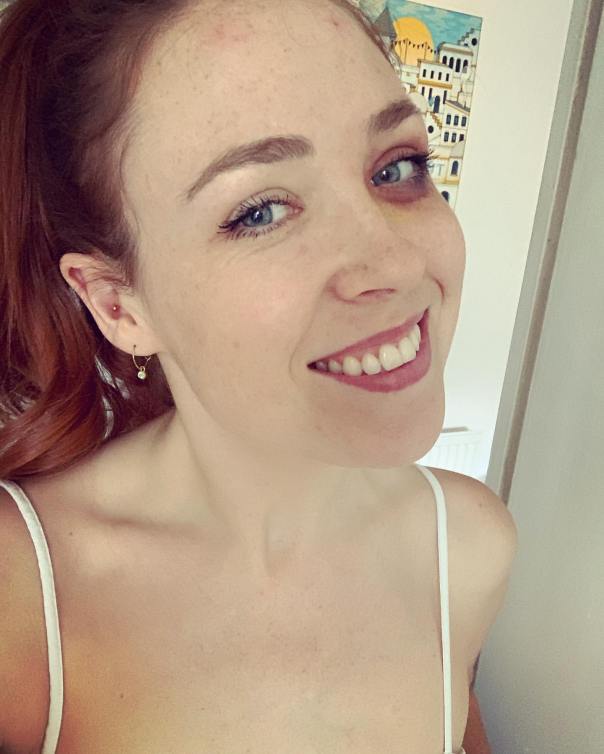
What is it about being performing in front of other people that makes you tick?
That’s a hard one as I guess as it’s kind of just always been an innate desire. As pretentious as that may sound! I guess performing in front of other people is always where I’ve felt most comfortable. Sometimes even more comfortable than I do in real life. I can be still on stage, where as life can sometimes be chaotic. I feel my most alive when doing a live show. Especially theatre because it’s a communal thing – you share that moment and that always leaves me buzzing. You get to feel and gauge how the story is landing, how the words are being met. The atmosphere in the room, the sound of their responses, the laughter, the shock, the horror, the encouragement, the support. Even down to the smell of the theatre and the dressing rooms. I love it all! As weird as it may sound it almost feels like I’ve never really had a choice, it’s always just been who I am.
What does your perfect Sunday afternoon look like?
Right now, not waking up to the screech of my alarm clock and a backlog of emails would be a dream! I love to wake up slowly, climb onto my bike and cycle to my yoga class, then a leisurely walk with the dog round the Hackney marshes – there’s so much greenery in London if you know where to look! Then it would have to be a Sunday roast at my local followed by an evening bingeing on Game of Thrones. I need to watch each season about three times over until I’m satisfied!
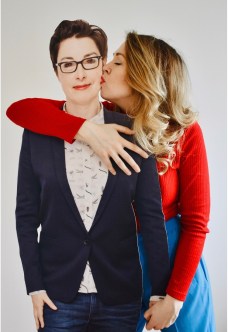
I have just seen your play at the Fringe, can you tell our readers more about it?
Of course! My new show, In PurSUEt, is inspired by a true story: A woman sent to treatment to deal with her drinking, relays her adventures pursuing Sue Perkins. She’s in deep denial over the realities of her own life. You follow her internal monologue as she relays her adventures pursing Sue, all the while finding coping mechanisms to function in a dysfunctional world. A world that’s focused on social media, celebrity image and Brexit! It’s set in a Therapists office so also covers the important topics of mental health and addiction. All told with a dash of humour along the way! Think Fleabag meets Miranda kind of vibe, with some fierce, heartfelt, honesty thrown in for good measure. Ultimately It’s central message is of hope and redemption; that by facing of our demons, we overcome them.
Where, when & why did you get the idea for turning your experiences into a play?
Well! Sue had always been on my radar. We worked in similar industries so I circulated around the fringes of her world. We met at various events and I developed a bit of a crush on her. We had a few funny encounters where I did some fairly ridiculous and embarrassing things. Often due to the free bar. Whenever I told my friends the stories of my shenanigans, they all said I should write it down. It was also becoming increasingly clear that I was drinking too much. So while on one hand I was finding myself in these funny and ridiculous situations I was also getting myself into quite tricky ones. In PurSUEt felt like an opportunity to tell a story using strands from my own life, while also telling a tale of resilience, obviously dramatised with artist license. I also felt I wanted to reflect on things that are personal to me. I wrote a 20 minute scratch performance of it for my MA last year. The response from the audience was so strong. It encouraged me to develop it. I was strongly advised to take it to the Edinburgh fringe, so I wrote some more and here I am.
Have people approached you at all, identifying with the problems you portray?
This has been the most rewarding part of the whole process. When you start to write something down, especially something so personable, you never really know how people are going to relate to the inner workings of your own mind. When nobody had seen it – I sat there in my living room thinking; oh my God, what are people going to think? This is crazy! I am revealing some pretty personal things about myself. I’m going to look like a lunatic! I was not prepared for the response that I have got. People have been coming up after the show saying how they know someone who’s suffered the same issues, they relate to what the character has gone through, they have friends, family and loved ones who’ve all had similar experiences. It’s been overwhelming and so moving. I can’t tell you how touched I have been the last few days with the responses….I’m very grateful. To me this is what creativity is all about. Sparking the conversations about the central issues in life we all face.
What have been the biggest challenges about telling your story in such a dramtic(al) fashion?
Well I delve into some pretty personal aspects of my life, so some of the biggest challenges have been keeping myself safe mentally – while I go to a pretty tough place from my past. Luckily, a lot of the things that happen in the play happened about three years ago and I’ve had a lot of time to process those things. Also, our past is what makes us who we are. I embrace what’s happened, how I was and who I have become. I believe the difficult challenges we face in life can be some of our most growing times. I don’t shut the door on them or regret the past. It’s put me where I am today. And if my story can benefit others, then it would have all been worth it. Gosh this is all getting rather deep isn’t it! Mainly after the show, I make sure I have downtime to recharge and get in touch with things like meditation – that I find really helpful.
You are a few days into your run, how has it all been going so far?
We have done four shows so far and Edinburgh Fringe is living up to everything we had hoped it could be and more. It’s insane! My feet haven’t touched the ground. I’m not sure anything could have prepared me for the craziness that is the fringe. But I love it. We’ve had the most incredible reactions from our audiences so far – it’s such a boost. It solidifies how we feel about what we are doing and spurs me on to try and get the word out as much as possible. It’s been a complete whirlwind! We’ve already had one offer of a London transfer and are in discussions with several others about touring the work. All by day four! I t’s been unbelievable and I am so very grateful.
You’ve got 20 seconds to sell In PurSUEt to somebody in the streets of Edinburgh?
Sure! A young woman fancies Sue Perkins. Most people would have the good sense to do nothing about this, but not her! She won’t take no for an answer and she wants a date. So she blags her way into anything and everything she can, to try and get near her celebrity crush. All the while she’s stealing her nerves with a few too many glasses of anything alcoholic. As you can imagine – things don’t go too well. The show opens in therapists office, where she has been sent to deal with her alcoholism. But she’s not an alcoholic and she doesn’t need therapy – she needs Sue Perkins! If only Sue could see that too, everything would be ok. Or will it? A dark comedy with real heart. If you don’t shed a tear or have a lump in your throat by the end, then you’d better check your pulse!
In PurSUEt
Aug 4-10: theSpace on North Bridge (12:20)
Aug 12-17: theSpace @ Niddry St (12:10)
Marie Lloyd Stole My Life

Script: Stagecraft: Performance:
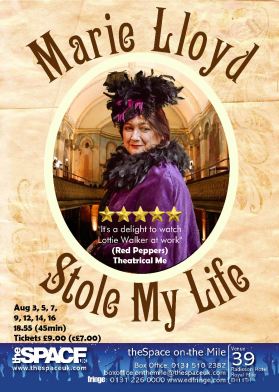
Edinburgh’s Space on the Mile had an intimate feel as we entered, with the stage taking up a large proportion of the room and seats on two sides. Before the show began, a man in a tuxedo played very gently on the piano, conjuring songs the more elderly audience members recognised. He would soon be joined by actress Lottie Walker, who graced the stage in the persona of Nelly Power, famous star of musical hall and pantomime. Resplendent in her fancy, 19th century, green velvet dress – with lots of frills and ornamentation – Nelly launched straight into dialogue. Her down-to-earth cockney accent was coupled with a beautiful smooth voice and delicate posturing. She was a performer famous througout London town. She knew of a great many things, not least how to navigate life’s rich scenes, to move in the right circles. This Victorian songstress was far from cold or nervous. In fact she was as warm and welcoming as the gentle songs that interspersed the play, many of which had great meaning for her.
Having captured us in a moment, Nelly held us in her careful hands for the next 45 minutes, telling us not only about her life, but also capably dispensing support and advice. Even as she described failed relationships she seemed to have already forgiven any wrong-doing. She didn’t seem to have any qualms even about her husband beating her, it just seemed to bring out humbleness without even a need to be upset. A century and more ago, people for the most part didn’t live much past 35, so there perhaps was no place for feelings of revenge.

Nelly’s career spanned decades and she accomplished much to be proud of, though “nothing to be vain about”. On the contrary, she’d lend a helping hand on more than one occasion to other artists and performers who were struggling to be someone, to make it. Especially, she would find inspiring words to encourage budding talent. Her purpose seemed full of love like a bouquet of posies; she was neither overpowering nor to be taken for a fool. Her songs, accompanied on the piano, were light, and her voice just as charming, inviting those of us who knew the words to join in.
Nelly was a strong and feisty woman and so is J.J. Leppink, who has woven in the social history of the suffragist movement to the play and also conveys the submersive element of Music Hall in Nelly’s dialogue. Lottie Walker
Read the full interview…
There was something about this show that was endearing and beautiful, a period piece that stood without history, yet with a definite past. Nelly’s personality shone through, a strong and generous soul, an example of balance, honesty and even trustworthiness.
Even in the end, when a woman called Marie Lloyd successfully stole what seemed like Nelly’s whole life and reputation, Nelly simply replied “maybe she’s better than me”. The Blue Fire Theatre Company’s production has intricate, imaginative dialogue, delivered to perfection with heart-breaking warmth. A definite YES! from me.
Daniel Donnelly

 Mumble Theatre