Author Archives: yodamo
Into that Darkness
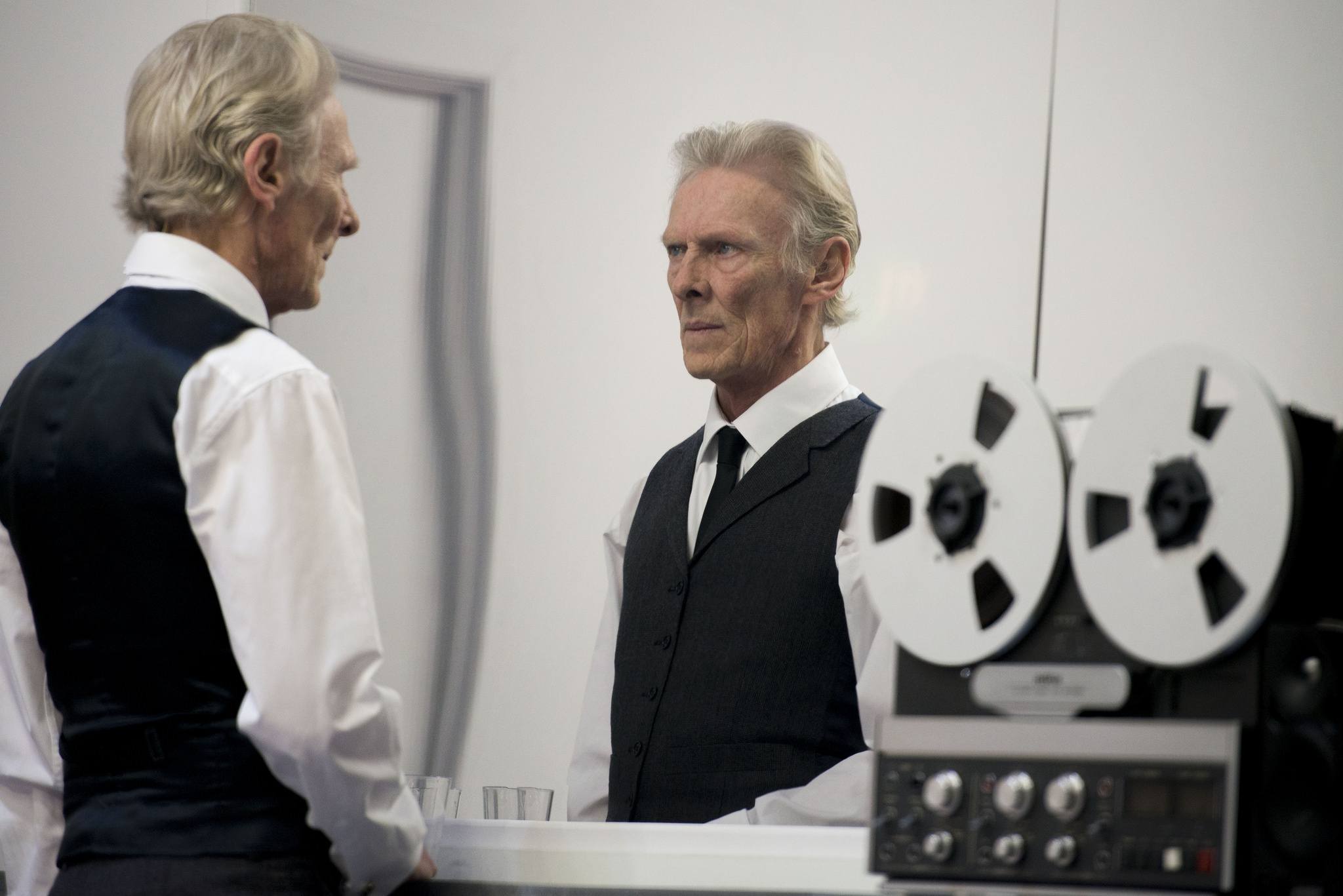
With the flick of a light the reflective glass box on the main stage of the Citizens Theatre has become a room. The audience have become voyeurs. Journalist Citta Sereny (Blythe Duff) is interviewing war criminal Franz Stangl (Cliff Burnett) about his role at the Second World War extermination camp, Treblinka. As Sereny calmly chips away at her subject, we gain unparalleled insight into the mind of a monster. Descriptions of early beatings from his abusive father: ‘stop it!’ his mother cried, ‘you’re getting blood all over my clean walls,’ precede depictions of his evil descent through the Nazi ranks, from police officer to death camp Commandant. Stangl’s stoic stance that his role was purely administrative can only crumble as other characters, including his wife (Molly Innes) and a host of former colleagues played by Ali Craig, deepen our understanding of the layers of lies and self-denial that facilitated the mass murder of thousands of Jews. And from that horror, Director Gareth Nicholls has created a powerful and strangely beautiful piece of theatre; from the crisp costumes to the elegant shapes Blythe Duff makes when sitting half towards the audience, half towards the proceedings inside that institutional-grey room.
The masterful dialogue-switches between actors, which take us to another conversation, another time – sometimes contradicting the present conversation, at other times enriching it – demonstrate Nicholls’ flair for storytelling, and indeed casting. A perfectly poised performance from Duff sets up a cat-and-mouse chemistry as Burnett’s chillingly believable Stangl falls prey to her prying; and despite his justifications, horrendous truths are laid bare.
Reviewer : Lou Prendergast
The King’s Speech
Mon 18th to Sat 23rd May

The Head In The Jar
Oran Mor, Glasgow
18-22 May
The play is about to start. Amidst the audiences chatter I pick out some words of an ongoing dialogue from Dylan played by Stephen Clyde.
“ramshackling sea..”
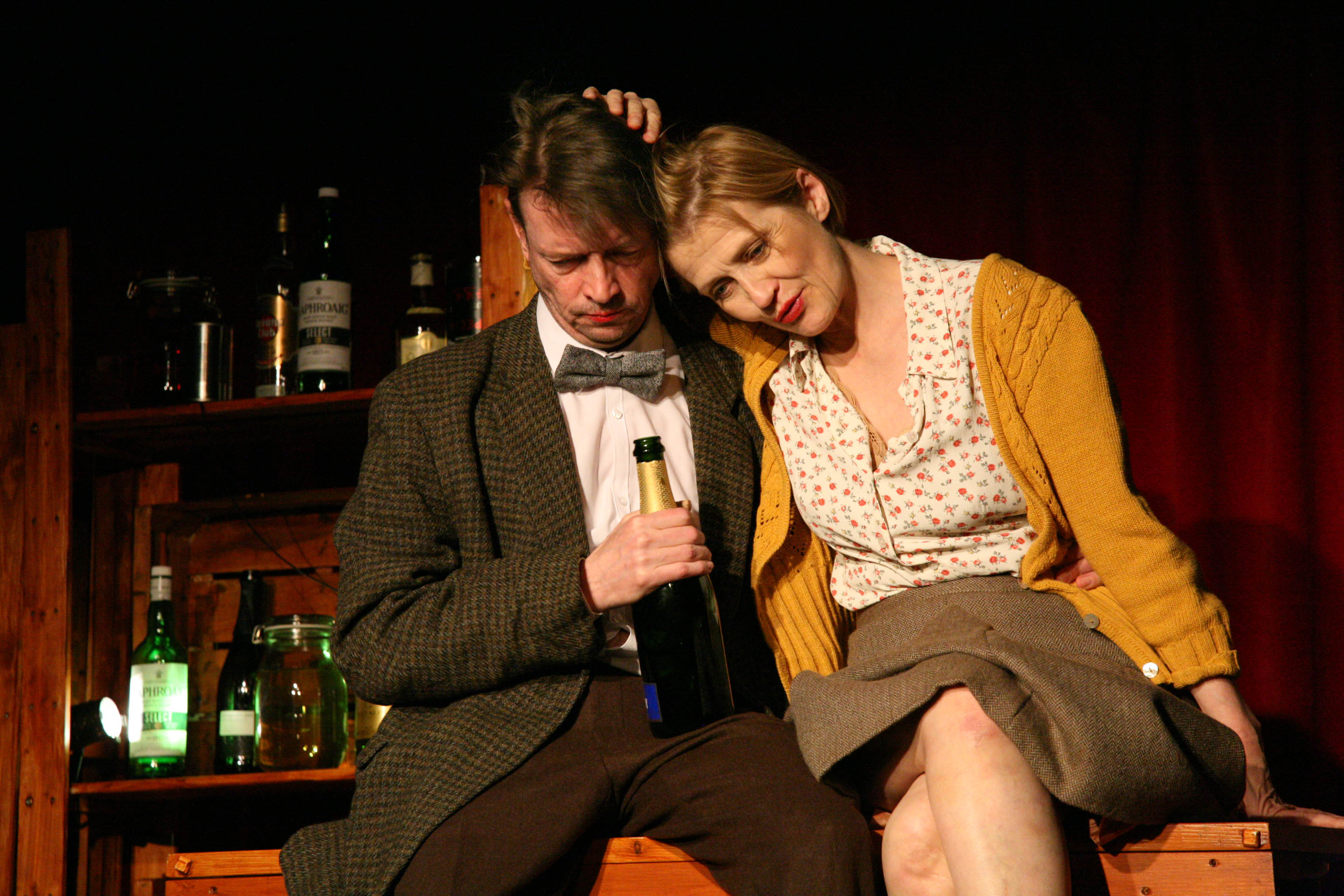
The stage is set with bottles along the back wall.Caitlin Macnamara is talking to us in the opening scene with glass in hand contemplating the 20 years of hell she has had.She sings “Lilly the Pink” as she teeters on the edge of the stage talking to us , her Alcohol Anonymous colleagues..this fear filled lady in floral shirt,grey skirt and ochre cardigan tells us that “the 8th November every year” sets her off because “when I see drink I see Dylan”.Dylan is of course her former husband, writer Dylan Thomas,who was always too pickled to remember their three little children’s names.
Caitlin played effervescently by ex Glasgow School of Art pupil Gaylie Runciman looks us over as she laments, “How can I trust a room full of strangers when you can’t even trust yourself.” The action now goes back in time and the young dylan enters and they congratulate themselves on the bottles of champagne they are alone with while the rest of the pub have scurried underground after an air raid alarm.“We have enough champagne to live here for the whole war,” enough to outlive “fucking Hitler”
So from their youth and beauty which is described by Caitlin as cucumbers they gradually pickle themselves till Caitlin realises she is expecting. Dylans “whirling dervish” his “dancer,isn’t she amazing” is drinking her way without him through the upbringing of their offspring.She has to drink at home while he meets with his “liquid family” in the pub.
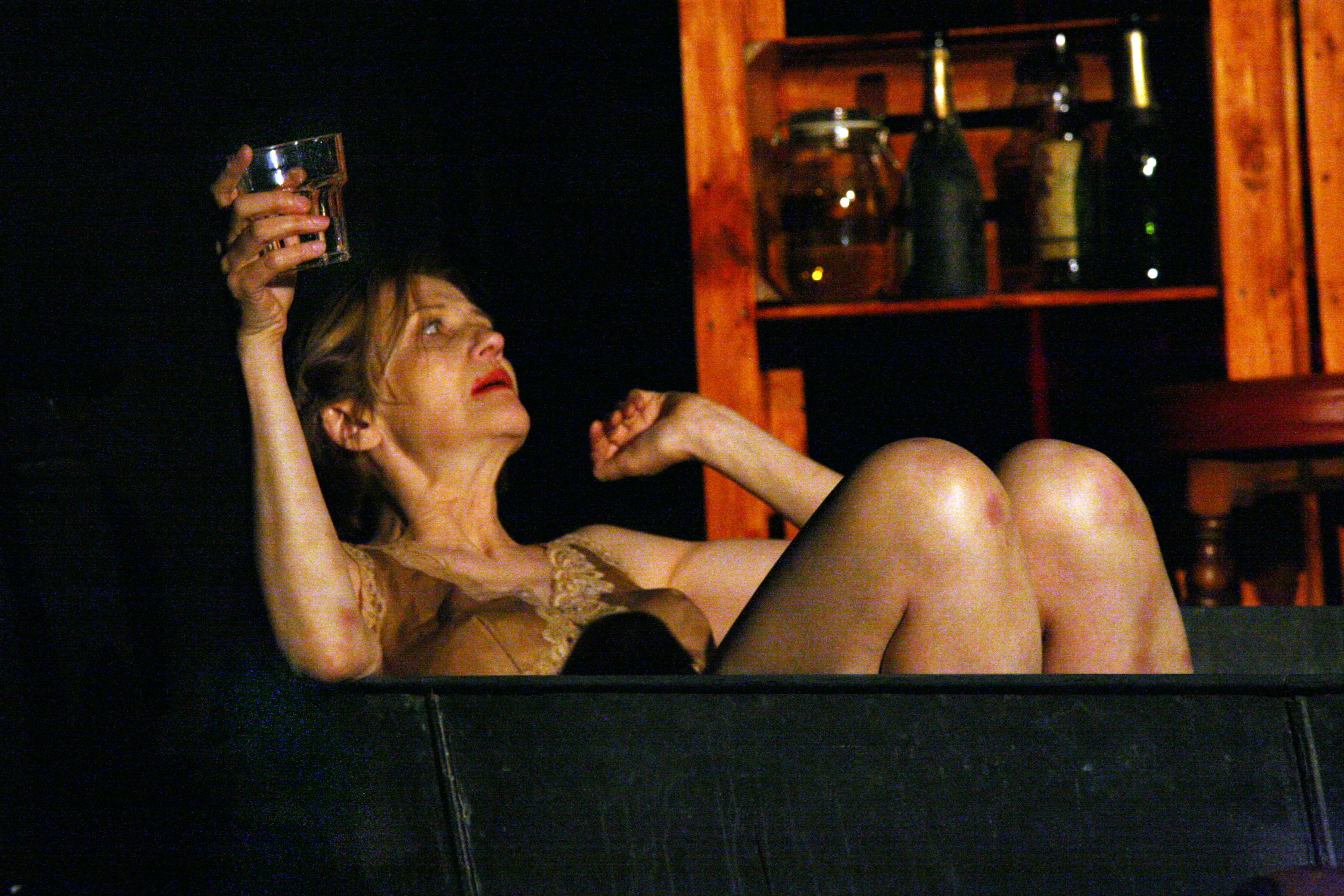
Years later Dylan enters from a three day bender and is confronted by a more gherkin like wife. She tries to get him in the bath telling him that their son, “is 15… where have you been. I’ve waited three days.” She refers to the 15 lost years when she tells Dylan that, “once placed in a jar of vinegar we shrivel.we were having too much fun… And the process cannot be reversed.”
While Caitlin continues with “red wine in my veins…beer in my ankles,gin in my eyes…flushing and rushing..pulsing me heart,” she knows that Dylan will go to New York and fulfill all his “cuntish possibilities,” as he steals the weins sweets after her refusal to go to the big apple with him.’
“New York? Yeah…who is she?”
Caitlin is not a victim though, not even when he calls her from her memory every Nov 8th. She knew that he needed New York she tells us in present time as she addressees her undrunk beverage…”you had become his true love”.She thinks back to the phonecall telling her that Dylan is on his last legs and how she arrived plastered at the hospital after a drunken flight only to see that he had a women by his side whose identity was never revealed to her.
“They thrust me out like a bloody chicken”
Now many Novembers later she is goaded by Thomas’ ghost to
“Step 3 …live to drink”
By step 6 she has taken the steps from Dylan who exclaims post humorously
“That’s my twelve steps”
We know now that she is victorious, she doesn’t need his fading voice in her head to “find love” in the past. She is ready for her her future as Dylan is confined to the memory of the alehouse, alone with his bottle. We believe the former Caitlin Thomas may be shrivelled but she will not remain a gherkin. This is highly humourous given its dark content.The script flows smoothly as we are transported to and fro between the living/dead/resurrected Dylan.The plastic bag over Dylan’s face describing his oxygen tank while he clutches a pint on his deathbed and the deep breathing in the background are both funny and disturbing.
One thing is for certain, this well directed offering by Alan McKendrick produced by Susannah Armitage is not to be missed.
Reviewer : Clare Crines
JEEVES & WOOSTER IN PERFECT NONSENSE’
Edinburgh King’s Theatre
MAY 11th 2015

On our way to the King’s Theatre we kept our expectations fairly level, somewhere between an enthusiastic ‘It has to be good as Robert Webb is in it, it just has to!!’ and a solemn ‘How can anyone possibly improve on Fry & Laurie’s classic TV take?’.
It is always difficult to bring a fresh angle to plays and adaptations that are so well loved they’ve been done to death but this cast pulled it off with a flourish.
From the moment Webb stepped onstage in his roles as Bertie and narrator, he absolutely owned the role of Bertie Wooster, managing to combine moments of manic energy with the loveably vacuous demeanour of everyone’s favourite toff. His delivery was perfect and, once Wodehousian shenanigans were in full swing, the TV version vanished in a puff of smoke and laughter at this reincarnation. Webb is obviously a very clever man, to portray someone that obtuse with such acute aplomb.
The combination of dialogue interspersed with fast & furious set/prop changes (all of which were used as a complementary feature to the play itself and caused consistent amusement throughout) worked perfectly. Set & costume designer Alice Power is to be commended on this.
Jason Thorpe and Christopher Ryan had a much more demanding job as they played no less than three characters each, of both genders, requiring lightning-fast costume and voice changes but their consummate professionalism shone through- they never put a foot wrong, save for a brief moment of corpsing form Thorpe, which of course is no bad thing in an already rather surreal comedy, providing a moment of intimacy as the audience lapped up the chance to laugh with the actors and not just at them.
Thorpe lacked the height and solid, physical presence of other Jeeves actors however he shone in his various other guises as the socially inept, newt-fancying Gussie Fink-Nottle and most especially in a downright hilarious, absolutely inspired scene of him simultaneously playing the braying Sir Watkyn Basset and his not-so-innocent young ward, Miss Stiffy Byng- one to look out for!
Ryan speeds between between the long suffering, deferential Seppings the butler, Bertie’s eccentric Aunt Dahlia, whom he imbues with an air of the demented window-licker, the Scottish butler at Totleigh Towers (in essence a Scottish indentikit of Seppings, complete with ginger hair) and the lunatic Führer-like Spode, never once putting a foot wrong.
The beauty of P.G. Wodehouse was his ability to build a clever comedy of manners around the most ridiculous affairs and objects (in this case a cow-shaped creamer), giving us a ringside seat to the quirky strangeness of human interaction and often hinting at greater transgressions but never actually revealing them. This show had it all, and the lovely interior and perfect size of the King’s Theatre was the icing on the cake.
HIGHLIGHT OF THE SHOW: Slow motion scene involving cow creamer- simply inspired!
COULD HAVE DONE DIFFERENTLY: To see a woman play one of the multi-character roles would be a welcome and interesting twist .
Overall a funny, warm and engaging performance, ‘Perfect Nonsense’ was an all round success, even for those who are unfamiliar with the Jeeves & Wooster stories.
Reveiwer : Maya Moreno
The Unremarkable Death Of MARILYN MONROE
Eden Court
Inverness
10th May
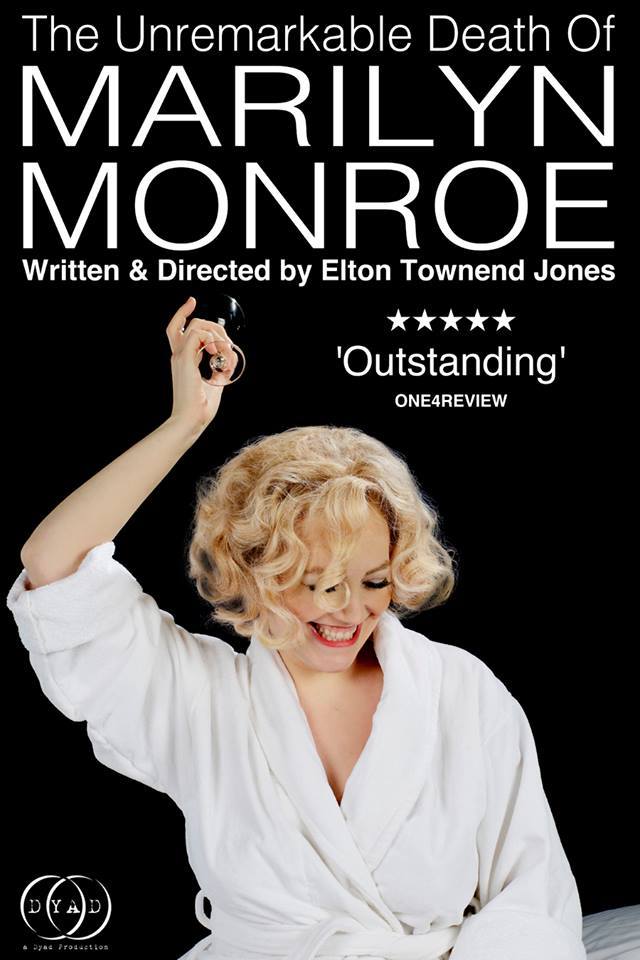
Having seen Dyad Production’s, Female Gothic last year, I was looking forward to see this play about the iconic film star Marilyn Monroe, which imagines her recounting her life in her last hours before her death in August 1962, aged 36. While we can only speculate to what she may have thought about in her last moments, Elton Townsend Jones went to great lengths in his research to discover the real Marilyn beneath all the rumour and sensation.
On entering the theatre we were faced with a set, not to dissimilar to Tracy Emin’s “My Bed”. After sitting down, I realised there was a figure on the bed, which lay motionless until the audience settled and the lights went down and the white sixties telephone rings, no one is on the end, just an eerie crackling …..maybe death is calling?
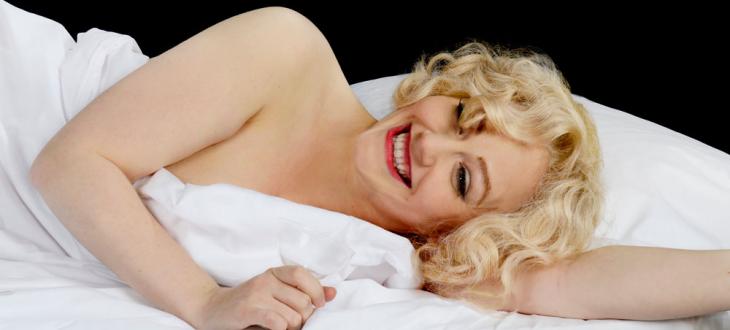
Despite the fact Lizzie Wort only had a slight resemblance to Marilyn she managed capture her spirit, as she frolicked across the stage in her dressing gown, popping pills and candidly telling her story of marriages to Joe DiMaggio and Arthur Miller, tales of affairs and friendships, her career and the darker days of her childhood. Lizzie did an exceptional job of portraying this complex woman. Dyad seems to be the master of monologue as yet again this was a superbly put together production, with simple storytelling that kept me captivated for the whole hour. FOUR STARS

Reviewer : Zoe Gwynne
Tommy’s Song
Oran Mor
Play / Pie / Pint Season
16-22 May
£12
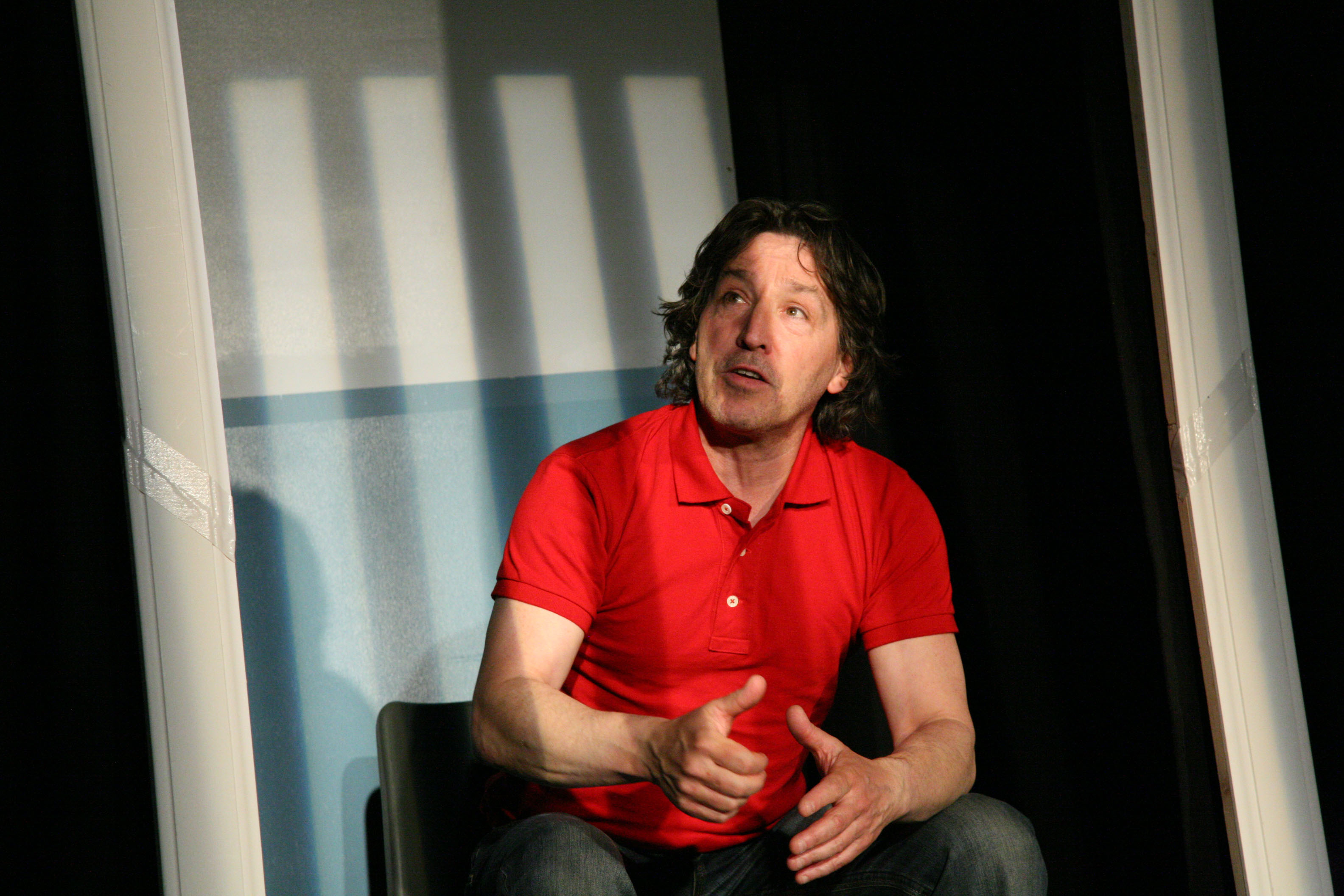
From out of the mini-country that is Glasgow comes this fine piece of native-born theatre, inking its way into the world along the pen of the award-winning Lou Prendergast. She presents us with the monologing Tommy, played by the talented & perfectly experienced Tom McGovern. Having been in & out of Barlinnie more than most folk go to Benidorm, Tommy is a hard-drinking, petty gambler & one of the characters Prendergast would have witnessed in her youth. Last year, her play Blood Lines brought the story of her gangster father to the stage, & this production seems a perfect spin-off off-shoot of that world.

The very cute Lou Prendergast
The story is set around trying to have a good Christmas for Tommy’s dying dad, with his ex-bird being invited along for good measure. McGovern brings these extra vocal parts into the story with expert changes of voice & mannerisms, & combining these skills with his phrenetic stage-presence really brings Prendergast’s vision to life. Colloquial as hell, as McGovern rattles through his lines we watchers really feel like we are in the heart of Glasgow, as indeed the Oran Mor theatre is.
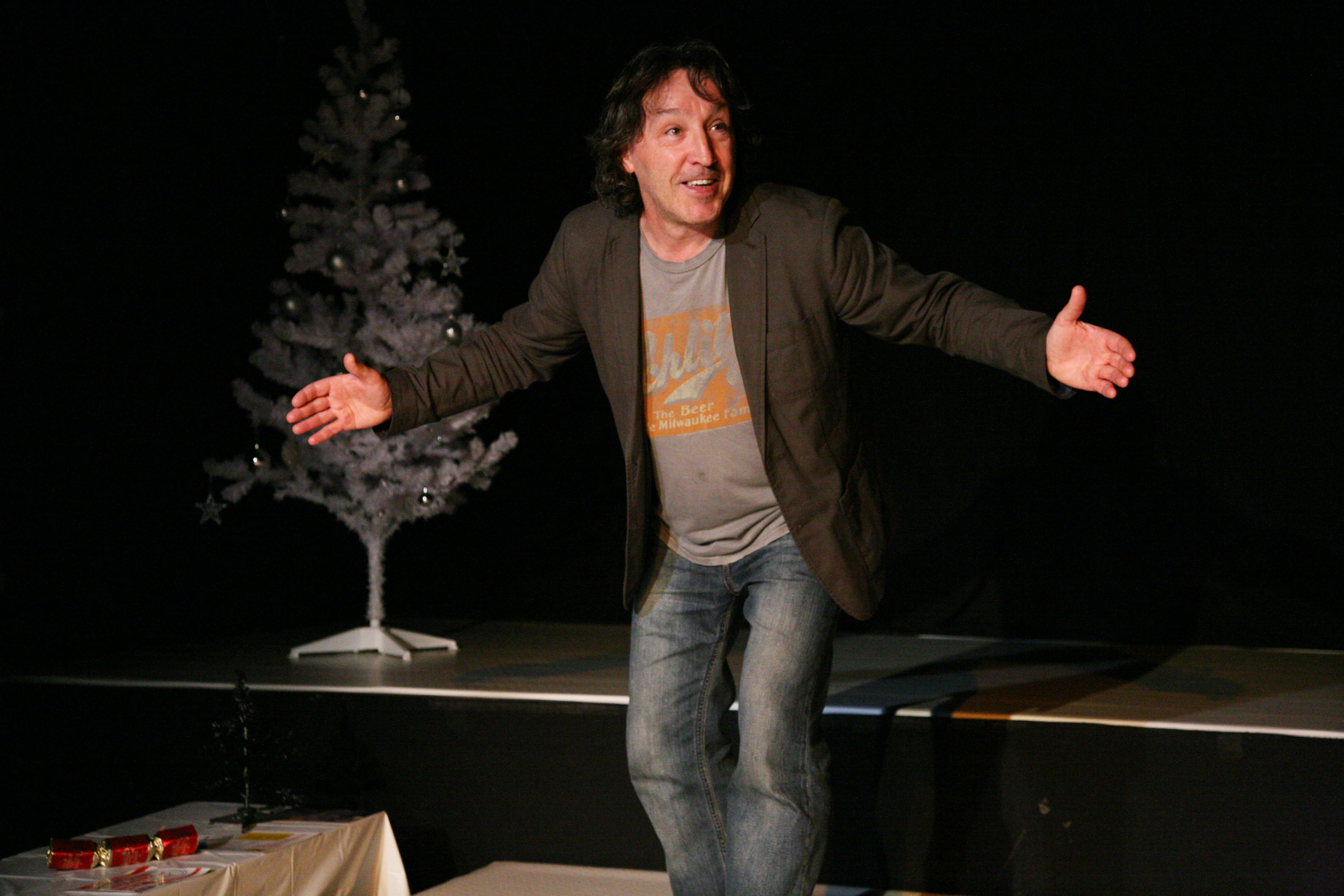
Prendergast’s first effort at writing for the male voice is something of a triumph, pulling off all the nuances that are involved in the banter-driven patter of the modern man. Together with McGovern’s wonderful oratory skills, witty one-liners & a genuinely touching plot, this play is a true winner.
Reviewer : Damo Bullen
Normal/Madness
Eden Court – One Touch Theatre
Inverness
6th May
In her first Solo show, Fiona Geddes chose to write about her own personal experience of growing up with a mother who suffers from Schizo affective disorder. As a child, her situation seemed quite normal and within her family the word Schizophrenia was never ushered. With a simple set and clever use of lighting, Fiona uses direct address, but plays the role of her mother while recollecting child hood memories and also performs the role of three doctors who give varying advice about this mental health condition. There is lots of humour which provides some relief from sad and distressing scenarios from her childhood.
Though the story is based from her point of view as a daughter and carer, playing her mother does give some balance to the piece, but at times I couldn’t help but find it a bit one sided. While the play maintained a good pace, it did feel slightly too long. All in all though this was a honest, well written and performed piece that bravely tackles real issues.
Reviewer : Zoe Gwynne
Table Manners
Eden Court, Inverness
April 30th 2015
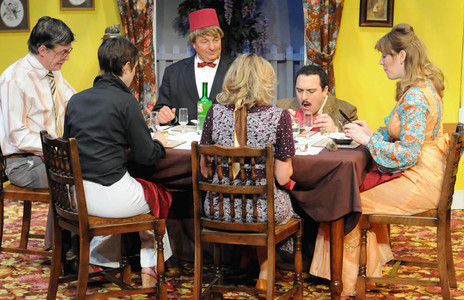
This Comedy play by the well-known author Alan Ayckbourn.is probably the funniest of his Norman Conquests trilogy. We witness six characters & their tangling relationships over the course of a bank holiday summers weekend in a county house. The story follows the amorous Norman, his wife Ruth, her brother Reg and his wife Sarah, Ruth’s sister Annie, and Tom, Annie’s next-door-neighbour. This play centers mostly on Annie and her futile attempts at a romantic fling in East Grinstead with Norman and Norman’s attempts to woo anything with a skirt.
The play was originally written and set in the seventies and for this production the set designers have perfectly reproduced a dining room of that time including horrific patterned carpets. Throughout Table Manners there I found many reminders of my parents’ observations life was in the seventies such as homemade wine brewed from various ingredients including carrots & food being made from a selection of tins as there were no shops open over the bank holiday weekend.
The play was well produced and well acted. Performances of note came from the misunderstood brother-in-law Norman and the long suffering Annie who had been left by the other family members to look after the aging mum (who you never see).I can recommend watching this wee gem : there is a smashing level of comedy throughout serving for an enjoyable evening’s entertainment.
Reviewer : Lucy Tonkin
The Curious Incident of the Dog in the Night-Time
Festival Theatre, Edinburgh
28th April to Saturday 9th May
*
*
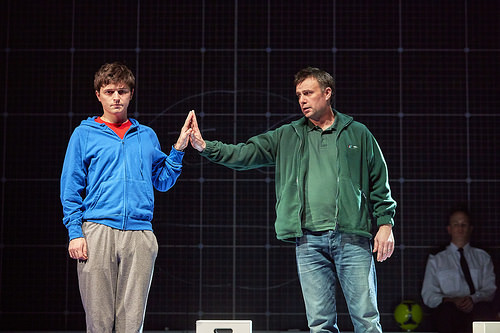
We welcome to Edinburgh this remarkable play, which has been adapted from the 2003 award winning book by Mark Haddon, now acquired reading for GCSE. Directed by Marianne Elliott co director of War Horse fame, The Curious Incident of the Dog in the Night-time is a story within a story. Christopher Boone is a young man who referes to himself only as “someone who has behavioural problems.” He has an exceptional brain, able to work out complicated mathematical problems and remember minute details. When he finds himself under stress he recites prime numbers. He dislikes strangers and the colour yellow. Christopher is also not able to interpret human behavior and emotion and avoids human contact only touching a hand with his father as “sometimes he wants to give me a hug, but I do not like hugging people so we do this instead and it means that he loves me. ”
*
At exactly 7 minutes past midnight Christopher finds Wellington, the dog of his neighbour, Mrs Shears, impaled with a garden fork. Immediately under suspicion he finds himself being questioned by a policeman his dislike of being touched causing him to lash out. He goes back home with his father and is told to mind his own business. His own detective work leads to the unlocking of long held family secrets that take Christopher on a terrifying journey both physical and emotional as he’s never left the street where he lives. Written as a first person narrative Christopher recounts the case, he has written it down in his book which Siobhan his life skills teacher has turned into a play.
*
*
The stage design by Bunny Christie is amazing : it’s like being inside a great big cube on which diagrams, maps, rail-tracks, sign posts and cascades of numbers flit across the walls in all directions. It’s an inspired representation of the sometimes chaotic workings of Christopher’s inner world. The physicality of the cast really bring his thoughts alive, while the sound and lighting also used to forceful effect both deafening and dazzling a complete assault on the senses : especially during Christopher’s train journey.
*
The Straw Chair
Borderline Theatre Company & Hirtle Productions
Eden Court – One Touch Theatre – Inverness
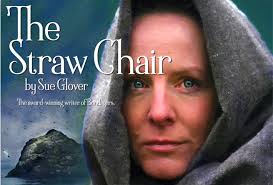
Borderline Theatre Company’s new presentation of The Straw Chair, which was last performed in 1988 has reawakened this script by renowned Scottish playwright Sue Glover (Bandages) and through its extensive tour of Scotland has brought it to audiences in the Highlands & Islands for the first time.
The story is based on Lady Grange (Selina Boyack) who was banished to a number of Scottish Islands including Hirta (St Kilda) by her unfaithful husband Lord Grange for being a problem wife. Imprisoned on this remote rural island, a far cry from her civilised life in Edinburgh she descends into madness and drink, her only comfort is a straw chair which she carries around with her. The arrival of the newly married minister Aneas (Martin McBride) and his teenage wife Isabel (Pamela Reid) provides a hope of getting a message to the outside world of her abduction and an unlikely friendship is struck up between Lady Grange and Isabel
Selina Boyaks imposing performance of Lady Grange as a wild, unkempt, outspoken, drunk and sex obsessed woman full of anger and frustration is in contrast to the austere Aneas who’s only initial concern is converting the Pagan inhabitants to Christianity. It is his young, sheltered wife Isabel who has the compassion and understanding to realise that Lady Grange is in most need of their help. The grounded character Oona (Ceit Kearney), who is an islander, paid to look after Lady Grange provides a balance between these opposing parts.
This is in no way a fast paced drama, but the characters slowly unfold and develop, it depicts how living on the beautiful but harsh environment of Hirta changes them, we watch Isabel caught between being the dutiful wife and standing up for her own convictions and how Aneas softens and is somewhat converted himself by the lives and values of the islanders. The evolving of the friendships and interaction between Lady Grange, Isabel and Oona, especially when they all get “intoxicated” on stolen brandy, not only provided humour but signifies how these strong females are striving for freedom and liberation in a time when women had little rights and were constrained by society.
Reviewer : Zoe Gwynne

 Mumble Theatre