Author Archives: yodamo
Birdsong
Kings Theatre,
Edinburgh
21-25 April 2015
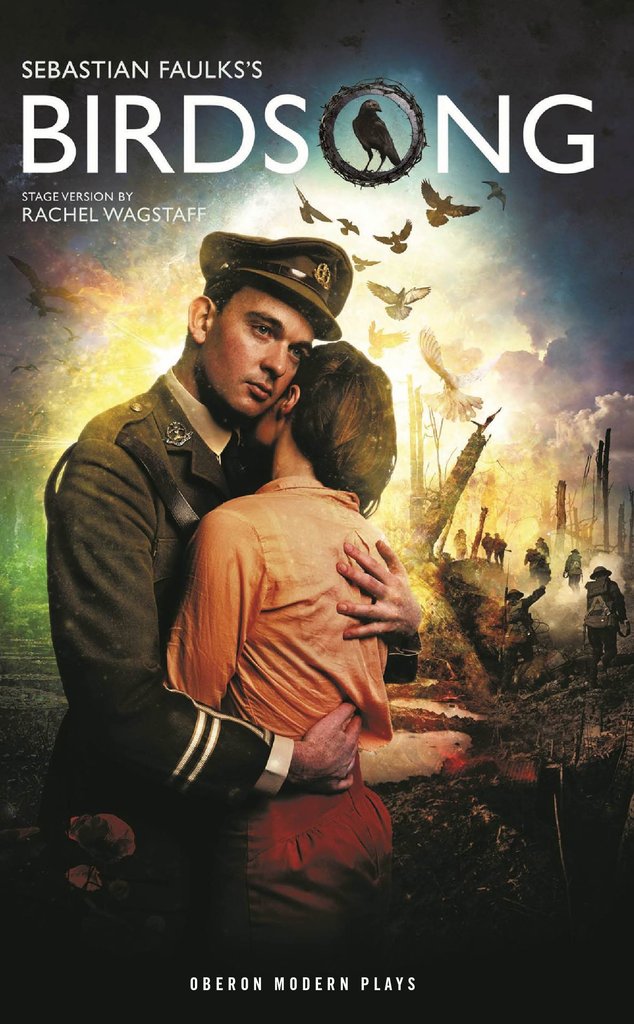
Rachel Wagstaff’s powerful adaptation of the acclaimed 1993 Sebastian Foulkes novel, does justice to the memory of the fallen of WW1. The challenges of bringing a novel which follows the ‘sappers’ – the tunnellers’ whose job it was to tunnel underneath the enemy to lay mines – have been overcome by a superb production team.
The story is set in France during WW1 on the Western Front and follows the lives of a group of sappers in the awful conditions that they survived in a century ago. Living 80ft underground they were sleep-deprived, undertrained, and in constant threat of tunnel collapse, being blown up by enemy mines and being trapped until the oxygen ran out and they were asphyxiated.
The Officer in charge is Stephen Wraysford a man increasingly realising the futility of war as he witnesses all humanity being washed away in tunnels dripping with blood that seeps in from the shell-holes on the battlefield above. The use of flashbacks takes us back to Stephens’s life in Amiens, before the war, where he fell in love with a married Frenchwoman Isabelle Azair, played by Emily Bowker. These changes are handled with skill by the cast. Through watching the human casualties mount up Stephen rediscovers his own humanity as he finds himself trapped underground with Jack Firebrace (Peter Duncan) in the final scene.
The production captures the constricted and torturous lives the men lived. It manages to communicate their longing for family, and the close bonds that necessarily take the place of family on the front lines. The Set Design (Victoria Spearing) and eerie lighting design (Alex Wardle) add enormously to the atmosphere as does dramatic use of explosive sound effects. The stage design manages to cope admirable with the necessity of scenes as varied as tunnels, trenches and pre-war Amiens. A violinist and singing Cartwright character (James Findlay) adds occasional lamenting elements at appropriate moments of pathos.
Birdsong is an impressive and poignant production. The 12-strong cast put in strong performances, often doubling as other minor characters (my only gripe being a couple of wobbly accent) and even the programme is a wealth of information, not just on the show but also in historical context of WW1 – there is an excellent information pack available for download on the shows are welcome additions when dealing with such a monumental human tragedy. FOUR STARS

Reviewer : David McCaramba
Last Dream (On Earth)
Eden Court, Inverness
Sat 18th April
*

*
When I went to review this I had no idea what to expect I had invited my husband as I thought he would enjoy the subject matter of space. On going into the performance we were given head phones, this made me worry a bit to what I had taken him to.
*
There was no reason to be concerned, as on sitting down and putting the headphones on you are totally drawn into the world that is being created for you on the stage. I had read briefly the program which explained the performance would be telling two stories along side each other one about refugees fleeing from Mozambique to get to Spain, while the other story was detailing the 1st human going into space. I wasn’t sure how this could work as the stories seemed too far removed from each other but the theme of human endeavor brings them both together, they are both life changing events driven by hope and dreams.
*
*
The audience and myself were totally drawn into this performance from start to end. In the beginning it is sound checks you hear, but even this draws you in, and each sound makes you want to see what happens next. Both stories are told through dialect and music with minimum actions. At a point in the play the performers want to convey the illusion that the performance is paused they do this by silence and standing dead still for what feels like minutes. It is a joy to watch how talented they all are.
*
The stories are told beautiful through the medium of speech, music and the projection of images on a large screen. If you have a chance to go and see this I would highly recommend I will be looking out for work by Kai Fischer in future a very talented director.
*
Reviewer : Lucy Tonkin
The Woman in Black
The King’s Theatre, Edinburgh
Tues 14th -Sat 18th April

52 Shades of Maggie Dirty Dancin’ in the Pub

Fat Alice
Oran Mor, Glasgow
March 30th– April 4th
13:00
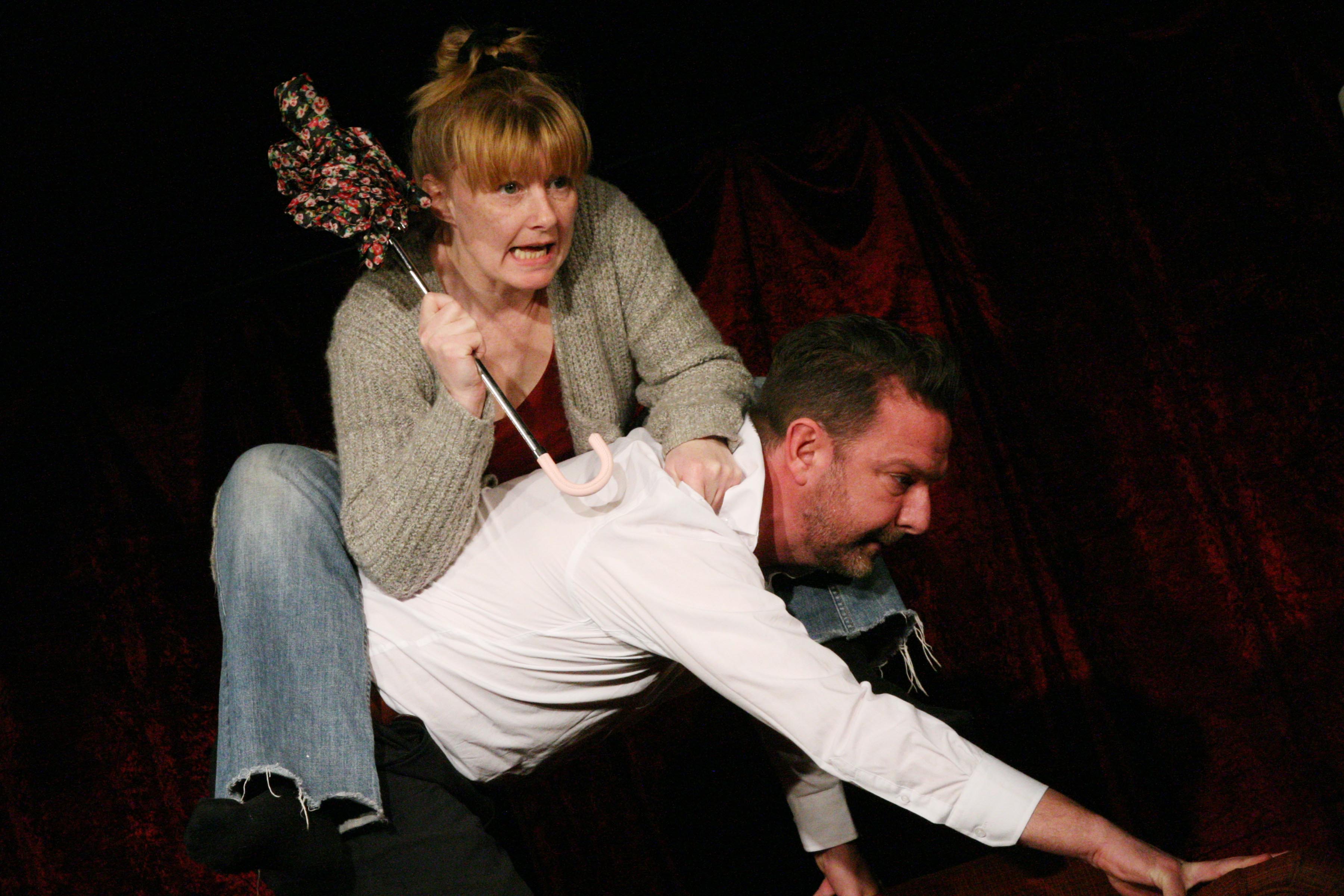
This week’s Play, A Pie And A Pint is a two-hander set in Moira’s (Meg Fraser) rented flat. She has been carrying on a ten year affair with married family man Peter (Richard Conlon). Writer Alison Carr has created some cracklingly (pun not intended) funny dialogue as the two characters sit down to a meal which becomes more and more interrupted by a growing crack and bulge in the ceiling above them.
The ever-increasing fissure serves as a metaphor for the couple’s relationship which is going nowhere fast. Peter is quite happy to carry on the way things are but Moira is fed up being “the other woman.” She has eaten herself fat to keep him happy but, for all her effort to please him, Peter admits that although he loves her, he loves his wife too. The situation is never going to change and deep in her heart she knows it.
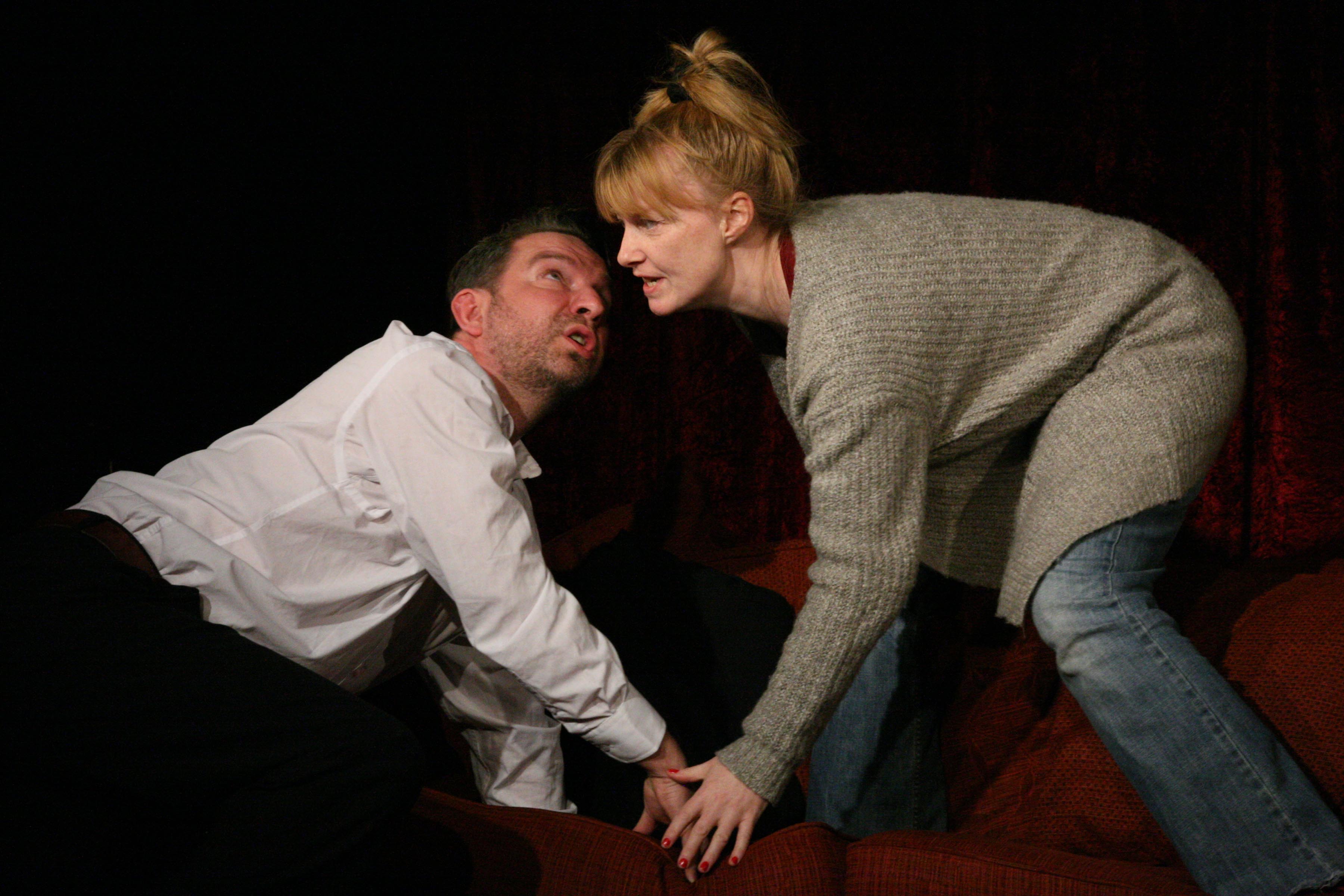
The comic interplay between the two cleverly reveals underlying issues of relationship, self-image, self-worth and how love won’t necessarily conquer all. The packed (again) audience enjoyed a good many laugh-out-loud moments and there were a couple of gasps of shock from them too. Meg Fraser’s comic timing, in particular, really added a lot to the experience The sound effects as the play developed were particularly effective. If you want to know what’s causing the crack in the ceiling you’ll have to go and see the play for yourselves. I felt there was a slight loss of pace in the last quarter of the play, but, even so, Fat Alice is well worth an hour of your time for some absurdist fun-and you will cheer at the end.
Reviewer : Dave Ivens
Hedda Gabler
Lyceum, Edinburgh
20 March – 11 April
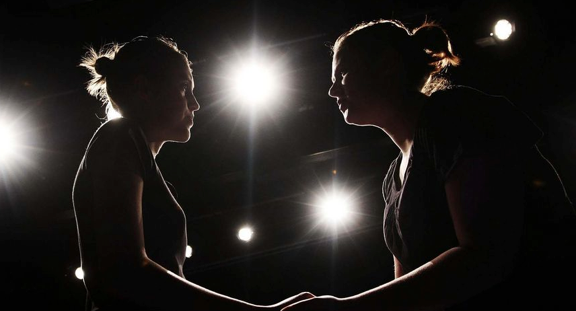
Amanda Gaughan’s debut as Lyceum Director, a beautifully staged version of Hedda Gabler, is built on a foundation of parquet flooring—a feature of many bourgeois households in literature—its uneven distribution into a jagged base is as much an allegory for the eponymous heroine’s psyche as it is part of the stage design. This particular bourgeois household is nicely captured by the fine ensemble of actors, delivering a sharp and wry version of Richard Eyre’s interpretation of Ibsen’s classic. The surprising emphasis on humour makes it more tragi-comic than might normally be expected of a play more commonly known as a tragic portrayal of an independent but dependent woman, trying to wrest herself from patriarchal control in Victorian Norway.
Lewis Hart somewhat overplays the dull impotence of Hedda’s spouse, Tesman, but counterbalances this with his frequent, and amusing, exclamations of ‘amazing’ about almost everything that happens. Tesman’s highly strung ex, Thea Elvsted, is also depicted with humour amid her anxiety surrounding her current love, Eilbert Loevborg, who, to further complicate matters, is Hedda’s ex and one of two unwelcome suitors. Almost stealing the show, however, is the other suitor, Benny Young’s disgraceful, treacherous and lecherous would-be blackmailer, Judge Brack. With brilliant command of Ibsen’s language Young highlights its subtlety, wordplay and humour: ‘impossible, but probable.’
At the centre of this parlour room’s games, of course, is Hedda, played by Nicola Davey, who declares she wants ‘to be in the middle.’ When we first see Hedda writhing on the chaise longue, it is difficult to tell if it’s in pleasure, or whether she’s putting the anguish into languish. Perhaps both. And this sets up the tension in the heart and mind of Hedda and with her relations and manipulations. Davey’s strong, nuanced performance, peppered with wry humour, completely owns this oscillation between frustration and control, hysteria and dry, icy observation.
From the parquet flooring upwards, the stage design, by Jean Chen, works incredibly well at evoking a sense of impending menace: its silvery sheen and portentous ‘fearful flowers’; the ghostly linen curtains billowing into the room, like an inhaling/exhaling chest; the scatted burnt ashes from the stove; and the kinetic wall that suggests space but also confinement, increases the sense of claustrophobia and the trap that Hedda feels is her social position. Complementing this sense of the inevitable is the subtle lighting, neatly demarcating the passage of time and the spectral soundtrack of faint piano and washes of ambience that create an eerie other-worldiness. The costumes are redolent of the 1890s, but are tailored to reflect contemporary fashion in the costume changes, a sentiment enhanced by the dreamlike dance at the end of Act One where Hedda is redressed by her maid. In summary this is a fairly exquisite version, though not without weaknesses, of Ibsen’s study of Victorian social mores and hypocrisies, grounded by the strong cast and stage design.
Reviewer – Nicky Melville
The Producers
Festival Theatre, Edinburgh
March 23-28
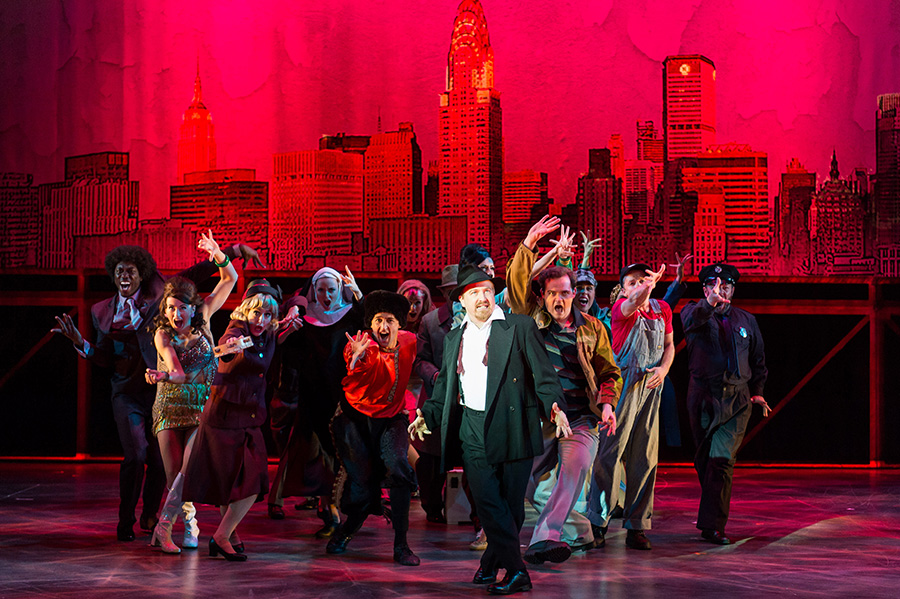
Coming out of The Producers much of the audience, especially the younger members, looked a little dazed. Was this show terrible or brilliant? Anyone whose seen the original movie, and managed to avoid the largely monstrous 2005 remake, will laugh knowingly, and explain how ironic that is. The film about a shockingly unpc musical, had itself become a shockingly un-pc musical: a smart-arse would tell you that was meta. The dude behind us, laughing uproariously, said to his wife/ partner/ sister/ whoever -who wasn’t, in a condescending, you just don’t get it, tone, “ach, it’s irreverent” and it is, like Jeremy Clarkson.
Here’s the thing, in 1967 The Producers, was a pretty edgy piece of cinema. A film about a bent Broadway Producer (not like that- as this Max Bialystock frequently points out) who corrupts impressionable accountant Leo Bloom (not like that, ditto: yawn) and convinces him they can swindle a bunch of cash if they put on a guaranteed flop. “Springtime for Hitler” is born. There’s a lot about this that was edgy in 1967, genuinely ad brilliantly irreverent: the war was a lot fresher in people’s minds, for one, and despite featuring what seem like incredibly tired clichés about homosexuality now (or should) must have been quite exciting glimpses into another life for some. Ultimately too, couple Roger Debris and Carmen Ghia are both are funny guys with great lines. They are ridiculed, yes but everyone is ridiculed equally, genuinely scathingly, audience included. And this equality of mockery, the idea that everyone, ultimately, is laughably tragic, was always at the heart of Brooks’ work. As a comedian in the 40’s, when everyone else was doing a snappy introductory number, bigging up their talents and what was to come, Brooks sang: “I’m just a ham, minus the looks, I’m here to stop the show, I’m Melvin Brooks.”
So anyway, awful or brilliant: the answer, definitely is both. Inseparably both. It was brilliant like a blood-diamond, glittering obscenely, distasteful and captivating. The set is amazing the costumes are beyond fabulous, the ticket price is worth is for the incredible costuming alone, you will be dazzled, and if you aren’t highly amused by the chorus girl’s alluring giant platinum sausages you have a hard heart indeed. And there is some excellent comic acting here. Phil Jupitus plays Franz Liebkind, the theatrical Nazi, in a fashion I loved, but reminded me somewhat of watching a staff member in a high school play: it as hard to tell if it was intrinsically funny, or only funny because he’s normally not got a German accent/ slapping bums, but teaching you double geography/ doing the Buzzcocks. Either way: hilarious. Jason Manford also reminds one of a teacher in a school play, but not for the same reasons. He is more the tragic teacher, the one who wants to be your best pal, and who everyone thinks is slightly tragic, and who puts their mouth too close when they talk to you, and their hot breath smells of cheese and onion pasties, and stale coffee, and self-hatred. The one who always took the lead part in whatever staff show was on the go, and obviously believed themselves to be a great undiscovered talent, and was wrong. He’s like a trout in a suit, Jason Manford, and it doesn’t matter that he can sing. He’s just awful, and strips all the charm from the character of Leo Bloom, a character we are supposed to empathise with, but in this production, is genuinely revolting.
Cory English is a lifelong theatrical actor, as opposed to one of those off-the-telly ones, and it shows. His Max Bialystok is a wonderful tribute to Zero Mostel’s original imagining, but also excellently sung. Engaging, energetic, and hilarious. Tiffany Graves is excellent as Ula, in that she is perky and stunning, and very bendy, and her Swedish accent is just as terrible as it should be. But the stand out star is David Bedella as Roger Debris: he is beyond fabulous, every line has extra punch, every dance move is chic and hilarious, he has poise, he has the most captivating smile: and he is such a brilliantly camp, stunningly bejewelled Hitler, that he sort of reminds you of the frivolity, of the power and genuine brilliance of the original.
Also brilliantly, this run of The Producers promoted itself in London, by turning up at UKIP party headquarters in full sequinned “keep it gay” goose-stepping Nazi-mode. Now there’s the sort of irreverence I can get behind. But the truth is, a lot of UKIP voters would love this incarnation of The Producers: it has more in common with, Mike Reid’s UKIP Calypso than is comfortable. Several times during the play, the punch-line is no more or less than a black person being black, many of the stock characters are so dated they seem to have wandered out of a seventies sitcom and become hopelessly lost. A kind critic would argue that the screamingly queeny, village-people populated depiction of the gay community is true to the original, but yet other stock characters of this sort have disappeared. Where is LSD, the character who so brilliantly satirised the flower-power hippy? Clearly it was decided that this character was too dated, but funny foreign accents are not, and the notion of the mincing, catty queen is still very much a winner. Its sort of galling that effeminate men are still up for ridicule, but Louis Spence as Carmen Chia, a man who exists merely to flounce, playing a man who exists merely to flounce, sort of hits you over the head with it.
Reviewer : Katie Craig
LOVE 2.0
Eden Court – One Touch Theatre
19th March
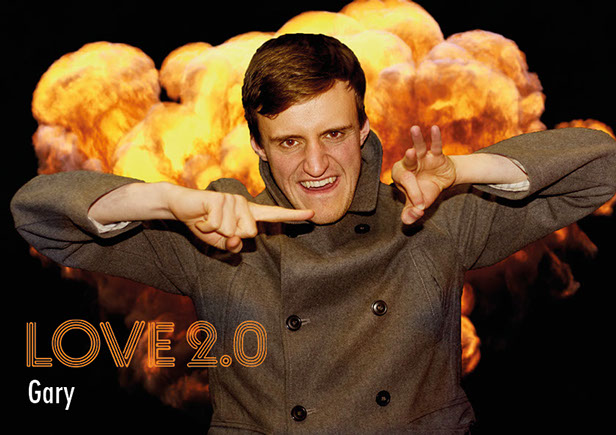
Love 2.0 is a side-splitting comedy with sinister undertones, which comments on how social media and technology has changed the way we interact and communicate with each other. This production by Andy McGregor and his brainchild the Sleeping Warrior Theatre Company delves into the pitfalls of dating in the modern world. Suzie (Lucy Goldie) a giddy character who loves Simply Red and Gary (Samuel Keefe) who quotes Kerouac and loves porn, meet on Facebook, through a mutual friend Big Dave. Their relationship develops through a series of “likes” and “pokes” and they agree to go on a date. But when this ill matched couple meet in the real world, Gary doesn’t quite live up to his simulated online persona.
I enjoyed the way that this play brought to life the virtual components of technology by replacing them with physical props, a Facebook wall became an actually wall with photos being added and removed, text messages wer replaced with post it notes, message alerts represented by a hotel bell and a Skype conversation with tins on a string. Both Samuel Keefe and Lucy Goldie gave lively performances and had natural comedic ability, the laughs were flowing throughout the audience from start to finish. But on a more serious note this production highlights how texts can be misinterpreted, embarrassin photos can go viral in seconds and how easily our virtual worlds can be cyber- stalked and invaded by trolls.A genuinely funny and cheeky play. FOUR STARS
Reviewer : Zoe Gwynne
The Day The Pope Emptied Croy
Oran Mor
A Play A Pie And A Pint
March 16th-21st
13.00
You can’t take Croy out of the bhoy and you can’t take the bhoy out of Croy either, is the chilling message of this week’s Play A Pie And A Pint directed by Emma Callender. Set in Croy (pretty much a Protestant-free zone at the time) during Pope John Paul The Second’s pastoral visit to the UK in 1982 and, in particular, on the day of his giant open-air mass in Bellahouston Park Glasgow, this three-handed play explores themes of religious bigotry, homophobia and general small-town small-minded ignorance. Opening to the strains of Anarchy In The UK, we see Barr (Keiran Gallagher) entering a Catholic church in Croy while sniffing glue from a plastic bag. Everyone has gone to Bellahouston Park to see the Pope and the church is lying empty-perfect for a bit of thieving.
His punk pal Ranald (Nathan Byrne) follows him in. Ranald is a punk anarchist agnostic and therefore branded as “a proddy bastard” by the townsfolk. Regularly spat on and abused, he has one aim and that is to get out of Croy. Barr is going to escape with him to a squat in Newcastle and the trip is going to be financed by stealing the church’s chalice, which is prised from its cabinet using a crowbar. During this scene we are treated to some very entertaining and hilarious banter, but always with a biting edge to it.
Ranald finds a school jotter in Barr’s bag and there is a suggestion of concealed homosexuality contained in some of the drawings inside. Without spoiling the reveal it transpires that they are not alone in the church and Chris(t), played by Sean Purden Brown, is trapped behind the altar. He is a transvestite who has been badly beaten along with his friend Paul while returning home from Bennets Bar in Glasgow by balaclava- wearing thugs wielding a crowbar.
The play puts its message across in a very uncompromising fashion, which took some of the audience aback. They came expecting a comedy and left stunned. The sense of doom at the close is palpable. Those not familiar with the sectarian difficulties of the West of Scotland might be at a bit of a loss to understand what’s going on, but, nonetheless, the issues at stake can be transposed to just about any part of the world. Recommended, if uneasy, viewing.
Reviewer : Dave Ivens
*********************************************************
THE PLAY WILL ALSO BE COMING TO THE TRAVERSE, EDINBURGH
Tuesday 24 – Saturday 28 March, with an additional Friday night performance at 1pm
Beating McEnroe

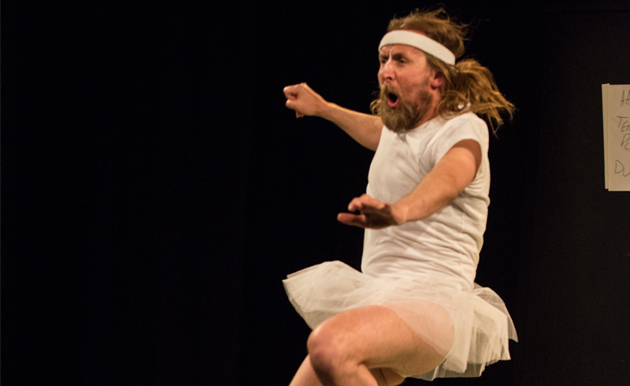
Beating McEnroe a one man tour de force from Jamie Wood made in collaboration with Ellie Griffiths and Wendy Hubbard as as co directors, performed at the Edinburgh festival 2013 and toured the country since. Set back in 1980 – 81 when Björn Borg was at the top of his game, the first super cool rock star type in sport. He was everything Jamie and his brother wanted to be until John McEnroe came along and burst the cool bubble. Wood takes us through his memories of these events he was six at the time his brother fourteen. We bounce through the inner workings of his mind. From dream sequence to dance sequence and onto that fateful match that gripped the world.
 Mumble Theatre