Category Archives: Fringe 2018
Stardust
Pleasance Dome
Aug 11-19, 21-27 (16:20)
Script:  Stagecraft:
  Performance:
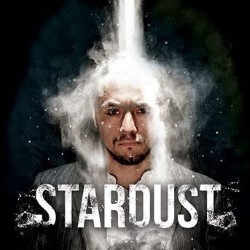
Everyone has an opinion on cocaine from the police officer on the front lines of the war on drugs to the casual recreational user to the repentant former addict but what we don’t often get to hear is the opinion of those it directly effects: the peoples who’s communities and families are shaped by its produce. “Stardust” is a show with that at it’s very heart but before you head for the hills fearful of some worthy lesson in blame shaming this show has far more to offer than mere edutainment. Our genial host is the diminutive Miguel Hernando Torres Umba, A Colombian national who has been living on these shores for over 11 years yet who still clearly feels a passionate attachment to his homeland.
His first admission to the crowd is that he has never actually taken cocaine and he would like to know more about it. This is a chance for the audience to test/share their knowledge whilst the faux naive Miguel wrestles with the dilemma of whether to try the cocaine provided for him by his producer – a running theme throughout the show. It soon becomes apparent that Miguel is quite the expert on the topic after all as he leads us through a fantastical journey into the dark heart of the cocaine industry something he acknowledges it is “impossible to ignore” in Colombia. Beginning with an exploration of the sacred rights of the coca plant by his Shamanic ancestors he takes us on a rip roaring exploration of the Cocaine trade, its ties to the colonial past and its uncertain future taking in the experiences of drug mules, Cocaine barons and weekend warriors along the way.
Miguel is a charming, self-effacing host who uses his excellent skills as a physical performer to bring elements of mime and dance into his story with mesmerising effect. It was impossible to take my eyes off him as he threw himself into the role of the cocaine user riding the high then crashing into the low, his small, wiry body twisting and contorting into the ecstasies of pleasure and the agonising pain of the comedown with a frantic, gurning, hot-stepping performance. At one point whilst demonstrating a traditional shamanic ceremony he literally steps into the animation too. It is a magical moment which combined with the beautiful black and white imagery- all swirling snakes and rustling trees – transports us into a distant past of folklore and myth.
As well as the expressive animation historical film footage is used sparingly which is particularly effective during the section on colonialism. Music and voice over also play their part to create a perfect synthesis of sound and vision throughout the show utilising various traditional musics to great effect. The use of audience participation too brings lashings of humour to the show as Miguel involves members in a mock game show, demonstrates the effects of cocaine on an apple or in one moving section breaks down the barriers between audience and performer entirely.
By the end of the show it is apparent to all of us what a deeply personal subject this is for Miguel. His passionate delivery, deep understanding and emotional honesty about the topic of cocaine use have allowed us to all to understand better the direct effects of this most unscrupulous and unregulated of businesses on the lives of those involved in it. Both unapologetically personal and unafraid to explore the areas in which we are all complicit I doubt anyone in the audience will look at the ‘white devil’ in quite the same way and many will indeed think twice before bugling with Charlie again.
Ian Pepper

Faulty Towers: The Dining Experience
The Principle Hotel, Edinburgh
Aug 11-27 (times vary)
Script: Stagecraft: Performance:
I – like many- grew up with the original Fawlty Towers. In my case it was via my parents VHS cassettes of the show and I have fond memories of the madcap antics of Basil and so I approached this performance with some trepidation. It had been years since I’d watched it. Would the performers do the characters justice? How would they deal with the anachronisms particularly the problematic nature of Manuel and its potential accusations of xenophobia. And perhaps the most important question of all would I find it funny? I needn’t have worried as right from the beginning it was clear that we were in the hands of experts.
All 3 actors were superb capturing not just the vocalisations of the characters from Basil’s clipped delivery to Sybil’s ridiculous laugh but also their very physical essence. Here we have a Basil who is as obsequious and full of brittle contempt as John Cleese’s rendering, a Manuel as sweetly endearing in his buffoonery as Andrew Sachs and a Sybil as shrill and flirtatious as Prunella Scales original. From the immaculately highlighted beehive of Sybil, to Basil’s too tight checked jacket the attention to detail of the costumes is also excellent.
But what saves the show from being merely a slightly creepy if excellent act of re-animation is that it is fully alive to the possibilities of the moment. The show is 70% improvised and although favourite gags and skits from the show are expertly weaved into the performance most of it is ad libbed. So yes whilst we do get the pleasures of seeing Manuel’s ‘ Siberian hamster’ or Basil goose-stepping we also get jokes about Brexit and Trump. These cleverly bring the material up to date and address some of those concerns audience members might have about the accusations of xenophobia Manuel’s character might now present.
The way in which the actors bring the audience into the show makes it a fully immersive experience too as they bounce off comments made by a very game public. At one point I asked ‘Basil’ what kind of soup it was and he immediately shot back ‘red’ with clipped irritation. A personal moment of comic genius of which there were many. Due to the projective skills of the performers what was happening at one end of the large room was for the most part clear and audible to all. The space itself was used very well whether it was Manuel standing on the table to conduct us in a jaunty rendition of ‘Viva Espania’ or the Sybil chasing Basil around the room with a fish. The humour combined the antic physical comedy of the original show whilst not losing sight of its famed wit. Some of the fun the performers had with language was comic gold whether it was a ridiculous gag about some dentures lost in the soup being ‘an aperitif’ to the constant misunderstandings of Manuel they were sublimely silly.
And so to the final and most important of my questions ‘was it funny?’ It was a veritable cavalcade of hilarity from start to finish. One barely dared speak to a neighbour in case one missed a gag as they came so thick and fast. The audience were clearly up for the fun too and added much to the show creating a great sense of camaraderie between audience and performers. What shone through most of all though was the respect and love clearly felt for the original Fawlty Towers material itself by all involved. This was a loving homage to the work of Cleese and Booth which captured and breathed life into its spirit.
Ian Pepper
That Daring Australian Girl
Assembly George Square Studios
Aug 2, 4, 6, 8, 10, 12, 15, 17, 19, 21, 23, 25, 27 (11:45)
Script: Stagecraft: Performance:
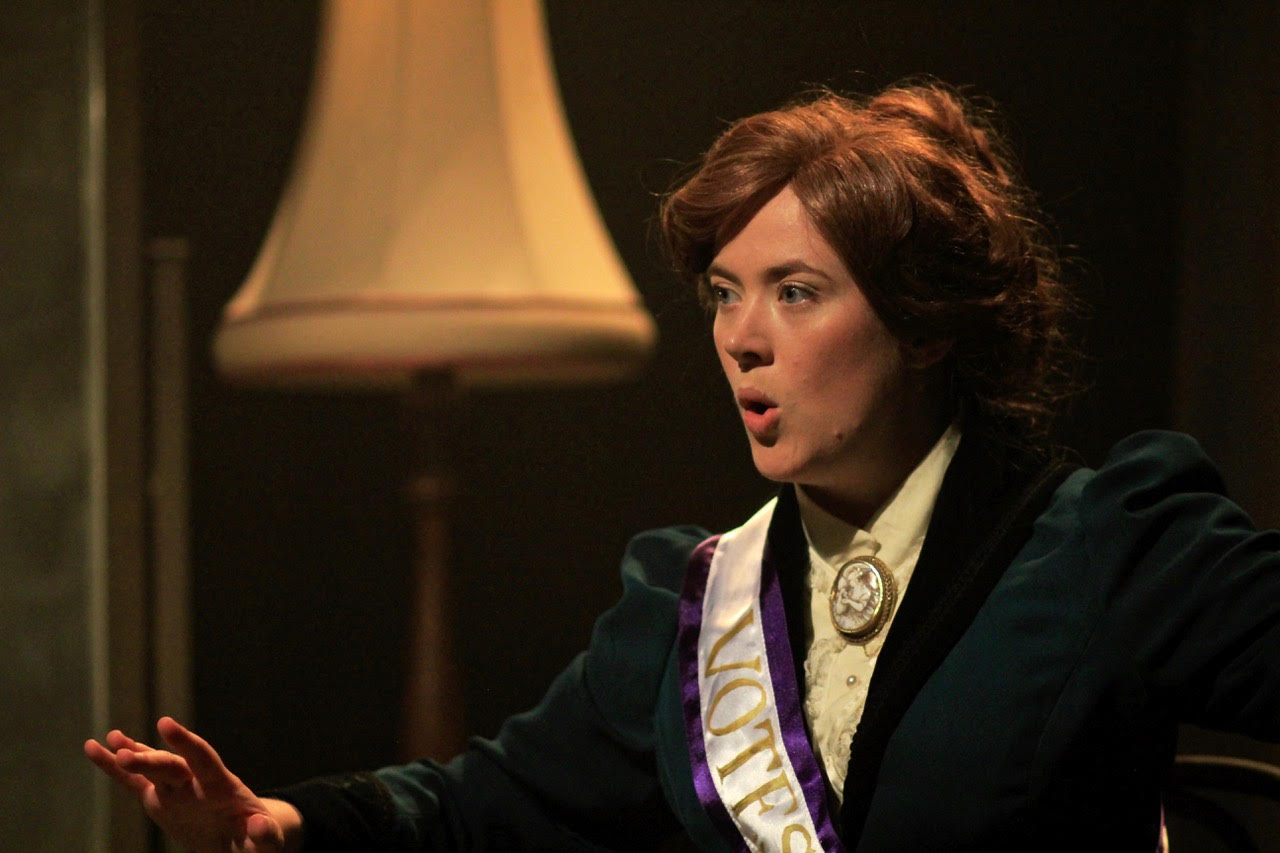
Joanne Hartstone has brought two solo plays to this year’s Fringe, & I have had the gladdening delight of seeing them both. On this second occasion, just as with ‘The Girl Who Jumpd Off The Hollywood Sign,’ Hartstone has penetrated the obscurer mists of history with a thespian eyeglass & found us a figure from her native land. Breathing life into visionary clay, her subject is Muriel Matters, a romantic young actress from ‘claustrophobic’ Adelaide who was swept along by, & then became a major figurehead for, the Suffragette movement of the United Kingdom.

This perfectly sequenced timeflying frolic sees Hartstone at her very best – effortlessly demonstrating her bewitching ability to implant a story & then deliver it to a proper conclusion through all its subtle strands, while entertaining the audience at the same time. A paragon of performance in this particular piece, as I was watching I thought to myself this is exactly the way I would like to learn about Muriel; not via the sterile pages of a book; or the observational fly-on-the-wall of a movie; not even the lectures, voiceovers, photos & grainy films offered by a well-made documentary – but real flesh & blood & original words keenly researched out of Muriel’s own life & mind.
The parallels between Muriel’s life and my own were immediately apparent when I began researching her life and achievements. I was born mere kilometres away from Muriel’s place of birth – separated only by the North Adelaide parklands and 107 years. She began her career as an actress and elocutionist – I began my career as an actress and a singer. Muriel was a teacher – I am a teacher. Muriel left her home in Australia for the bigger theatrical industry in London – I travel to the UK at least once a year to participate in theatrical festivals.
Read the full interview
The true beauty of Hartstone’s art is her ability to turn monologues into conversations; it feels like we are with her in a chamber room, or having high tea in a salon, sharing a passionate chit-chat about both our goings-on, but of course we can never get a word in edgeways – yet the warmth of her performance really does engage us all on an individual basis. As a play it is well-paced, informative, & above all extremely watchable. As historical document That Daring Australian Girl is a perfect & poignant reminder that many of the things we globalities take for granted – desegregation in America, universal suffrage in Britain – were fought for with extreme tenacity in the face of enduring persecutions, & seeing Hartstone recreate the horrors that brave young women endured in the grimy old corridors of Holloway prison is the stainless exemplar.
Damo
Valerie
Summerhall
Aug 1-27 (21:15)
Script:  Stagecraft: Performance:
Tom Broome
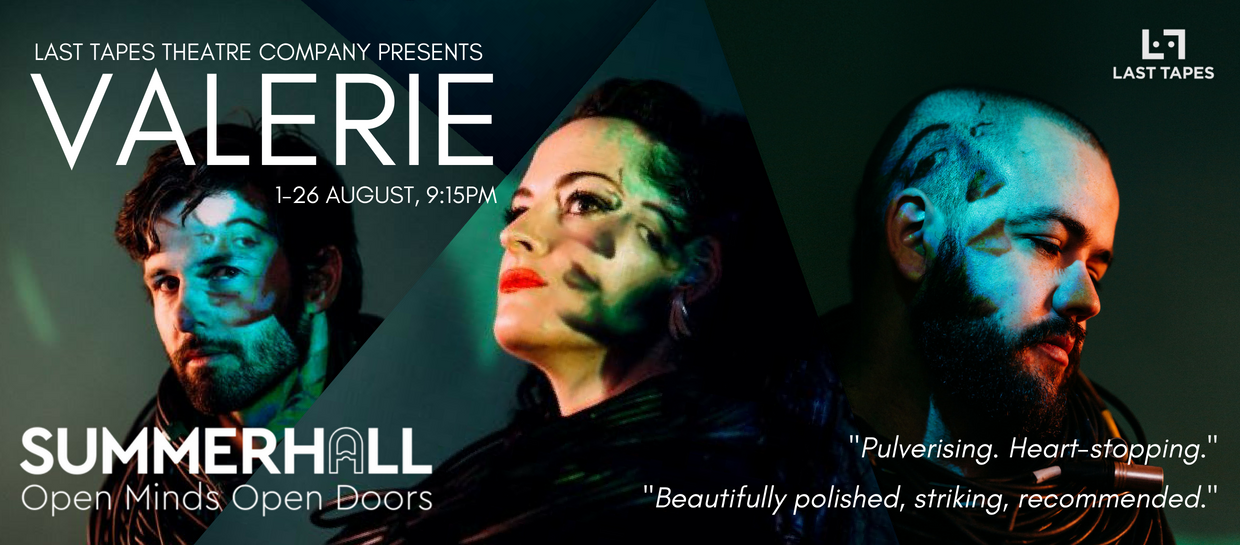
The Summerhall was formerly a veterinarian college, & I’ve always found it pretty cool how their old lecture rooms are converted into performance spaces during the Fringe. Thus, when I found myself immersed in the curious comblending of kick-ass music & genetic science that is Valerie by New Zealand company, The Last Tapes, it was a perfectly serendipitous occasion. We are presented with a trio of enigmatic performers, whose ethereal stage presence beam’d into the room as if they were General Zod, Ursa & Non from Superman II. The soundscape is provided by Robin Kelly on cunningly-played keyboards, Tom Broome on splatterdash drums – a song called White Knuckle Trees was especially lucid – & the incomparable vocal talents of Cherie Moore up front. ‘Lovely as the wail of a Dingo‘ are her opening lines, & there is indeed something primal in her voice.
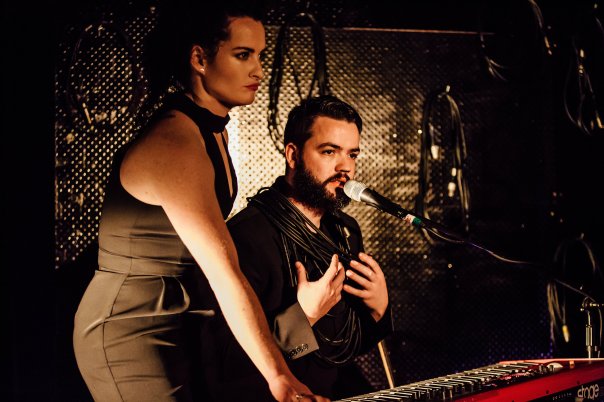
Cherie Moore & Robin Kelly
Between songs, we have musically silent narrations from Kelly & Patti Smith style recitations from Moore over avant garde jamming from the boys. The chief ribbon of the piece is Kelly’s exploration of the mental health of his family tree, revealed to us at one point on the naked back of Moore, whose own place in the scheme as Kelly’s partner was pointed out by her with some delight.
We’ve been in a relationship for nearly 10 years, so I’d say our working relationship is beautiful, and complex, and has a depth of understanding and empathy that can only come with that much shared experience
Read the full interview
The ultimate pondering convoked by Valerie is the question of nature-nurture; its connection to our mental health & familial inheritance – does nature really load the gun & nature pull the trigger? As an audience member I often found myself lost in moments of most thoughtful awakenings – this show attracts & fulfills the mind, & also makes one’s feet beat to the tune.
Reviewer: Damo
Photography: Andi Crown

Grace
Gilded Balloon Teviot – Sportsmans
Aug 10-12, 14-27 (13:45)
Script: Stagecraft: Performance:
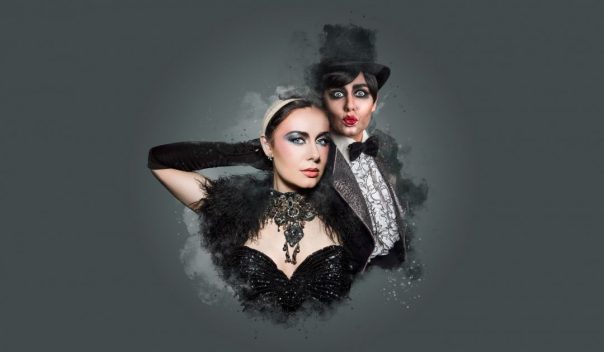
Two clothes stands occupy either side of the stage as the spotlights rise on an empty stage; to the left hangs a black sequinned and feathered coat; to the right, a coral-pink gown and pearled head-dress. These are faded but once-beautiful clothes for beautiful people, reminiscent of vaudeville from years ago. Into the spotlight bustles Sheryl (with an S), theatre manager and the first of a brood of splintered tragi-comic characters brought to life to tell the story of Alfie, the male half of comedy duo Grace and Alfie. Only, Alfie is transitioning into the beautiful, female performer Zora de Rosie. Along with every birth, it seems, there has to be a little death. So say goodbye to Grace, and goodbye to Grace and Alfie.
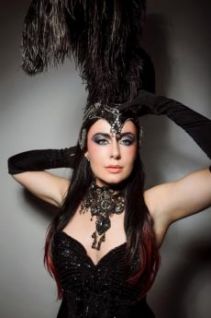
Katie Reddin-Clancy has penned a poignant, intricate show that explores gender, performance and personal identity. The writing is beautiful: at times haunting and poetic, at times as wittily sharp as a tailor’s tack. The story unfolds through the characters’ narratives, skipping backwards and forwards in time and, seen from different viewpoints, builds to the emergence of Zora de Rosie (echoic of Homer’s Rosey Fingered Dawn?). Building up to Zora’s debut we are introduced to characters Alfie and Grace have met along the way; Anna Clamber, power-hungry theatrical agent; Audrey, a debut stand-up in a regional backwater town theatre. There’s some deliciously observed character comedy here, and aperçu one-liners aplenty. Look out for grande debutante with a space on her dance-card for a spot of something risqué !
Grace is a high-reaching, mesmerising and witty piece of comedy theatre. Reddin-Clancy’s performance is powerful, intelligent and funny. Go see this show for laughs and food for thought.
Mark MacKenzie
The Girl Who Jumped Off the Hollywood Sign
Assembly George Square Studios
Aug 3, 5, 7, 9, 11, 13, 16, 18, 20, 22, 24, 26 (11:45)
Script: Stagecraft: Performance:
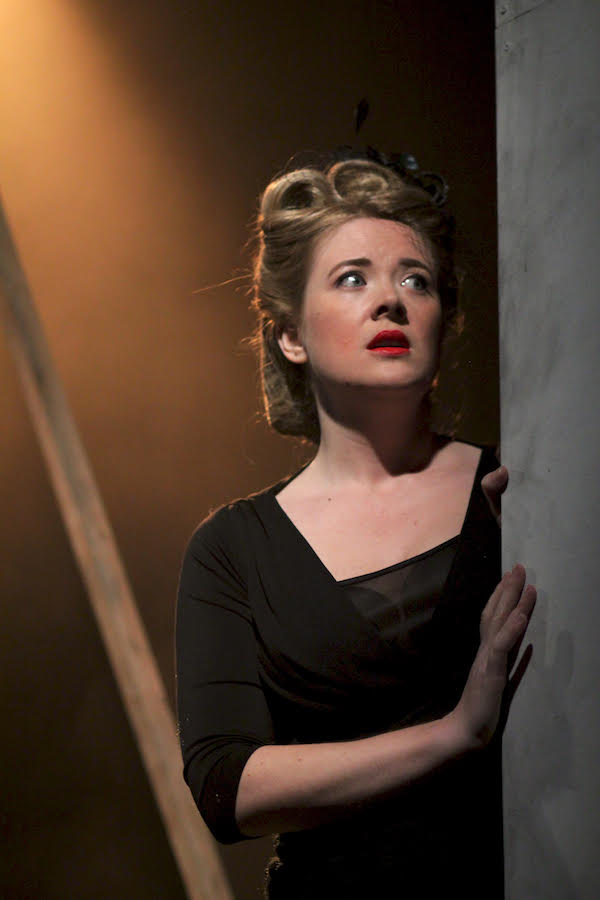
Joanne Hartstone is a theatrical renegade, a portrait painter of niche figures, out of which creations she pulls out a composite blend of her own humanity & that of the planet at large – & all for our entertainment. Australian by birth & upbringing, in this instance Joanne has donn’d the masque of a meteor-eyed American actress, trying to break Hollywood in the mid-twentieth century.
It is a revealing commentary on America’s Dream Factory, from a point of view rarely observed
Read the full interview
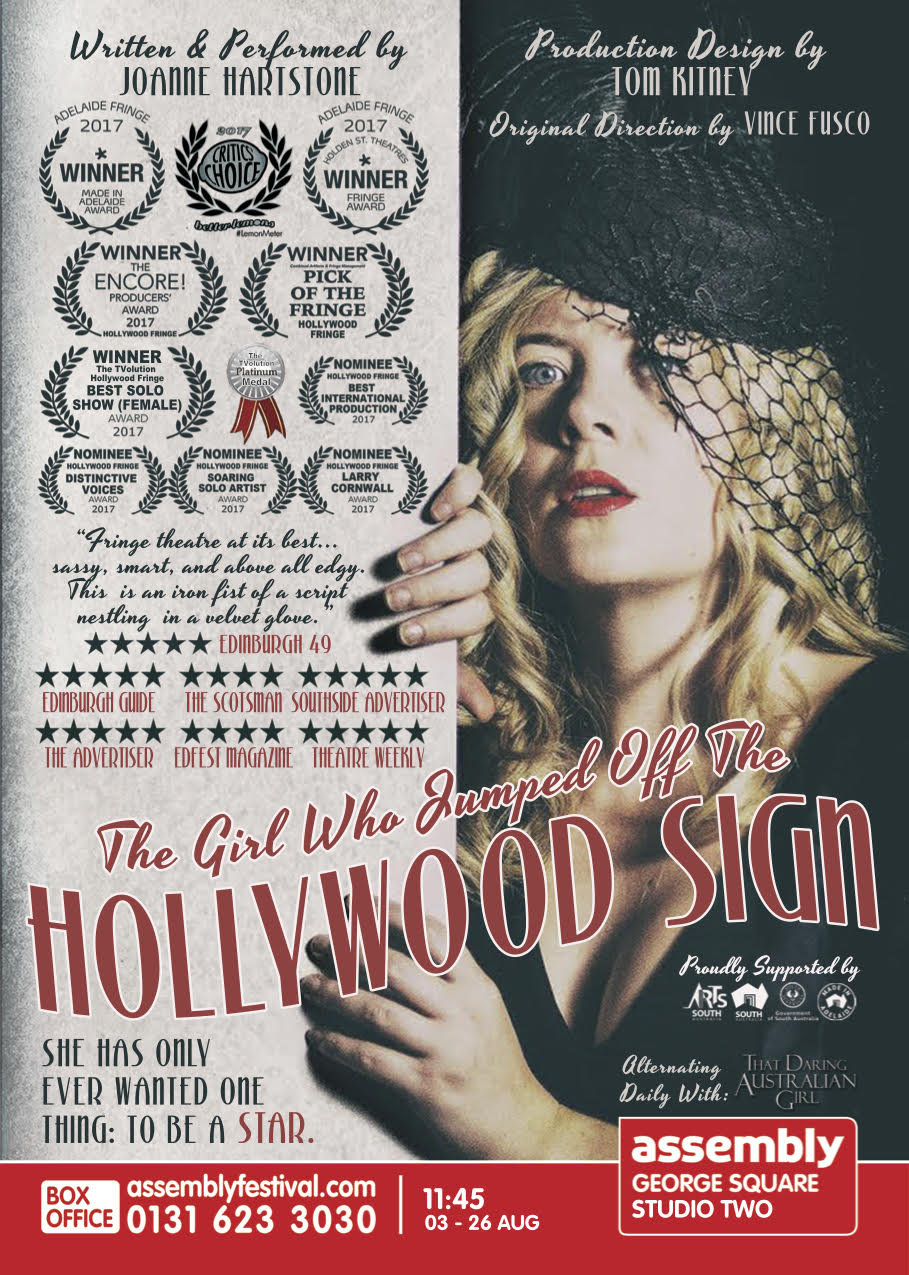
Her name is Evie Edwards, & the setting is at the top of the ‘H’ of the Hollywood Sign where she has climbed to look back on just how she ended up at this point in her life. We’ve all been there, or somewhere like there at some point. The real life inspiration is that of a certain actress called Peg Entwistle, who leapt from the H in 1932. The Girl Who Jumped Off the Hollywood Sign is then a platform for Hartstone’s impeccable sense of historicity & the mammoth study that goes into the recreation of the past. But then, of course, she must turn that into entertainment, just as Shakespeare looked up from his well-thumb’d copy of Plutarch’s ‘Lives’ & got busy with his Roman plays.
Let us then follow Hartstone’s hologramatic Evie through her life, from the poverty of a Hooverville to the unwanted advances of Hollywood execs. With a subtly splendid set & lighting created by Tom Kitney, & punctuated by authentic songstress blossoms from the era, Hartstone’s performance seems as if she were the shepherdess of our mental images, herding us all into her intellectual craftsmanship without protest. All in all a terrific & entertaining time capsule which flies on feather’d nostalgia.
Damo
Old Souls
Riddle’s Court
3rd – 27th August (Not 8th, 13th or 20th) (17.00)
Script: Stagecraft: Performance:
Last year I found myself watching a young actress in a solo comedy show called One Woman Army in one of the more obscurer Free Fringe venues. Her name is Vicki Sargent, & this year she’s back with something quite different. She’s moved on from finding humour in personal retrospective, & decided to entertain us with theatre. Hearing her writing & watching her act through Old Souls has just proven to me this lady is still a blossoming talent, & a year of creative maturity has presented us with something quite magnificent. I’m not sure when, but at some time in the future Vicki will be creating a timeless classic.

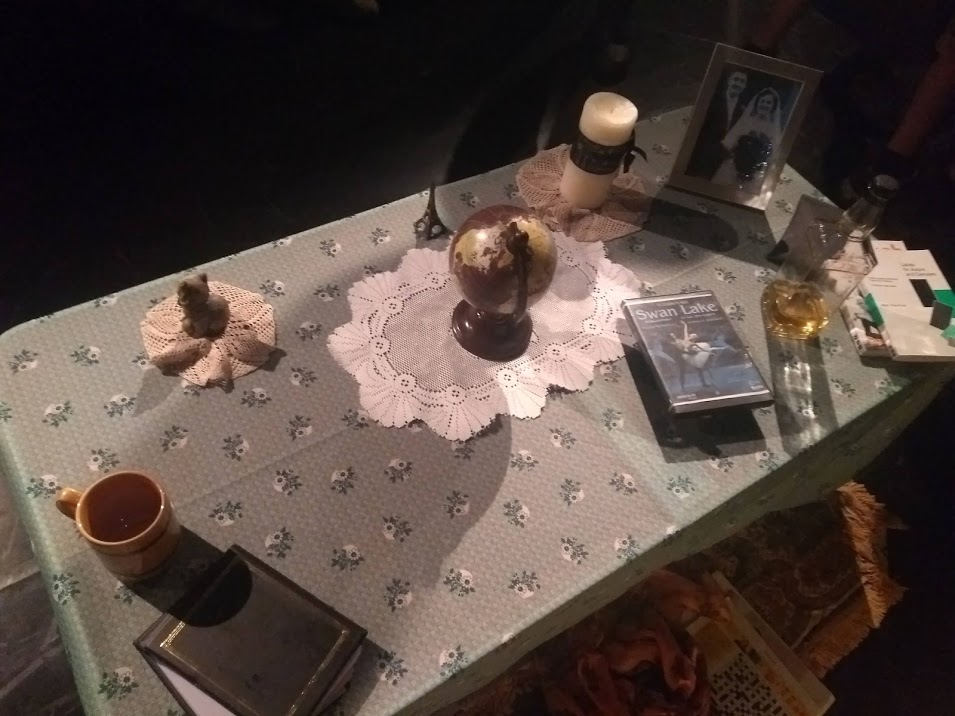
But this is 2018, & what she has for us this time round is a delightful fly-on-the-wall window into a young persons visitor scheme to counteract old-age loneliness. Meet 21-year old Rosie (Vicki) & cantankerous, sarcastic, Irish Coffee loving 78-year old, Vera, cannily played by Janet Garner. The irony is this – while Rosie is a bit, well, dull, Vera has lived life to the fullest, becoming a dancer in Paris at the start of the sixties when she had been 21. Alas, the passage of a half-century had stripped her of friends & family, arthiritis is wracking her body, & all that remains to comfort her are the ‘the memories of when she was brave.’
Old Souls is divided into several scenes, marked by blouse changes & subtle differences in the two actresses’ interchanges. There is also a subplot – Rosie’s application to a baking school – but the real beauty of this play is just watching the two ladies bicker over Countdown & crosswords.
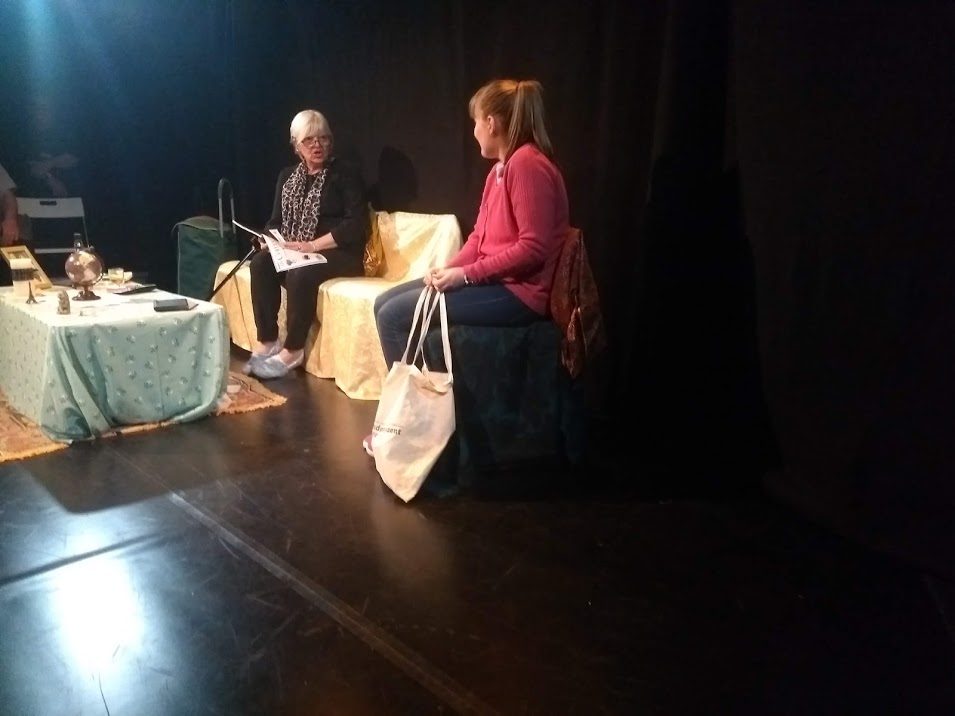
It’s a clash of personalities but ultimately they both have something to learn from each other.
Read the full interview…
Edinburgh is the UK’s loneliest city for the elderly, & while millions of people are coming together during the Fringe to mingle & make fun, thousands of others are simply sat at home, watching TV, not having spoken to anybody else for days. Compliments, then, to Vicki, who shows just how much our elders have to offer – they may not be as spritely on their feet, but they have wisdom & they have many a tale to tell. This soft ‘duel’ between Entitled Millennials & Post-War Austeritites is perfect for all – witness an Indian family in the audience whose teenage boys were laughing just as much as their parents. Old Souls is excellent, yes, & funny to boot, & coupling it up with a visit to the renovated Riddles Court in which the cosy theatre is situated is like the perfect Edinburgh cocktail.
Damo
bad things happen here
Paradise in the Vault
Aug 4-18 (18:45)
Script: Stagecraft: Performance:
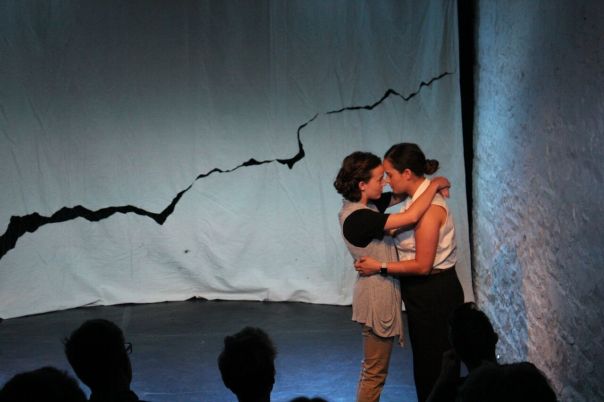
Bold, unexpected and gripping, Healthy Oyster Collective’s ‘bad things happen here’ is a brilliantly-acted feast for the imagination. Set in an alternative universe where strict curfews, round-the-clock CCTV and constant police (known as ‘dogs’) supress speech and thought, ‘bad things happen here’ follows the lives of multiple nameless individuals as they conform or rebel against the system. There’s no denying that the prevalence of The Handmaid’s Tale, Black Mirror and Stranger Things have made dystopian theatre and film fashionable. Indeed it seems that we the public relish wincing at the nightmarish woes of characters trapped within a cruel alternative universe, forever suffering and never escaping. What makes bad things happen here so brilliant, however, is the way it manages to get all of the dystopian stuff in without losing us as an audience – it cuts so close to the bone that we can’t suspend our disbelief too much, and the show is all the more powerful as a result.
bad things happen here opens with us being thrown into a rapid, quick-fire exchange between two individuals (Marieta Carrero and Molly Winstead) as they worry that the police are closing in on them as they are trapped in their home. Playwright Eric Marlin cleverly demonstrates the level of repression within the system as the language that the characters use throughout the show becomes infrequent and stifled: a clever choice which demonstrates just how severe the government’s grip has become. The delivery of said language is faultless, with Carrero and Winstead exchanging dialogue almost melodically in a way that only serves to make what they say more powerful. From reporting a rape to a clinical yet frightened doctor, to a married woman demanding sex from a sex worker, communication is efficient and, when necessary, emotionless. Both Carrero and Winstead navigate these shifts effortlessly, delivering magnetic performances throughout: Carrero’s funny but horrifying detachment in the role of a factory supervisor and Winstead conveying vulnerability and fear with brilliant subtlety were particular highlights of the show.
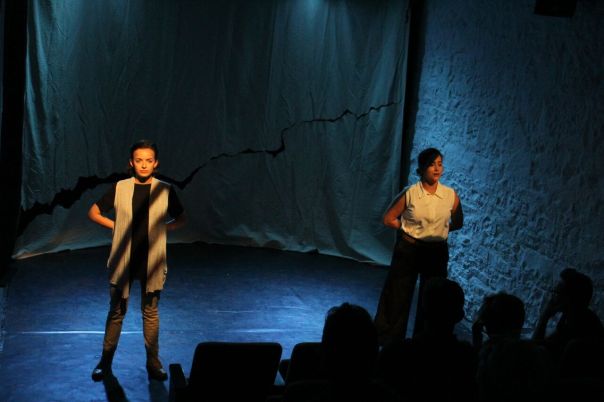
Dressed in grey and white costume, with the lighting alternating between bright and clear or fractured and hazy, tech, costume and lighting design is simple and effective. One scene is lit entirely by torches pointed at us: an excellent turning of the tables as we become the subject of the piece. A simple jagged rip through a white bedsheet acts as startling backdrop that the actors never disappear behind: rather, we become their oppressors as we keep a trained and watchful eye over them for the entire show. Though the script perhaps sometimes suffers from occasional moments of cliché – for example, the metaphor of ‘cogs in the machine’ is perhaps taken too literally at times – the show manages to elegantly capture the human descent into compliance within an oppressive system.
The staging of the piece is expertly executed by director Lila Rachel Becker, who never has Carrero and Winstead linger on moments of tragedy or humour, but rather keeps the piece thumping with energy throughout. Marlin’s pacey and intelligent script demands this energy, as we are constantly hearing uncomfortable things – the peak of this being Trump quotes about women embedded into the script, which place the piece back into the realm of necessary and important. Here, Marlin is proving that bad things do indeed happen here long after the actor’s final bow, and it is this sentiment that elevates this production from dystopian fantasy to an urgent and brilliant reminder that theatre can and should be political.
Lucy Davidson
The Odyssey
Greenside @ Nicholson Square
Aug 6-10 (09:00)
Script: Stagecraft: Performance:
An epigram inscribed into the tomb of the 6th century BC Athenian tyrant Pisistratus, records; ‘Pisistratus, great in councils, I who gathered together / Homer, who had formerly been sung here & there.’ Nobody knows just exactly how the Rhapsodes, & the Children of Homer delivered those tales sung here & there which distilled into the Iliad & Odyssey; but in the depths of pre-Classical history, & on account of the great reams of dialogue contained in at least the Iliad, there shimmers the fleshy, dramaturgical kernel upon which the hard shell of Homeric narrative has formed. Thus, I found myself experiencing some kind out-of-body timewarp when I witnessed this theatrical retelling of the Odyssey, gone back to a time when the poem or play or whatever it was, was acted out in the halls of Mycenean nobles.
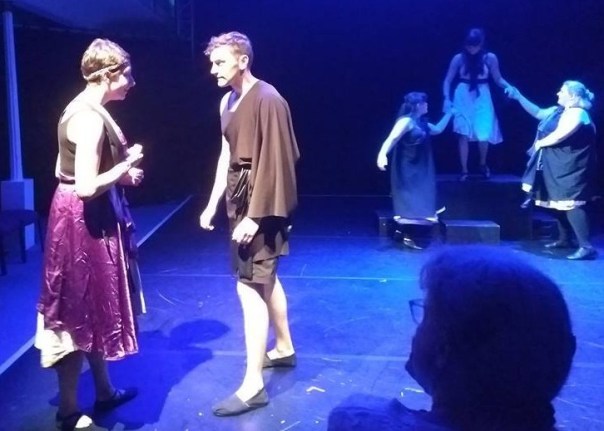
This Odyssey has been brought to the Fringe by Ragnarok Productions, & only lasts 40 minutes. That is an extremely rapid retelling, & yes, the action is fast-paced, but never too fast, quite exhilarating to watch really. The cast is young & vastly female – there are six young women to a single man – which rather does fit in with the general vibe of the Odyssey. Among the many strong female characters in the poem, the true star & heroine has to be the goddess Athena, who dominates the action from beginning to end. It takes a special actress to play goddess, but Ragnarok’s very talented Jennifer Drummond was insatiably excellent in the role. The rest of the cast were of a fine quality also, each had their star moments, & all members of the company delivered the fluid couplets of iambic-pentameter that had been restitched by Nathaniel Scott, the impresario of Ragnorok. In a recent interview with the Mumble – he described the creative techniques behind the redacting the Odyssey to just forty minutes.
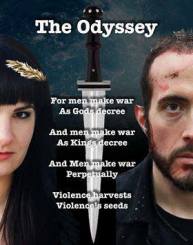
I worked with the iambic pentameter translation done by Chapman. The goal of that choice was to work in metered storytelling in deference to the story song traditions of oral histories, but keeping it in the meter with which many actors were already familiar. The process involved reading the swaths of the Odyssey, reading commentaries and articles and a variety of translations until I could condense twenty pages of content into a page or less of text.
Read the interview here…
For me it worked & it didn’t. The Odyssey is divided into two spirits – the adventures & shipwrecks en route to Ithaca & then the nostoi on the island itself. The Ithaca sections were done brilliantly – announced with a foot stamp & a boldly bellowed ‘ITHACA’ – but the adventures were far too hurried to follow properly, especially if one is unfamiliar with the stories. But that is the only criticism & one must really say at least bravo for the effort. Reach for the stars & see where you end up. As a spectacle, the musical couplets were never dull or awkward & the shapeshifting physicality of the cast was exhaustingly entertaining, like neutrons buzzing around an atom. I also really enjoyed the shadowplay of one scene, showing that Ragnarok can handle any dimension of the theatrical experience. As an artistic whole, this Odyssey seemed very much like a dream, as if Coleridge had just read the Odyssey, dropped some laudanum, then reimagined it all again in the ethereal substrata of his consciousness. Altogether, a really enjoyable piece.
Damo
Feed

Pleasance Dome
August 6-14, 16-27 (14.00)
Script: Stagecraft: Performance:
Feed is a four-person theatre production by Theatre Temoin and The Lowry Everyman Cheltenham, co-written by Eve Leigh and Erin Judge, and directed by Ailin Conant. It’s a compelling and timely play addressing some of our more disturbing contemporary trends, specifically taking a hard look at the damage social media is wreaking on our individual and collective psyches. The performance begins with a compelling speech about the internet and social media, rather resembling a Ted Talk, by the SEO expert (played by Johnathan Peck). The audience is instantly pulled in by his rapid change of accents with eerie sound distortions placing us on edge as he proclaims ‘attention’ to be the most important commodity at this stage of our global capitalist economy.
As we cut to the anniversary of two lovers (Louise Lee Devlin and Yasmine Yagchi), we can easily relate to journalist Kate (Devlin) being continually distracted from the present moment by the incessant buzzing of her phone. The vibrations herald notifications announcing her article about a boy killed in Palestine that is beginning to sweep the internet. Awkwardly, Kate has stolen a photograph from her girlfriend to use in this article knowing it is of another boy. When the truth emerges, their romantic anniversary descends into a bitter fallout that kickstarts the chaos of the rest of the show. When a young woman (Nina Cassells), a YouTube makeup artist sensation, expresses emotion in one of her videos over the boy’s death, she is drafted into the power moves behind the scenes of the internet. The play takes a truly sinister turn in a scene where she cuts her arm, drawing blood in order to encourage us to ‘feel something real’ for a child killed in conflict across the other side of the world. As she jumps onto and begins to steer the bandwagon of #feelfornabil, it’s a jab at our society’s fleeting, insubstantial hashtag outrage that often results in more damage than good.
Because the majority of the play is set in cyberspace, it allows for a great amount of freedom and creativity in the representation of online life. The set and the use of sound effects were innovative and effective, creating an immersive and disturbing experience. The scene where a critical text conversation is acted out, complete with inane sounding emoticons, is a stark reminder of how ungrounded and bizarre much of our daily communication now is. The references to the current political divisions, messianic movements and lack of constructive dialogue on the internet are all on point. The play is a stark warning to us all to wake up fully to the ways in which late-stage capitalism, and most specifically the amoral ‘attention economy’, is hijacking our minds, wrecking our values, efficacy and relationships in the process. The show begs us to reflect on our own complicity in allowing the suffering of the marginalised to become our narcissistic reward as our capacity for human empathy becomes increasingly narrowed.
There’s strong and compelling acting from all four actors from Theatre Temoin, trained in Lecoq pedagogy, with an emphasis on physical theatre and the use of masks. Theatre Temoin is a socially engaged theatre company, where the devising is non-hierarchical and emerges from discussions with communities. If the show seems at times a little OTT, remember that the viscerality of the production is part of a theatre tradition specifically designed to create strong, physical reactions in the audience. Mr SEO expert transforms into the quintessential imagined troll, stoking ferment in the background, the personification of a modern day Satan in a green feather headdress. As he envisages a future of grotesque mash ups of clickbait subjects, he stokes a ‘Lord of the Flies’ style mass descent into demonic infantilism. Indeed, following one of the mantras of the show, behaviour “without any adherence to morals, ethics or other forms of content moderation of monitoring”.
One scene is reminiscent of Childish Gambino’s This is America video sequence, showing what an effective tool the continual distraction of the attention economy is as a distraction from full understanding and engagement with some of the worst injustices of our modern world. With one individual character managing to hold on to sanity and a sense of morality, the show asks questions about how we might start to resist and move away from our current situation. By the end of the show, I was seriously considering deleting all my social media accounts. So when we were asked us all to head to Twitter to encourage others to come to the show it raised a few bitter laughs. Feed is a thought-provoking and clever piece of theatre, so try and catch it if you can!
Lisa Williams
 Mumble Theatre