Category Archives: Fringe 2018
How to Swim In Hollywood
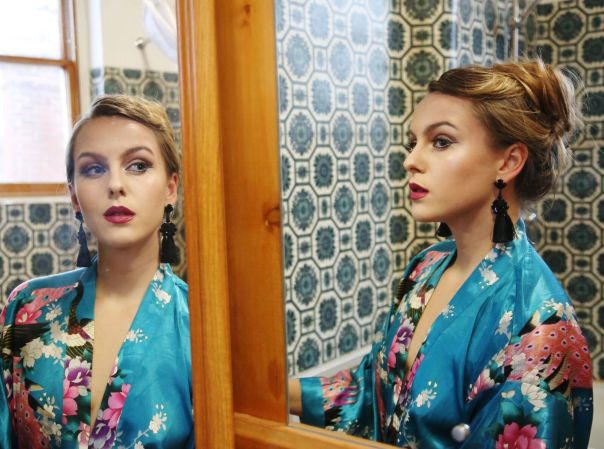
Greenside, Infirmary Street
Aug 5-11,13-18 (22:00)
Script:  Stagecraft: Performance:
Alice Syvlester is a young woman unafraid to announce her most intimate sensations, to advance well-preen’d angels of sensuality into a theatre as she delivers her brave & brainy monologues. She has also been stricken by the Muse-Goddess, & unlike most dramas of today which seem spoiled by moments of poetry, Alice is quite the opposite, for her sporadic Pegasus flights transcend her general narrative with ease, ebullience, & beauty.
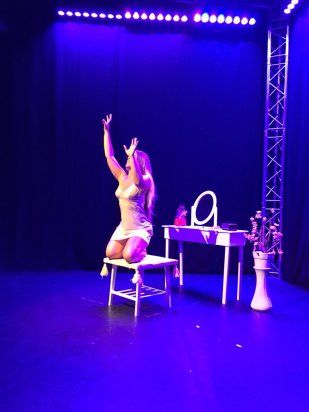
Last year she brought us a Sylvia Plath themed piece, & this time round we have a lyrical libation to the burgeoning femininity of a young woman caught up in the post-hippy hangover of Seventies LA. Around & over & into this setting Sylvester spins a yarn of consummate quality. You just feel cool when you’re watching her; I had a glance around the audience & all were enraptur’d at her physical movements, her facial dancing, her assured tone & the supple world in which her character, Daisy, dwelt in. For Daisy, the butterflies formed in her tummy via juvenile romance, flutter’d away & never came back.
I wanted to write a piece that shows how cultural norms regarding beauty standards and gender ideals strongly influence sexual exploitation, and the way we understand it.
Read the full interview here…
I loved her set; a simple but effective combination of dressing table & ingenious lighting from the Greenside crew – & Alice in her frilly nightie flouncing about unfurtively. She also knows how to command a physical silence; the dialogue pauses & she just stands there or sits there drawing us all in like a black hole until she bursts the spell with a flick of the head, a raise of the eyebrow, a curl of the lip… & the verbal continuation of her work. There is something opiate in the watching of the acting of Alice Sylvester – you dare not blink, you can barely breathe.
Damo

An Interview with Nathaniel Glein Scott
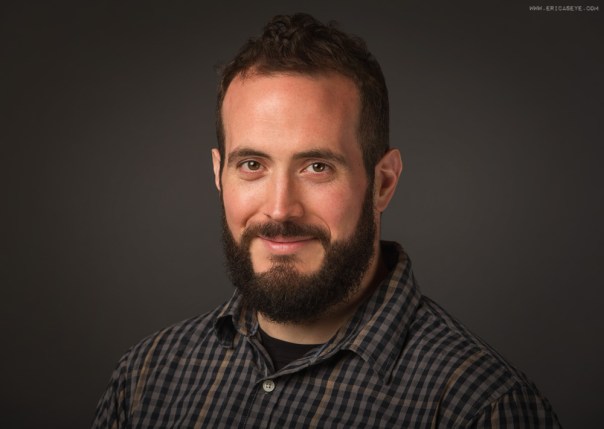
It is the mission of Massachusetts’ own Ragnarok Productions to highlight themes of rebirth with stories that exist on the line between the crumbling of one world and the flowering of the next…
Hello Nathaniel, so where are you from & where are you at, geographically speaking?
Nathaniel: I was born in Seattle in the US. I was raised in Portugal, Romania, and have lived in a variety of locations around the United States.
When did you first develop a passion for theatre?
Nathaniel: I have always had a passion for storytelling. I wrote/directed/produced my first stage play (called “Benedictus”) as a 14 year old in Romania.
What for you makes a good piece of theatre?
Nathaniel: The biggest opportunity theatre provides is the audience being present. It makes certain kinds of storytelling possible that do not work anywhere nearly as well in film or as printed words. My ideal theatrical performance is one that seeks to consider the presence of the humans on the stage and humans in the audience and connecting the two of those in effective ways. Besides that, I adore theatre that is bold and has a reason of being other than just being. I would rather go to any play that tried three dozen things with varying degrees of success than one that took no risks or brought no originality.

Can you tell us about Ragnarok Productions?
Nathaniel: Our company’s name was taken from the Ragnarok myth, the story of the climactic final battle in Norse legends. The ultimate conclusion of this narrative is that the seeds of the world to come are planted in the world that came before. It is the mission of Ragnarok Productions to highlight themes of rebirth with stories that exist on the line between the crumbling of one world and the flowering of the next. It is our goal to bolster the courage to keep looking ahead and foster hope in renewal.
You are bringing two shows to Edinburgh this August, can you tell us about them?
Nathaniel: The artistic collaboration which brought us to this stage (pun intended), was made up at the outset of three different companies working under the umbrella of Ragnarok. The two shows are incredibly different tonally, but definitely operate on a shared journey theme.
What is your role?
Nathaniel: On the broader scale, I am the founder and managing director of Ragnarok Productions. With this particular set of shows, I was a producer for both, and was the writer on “The Odyssey of Homer”
Could you tell us more about your adaption – which text did you use & how did you use it?
Nathaniel: I worked with the iambic pentameter translation done by Chapman. The goal of that choice was to work in metered storytelling in deference to the story song traditions of oral histories, but keeping it in the meter with which many actors were already familiar. The process involved reading the swaths of the Odyssey, reading commentaries and articles and a variety of translations until I could condense twenty pages of content into a page or less of text. The edit of the play that will be taking the stage in Edinburgh is a slightly pared down version.
The cast is predominantly female, what is the back story?
Nathaniel: It became a story of learned patterns of the glorification of violence in paternalistic cultures and is told by a predominantly female cast. As such, the notion of having Telemachus played by a male where the rest of the world around him was portrayed by female actors.
How did you nurture the adaption into life?
Nathaniel: Knowing that the script was densely written, it was always the intent in direction to keep the piece moving and vital to which end, its visual roots are drawn from physical theatre traditions.
You’ve got 20 seconds to sell the Odyssey to somebody in the street….?
Nathaniel: The play is a new work AND a classic. It’s ancient AND has a critical and timely thematic exploration. It’s relentless in its pacing and will draw you in and get you closer to home with images to remember, poetry and songs to echo in your head, and a group of talented actors and production team to applaud.
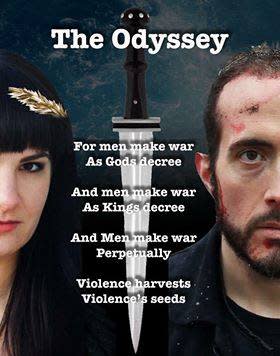
The Odyssey
Greenside @ Nicholson Square
Aug 6-10 (09.00)
www.ragnarokproductions.com
An Interview with Mick Cohen-Carroll
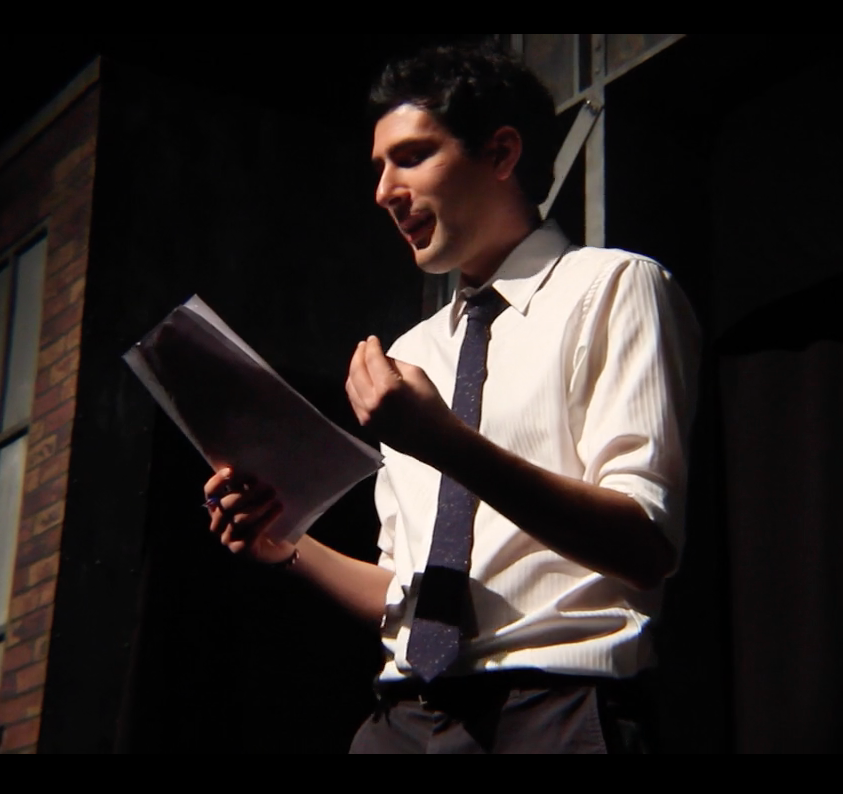
Mr Cohen-Carroll is the quintessential cerebral entertainer & the Fringe & the Mumble are very happy to have him here in Edinburgh…
Hello Mick, so where ya from & where ya at, geographically speaking?
Mick: Hi Emily! GeographicalIy speaking, I live in Chicago, though I grew up in Paris. Where I’m at mentally though, I’m not sure.
When did you first develop a passion for theatre?
Mick: When I first started doing improv classes in Paris, which led to some physical theater work.
Can you tell us about your physical theater experience in France?
Mick: Yes, I developed an interest in slapstick, mime, mask and being a clown. Expressing with just your body can more powerful or emotional and you don’t have to rely on words.
What for you makes a good piece of theatre?
Mick: Something that makes you think, dream, or inspires you.
I’ve heard you pontificate upon the absurd nature of humor; can you summarize your thoughts for us?
Mick: Here’s an equasion:
(SURPRISE + DISCOMFORT) x TRAGEDY + TIME = HUMOR
PERSPECTIVE – SCHADENFREUDE x HIGH STAKES = HUMOR
HUMOR + HUMOR = 2HUMOR
2HUMOR = ((SURPRISE + DISCOMFORT) x TRAGEDY + TIME) + (PERSPECTIVE – SCHADENFREUDE x HIGH STAKES )= TOO ABSURD
HUMOR = ABSURD
You seem to be something of a comedic philosopher, so can you tell us we laugh at all and what is the brain’s role in it?
Mick: At the end of the day, it’s interesting to think about the why. Our collective experiences can definitely influence whether we find things funny. Things in our past, the types of friends we have. But I believe there also exists a visceral response to some things beyond nature, conditioning or culture. Some things, like physical humor are universally appreciated, and my desire with Me Talking Mostly is to explore that sense of universality. I believe I try to that with all my work.
Can you tell us about Pinky Swear?
Mick: Yes! Pinky Swear is my guitar and comedy duo with my friend Joshua. A “Very Best of Pinky Swear” album will be out shortly.
What does Mick Cohen-Carroll like to do when he’s not being, well, dramatic?
Mick: Well, good question. Love running, playing guitar, it’s important to take care of yourself and to “treat yo self”.
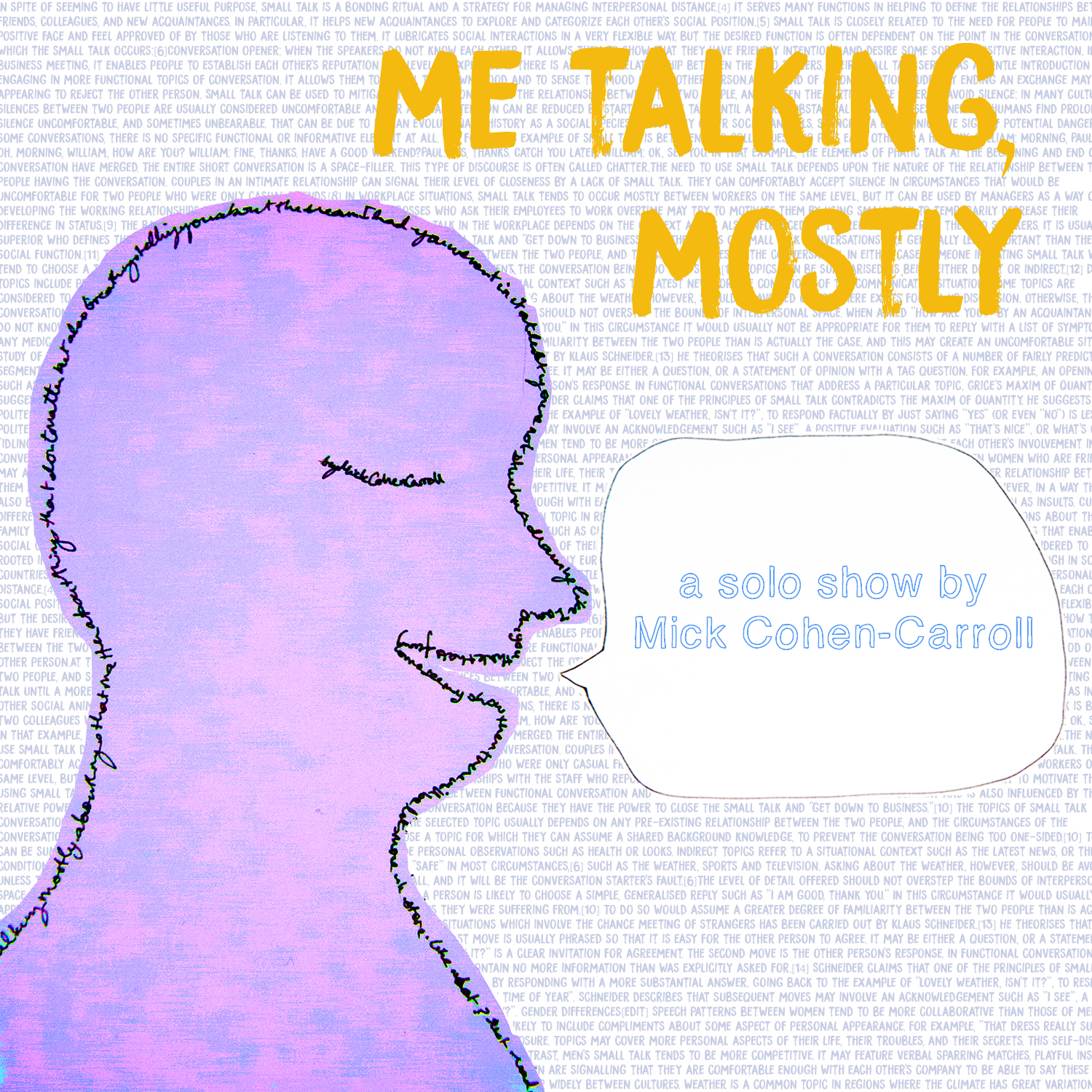
You are bringing your solo show, ME TALKING MOSTLY, to this year’s Fringe; can you tell us about it?
Mick: I did this show in Chicago and New York already and it’s gone really well! I mess around with the audience quite a bit and create an interactive experience through storytelling, improv, music, poetry all surrounding the theme of modern comedy and audience expectations.
What do you hope an audience member will take away from watching Me Talking Mostly, on what levels do you want to connect with them?
Mick: I’m hoping to connect on an intellectual and emotional level, that they take away a sense that it’s ok to be break the rules and to question.
You’ve got 20 seconds to sell the show in an Edinburgh street….?
Mick: Absurd Chicago humorist makes you laugh, cry and question the world. Also, get ROCK HARD ABS!!! for this show will make you laugh so much, you’ll strengthen your core.
What will you be doing after the Fringe?
Mick: I will either go on tour with the show or get my PhD in applied mathematics. Don’t know which yet.
Me Talking, Mostly
Paradise in The Vault – The Annexe
Aug 4-11, 13-18 (20.10)

www.cohencarrollmick…
An Interview with Lily Bevan
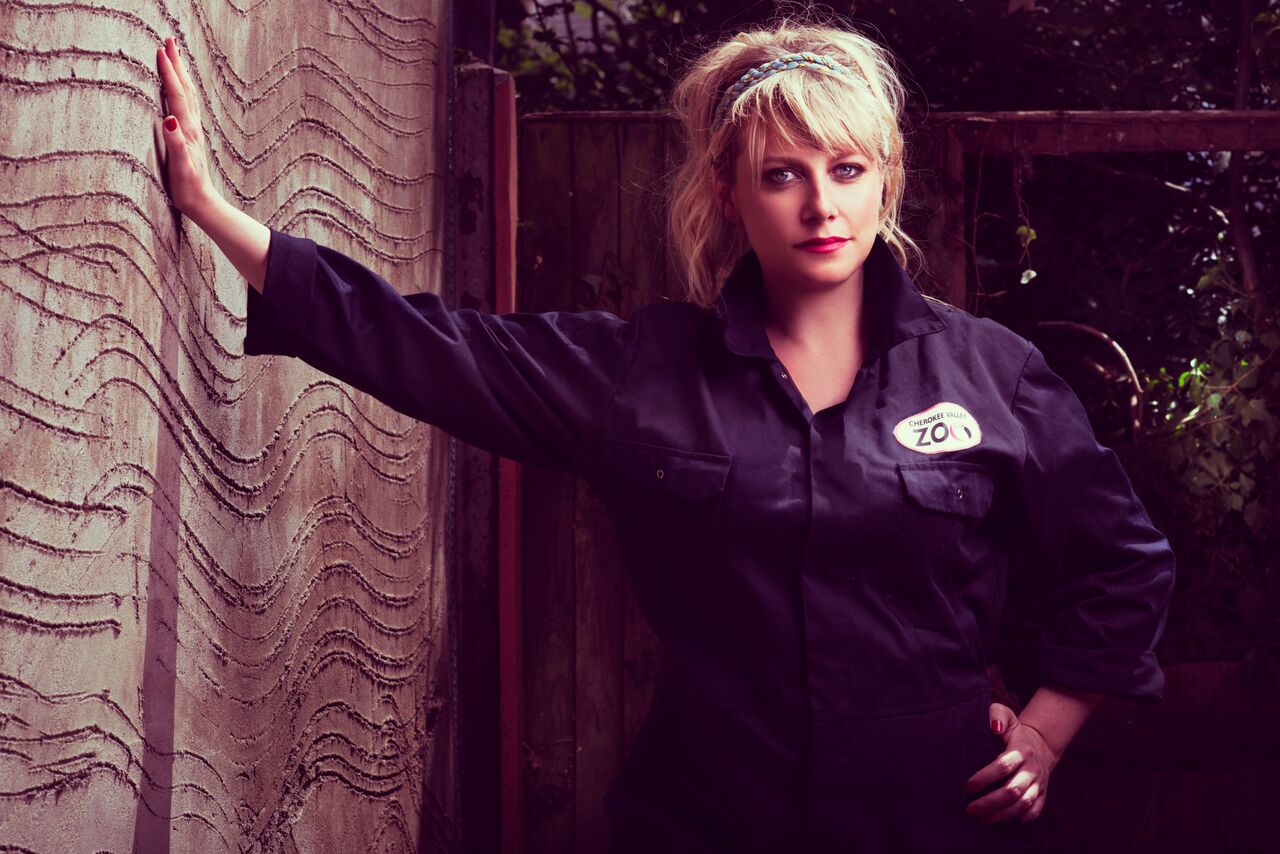
It’s been three years since Lily Bevan wowed the Fringe with her Pleasant Pluckers. The Mumble wonders what she’s got for us this time around…
Hello Lily, so where ya from & where ya at, geographically speaking?
Lily: I’m half from Tooting in London and half from Suffolk. Now I live in West London. When I was little my Dad raced greyhounds at Wimbledon & Walthamstow dog track, so I feel partly like from I’m from a kennel.
When did you first develop a passion for performance art?
Lily: When I was at school and played a rock in the school play. I felt very solid, very sure. And after school I was ready to go straight to drama school but I went to university first, to be on the safe side.
Can you tell us a little about your training?
Lily: I trained at RADA which was fantastic. The course is really varied, so we were doing sword fighting, period dance, method training, improvisation, choral singing, flamenco – I found a lot of it a real challenge.
What for you makes a good piece of theatre?
Lily: I love seeing things I’ve never before seen on stage. Like in Carol Churchill’s plays often there are gender swaps and they jump back in time, and people surprise you and the language is inventive. Surprise is wonderful, and vulnerability. I don’t like it when it’s just people stomping about.
What does Lily Bevan like to do when she’s not being theatrical?
Lily: I do yoga, and walk by the river. I like drinking wine with friends. I just watched all of Love Island which was a colossal waste of my time. I like galleries and talks and exhibitions. I like cake.
You were in Edinburgh in 2015 with Pleasant Plucker, how did it go?
Lily: It was brilliant. It was a steep learning curve as it was my first time performing alone but it taught me so much. The show went on to the RADA festival at the Bush and was then published by Samuel French.
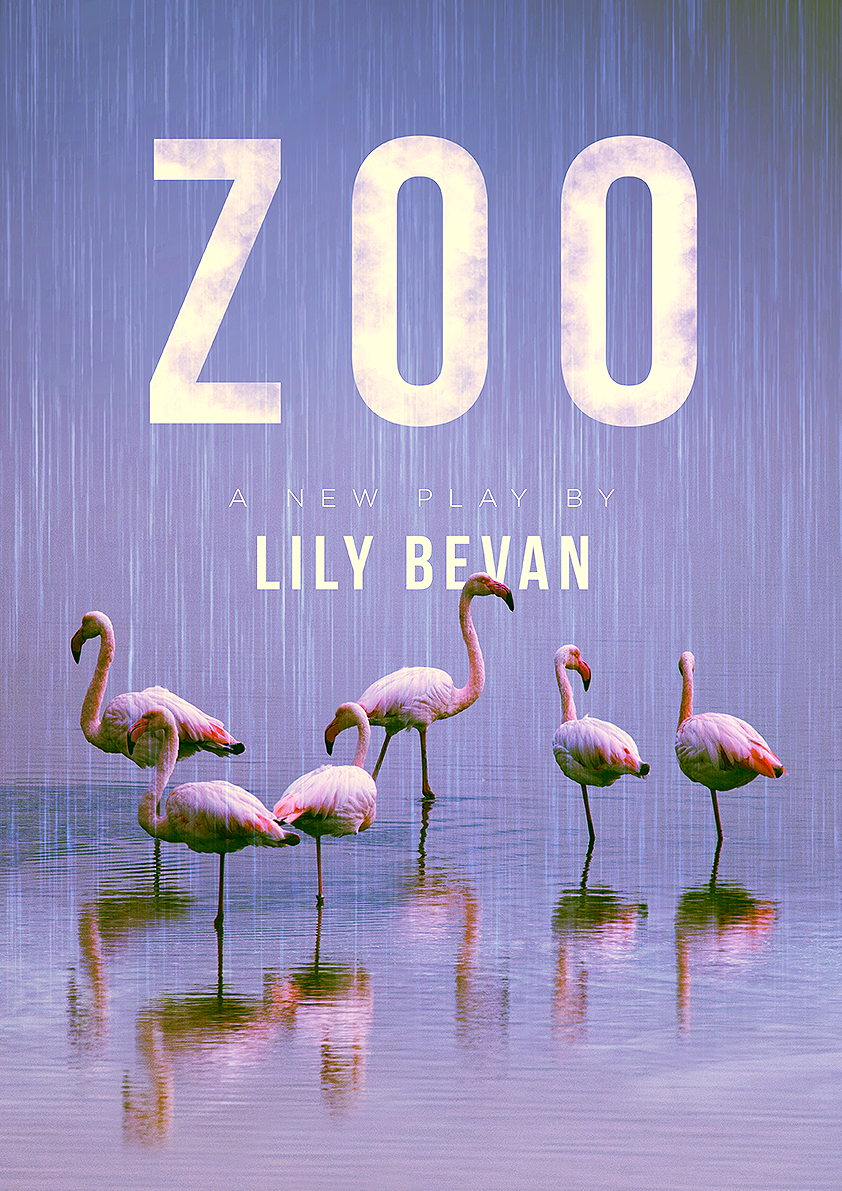
You are bringing a new play to this year’s Fringe, ZOO, can you tell us about it?
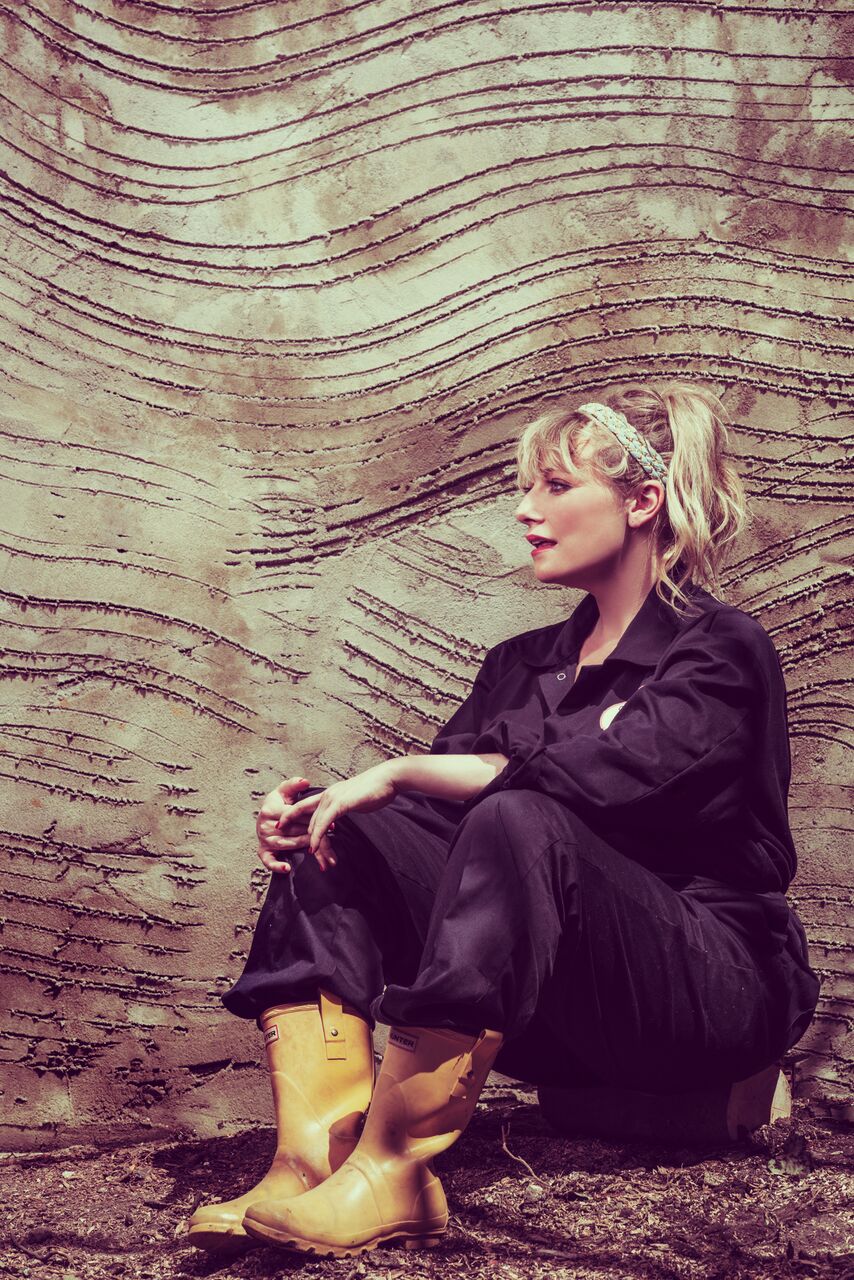
Lily: Zoo is about two women, Bonnie and Carol – one in America and one in the UK, who both work with and love animals and who have both had a tricky time with people. It’s based on the real story of the hurricane hitting a zoo in Miami last year and how the zoo keepers responded. The story then jumps to Yorkshire and another animal chapter. When the going gets tough – their friendship helps them through. It has high winds, flamingoes, bats, giant otters and lot of laughs. It’s performed by me and fab actress Lorna Beckett with cameos from Jim Rastall, Robert Moutford and award nominated comic Mike Wozniak.

When do you know you have just given a good performance?
Lily: When it feels like it all made sense and the audience are with you.
How have you changed as a performer & director in the three years since Pleasant Plucker?
Lily: I am more experienced at performing my own work. I have directed more devised and improvised work. I have thought more about what I want to make work about.
Can you describe your working relationships with co-director Hamish Macdougall & co-actress Lorna Beckett?
Lily: Hamish is a fantastic director. He directed Joe Morpurgo’s show ‘Hammerhead’ which I thought was brilliant. He’s good fun, and very clear energetic and has a great eye. Lorna is my best friend in real life. She is the kindest calmest person I know and an excellent actress. I feel so lucky to work with both of them.
You’ve got 20 seconds to sell the show to somebody in the street, what would you say?
Lily: This is a comedy drama – with flamingos, bats and a hurricane. It’s set in Miami and North Yorkshire. It’s unusual, poignant and daft. And it’s at 11am – so won’t clash with much. Bring your flat white in.
What will Lily Bevan be doing after the Fringe?
Lily: I’ve just been commissioned to write a new play for the Globe, in London. It’ll be part of the Winter Season called ‘Dark Night of the Soul’ , based on Dr Faustus.
ZOO
Assembly George Square Studio Four
August 2nd – 26th (not 13th, not 20th) (11.00)
An Interview with Henry Maynard
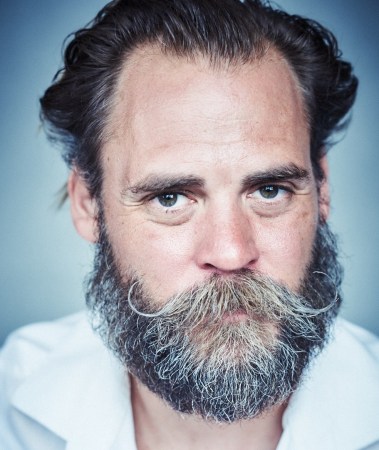
The theatrical mind of Henry Maynard is to the Fringe as cranberry sauce is to a Christmas Turkey; absolutely essential!
Hello Henry, how’s tricks & welcome back to Edinburgh. So where ya from & where ya at, geographically speaking?
Henry: Hello Mumble, thanks! I’m a glutton for punishment so here I am again for the seventh year in a row. I was born in Croydon, grew up around St Ives, Cambridgeshire and have been living in north London since I went to Drama School in 2006, whilst writing this I am sitting in Deli Airport on my way to perform in a Bollywood feature film.
When did you first develop a passion for performance art?
Henry: I had a wonderful teacher in primary school who introduced me to performing, I was lucky enough to be given good roles, which continued through GCSE drama and into A’Level Theatre Studies and culminated in a BA(hons) in Acting (after a six year flirtation as the Lead Singer in a Thrash Metal band)
What for you makes a good piece of theatre?
Henry: Flabbergast’s tagline is that theatre should be ‘engaging and sweaty’ I love direct address, I’m not too bothered about story arcs but I feel that theatre should be a sharing of an imaginative experience. I love Physical theatre (that isn’t wanky). I’m also partial to Brechtian theatre, my favourite ever performance was a show called ‘All Wear Bowlers’ by Pig Iron, it was a silent Clown show and heavily influenced my decision to explore that medium in my solo ‘Tatterdemalion’
Can you tell us about your time with War Horse?
Henry: I was in War Hores (deliberate misspelling) for eighteen months in the West End performing as the Head of Topthorn. It was a great experience and certainly the longest run I have done to date, as the horses you are encouraged to be as like a real horse as possible which gave us quite a lot of opportunity to play and develop our performance between the three puppeteers, that kept it fresh. I’m not sure being a human part for that long in that particular play would have been as exciting for that long. Physically it was very demanding but I thrive on that.
Can you tell us about Flabbergast?
Henry: Flabbergast was set up by me in 2010 with five founding members to create what eventually became the Boris & Sergey cannon of six shows several short films and viral videos and Plan B’s Music Video ‘In The Name of Man’. We have toured all over the world including America, Africa, Australia and Europe, been all around the UK and performed with the Old Vic and Shakespeare’s Globe. It has fostered the careers of several excellent puppeteers who have gone on to perform in West End shows, on Television, and in No 1 tours. Recently we delved into Clown and Buffon, and even did our first ever narrative based show (Macbeth at Wilton’s Music Hall) whilst exploring mask.
What does Henry Maynard like to do when he’s not being theatrical?
Henry: I love building, making and restoring. I have built a theatre which we brought to Edinburgh called The Omnitorium, I have a Narrow boat which is now screaming for me to do some work on her. I also love to travel, I have been quite lucky recently that I’ve been able to combine travel and work.
So far you’ve brought three creations to Edinburgh; Tatterdmailion, Skrimshanks, Boris & Sergey. How do you find the Bowie-like energy to reinvent your artistic avatar each year?
Henry: I’m fascinated by different theatrical expression and so as we continue to add theatrical styles to our repertoire the company becomes more rounded and robust, I just love to learn and experiment to see what is possible. It’s not always been easy and it takes a toll on the purse sometimes but I wouldn’t have it any other way
What have you got for Edinburgh this year?
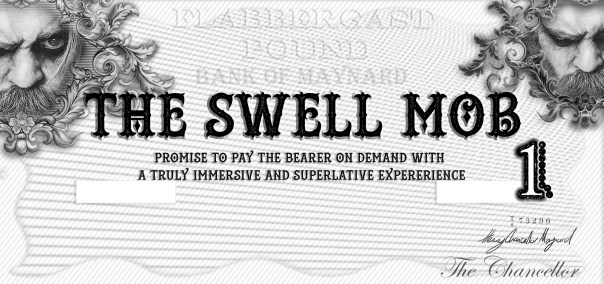
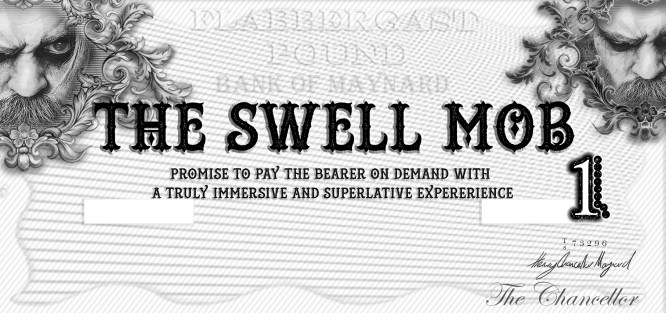
Henry: This year we are embarking on our first Flabbergast Theatre immersive show, there will be elements of puppetry, mask and physical theatre but all set within the dingy and delightfully Dickensian (I’m a sucker for vintage) world of The Swell Mob. There will be a bar open throughout and it will be populated by a rotating cast of misfits and rogues. Lots to do for those that want to potter but something more sinister lurking under the surface for those intrigued individuals that wish to delve deeper.
Can you tell us more about Bunraku puppetry?
Henry: Bunraku Puppetry is a style that has its roots in Japanese culture, it is an incredibly beautiful if slightly labour intensive style of puppetry. Three people operate one humanoid puppet with one taking the head and left arm, one the right arm and back, and one the feet. All three puppeteers have to work in harmony and with a deep level of complicity especially when you begin to improvise too. It is an excellent basis for training in other puppetry styles too. Done well the effect is dazzlingly magical and audiences really invest in the life of the puppet.
What do you hope an audience member will get from the show?
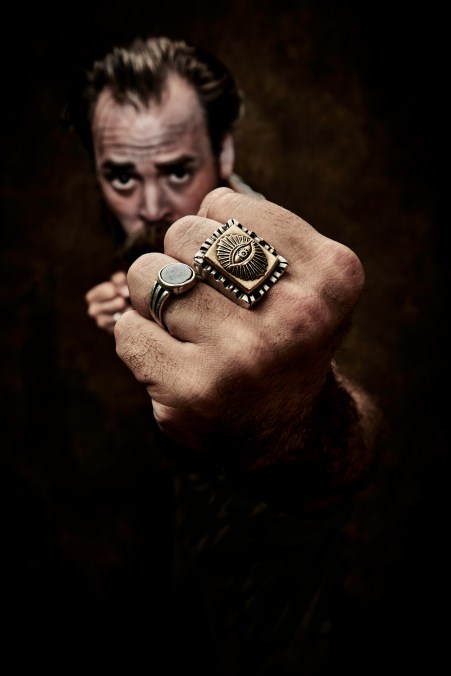
Henry: I hope people will leave The Swell Mob, excited and enthralled by the world that we have created, my wish is that they will have had an experience truly unique to them alone. Many things will be reserved for one on one experience and as the show is free roaming the experience will be in part down to the individual audience member.
How will you know you have just given a good performance?
Henry: I’m sweating buckets and the audience is smiling
You’ve got 20 seconds to sell the show to somebody in the street, what would you say?
Henry: It’s like a Punch Drunk… only more acting, less dancing, and no masks… less budget but more raw passion I mean actually it’s not very like Punch Drunk but its fucking awesome (you can tell I’m not very good at flyering)
What will Henry Maynard be doing after the Fringe?
Henry: What Henry Maynard WANTS to do is crawl into a hole and hibernate… unfortunately he will be starting rehearsals for a new tour of Dracula… coming to a massive theatre near you Edinburgh!
The Swell Mob
Assembly Underground
August 1-12, 14-26 (19.45)
Ron The Plumber Meets God-Cilla

The Loft, The Counting House
Aug 2-17: (13.30)
Script:  Stagecraft:
  Performance:
I’m gonna give you a sample scenario. You’re at the Fringe, you like a bit of theatre, you like a bit of comedy, but you just don’t know what mood you’re in right at this moment. If that sounds like you, then Ron the Plumber is the performer for you. For those who feel a smile is the gateway to the soul, Steve Attridge is its Saint Peteresque gatekeeper, so pleasant a sensation it is to be in his company. Even before the show started he was chatting away to the audience, making us all feel relaxed, & eager for the show to commence. For example, some of the crowd were from Arizona, & before long we found out that an 18-year old Steve had once won a competition to meet Rod Stewart & The Faces in America, & ended up becoming the roadie. Three months later he turned up back in Britain & perhaps has never quite recovered.

As an icebreaker I bring along a brochure of flappers & float-balls
I digress. The best way to describe this creation of Mr Attridge is ‘high-brow toilet humour.’ As follow the adventures, escapades & Cockney trade-tricks of Ron the Plumber it is impossible not to guffaw ridiculously at the sheer accuracy of Ron’s mammoth knowledge of Plumbabilia & his appreciation of social niceties, all delivered with hilarious & lyrical honesty.
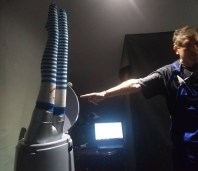
In a recent interview with The Mumble, Steve told about the origins of Ron, who he says, ‘first appeared a few years ago in a comedy review I wrote and performed. Audiences really liked him so it was always in my mind to write a one man show for him. I wanted a showcase for him – a bit of narrative with an episodic mix of stand up, comedy character and bits of theatre. An OCD character on the rampage through the pipes and cisterns of the nation in a quest to destroy something evil.’
Long story short, if one was to judge the very quintessence of laughter, then Attridge & his adorable Ron are funnier than about %80 of the stand-ups at the Fringe. The stagecraft is a little sparse, but the combination of Steve’s genuine quality & a cleverly thought-out, gag-punctuated, innuendo-pregnant script brings dividends. Totally go see this show… its 35 minutes long – which is perfect for the Fringe I think – its free, & its clearly class! You will also massively increase your knowledge of that oblique corner of reality that keeps us all well flushed!
Damo
An Interview with Cherie Moore
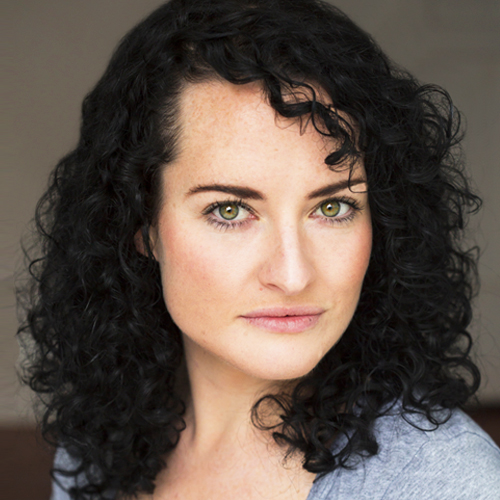
This year The Last Tapes have been wowing New Zealand with their remarkable ‘Valerie.’ Luckily for us they have just arrived in Edinburgh…
Hello Cherie, so where ya from & where ya at, geographically speaking?
Cherie: Hi! I’m from Auckland, New Zealand. While in Edinburgh I’ll be performing in the Cairns Lecture Theatre at Summerhall!
When did you first develop a passion for theatre?
Cherie: I started singing when I was 7, and doing theatre when I was 13, so it seems my path was carved from an early age.
Can you tell us about your studies?
Cherie: I’ve had singing lessons since I was a kid. When I was a teenager I was in an auditioned youth theatre company. When I left school I did an arts degree in Drama and English, and then I went to drama school at The Actors’ Program.
What for you makes a good piece of theatre?
Cherie: Fearless story telling. Courageous connection. Humanity.
You’ve got three famous figures from history coming round for dinner. Who would they be & what would you cook; starter, mains & dessert?
Cherie: Nina Simone, Samuel Beckett, and Maya Angelou. For starters, caramelised fennel with toasted walnuts, I’d cook a spicy mango and coriander fish with coconut rice, broccoli and beans with lemon oil and sliced almonds for mains, and a dark chocolate mousse with raspberries for dessert.
Can you tell us about Last Tapes?
Cherie: Last Tapes is a small independent professional theatre company based in Auckland, New Zealand. We make and produce ‘theatre that gives a shit’. We’re interested in creating conversations through the medium of theatre, music, and live performance art.
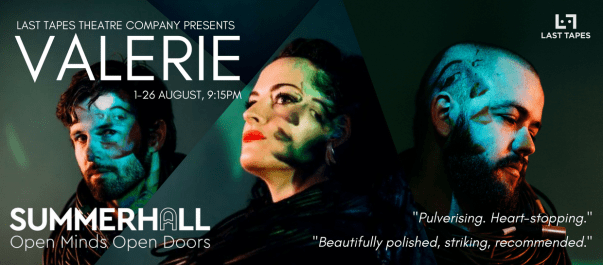
You are bringing ‘Valerie’ to Edinburgh this August, can you tell us about both the play & your own role?
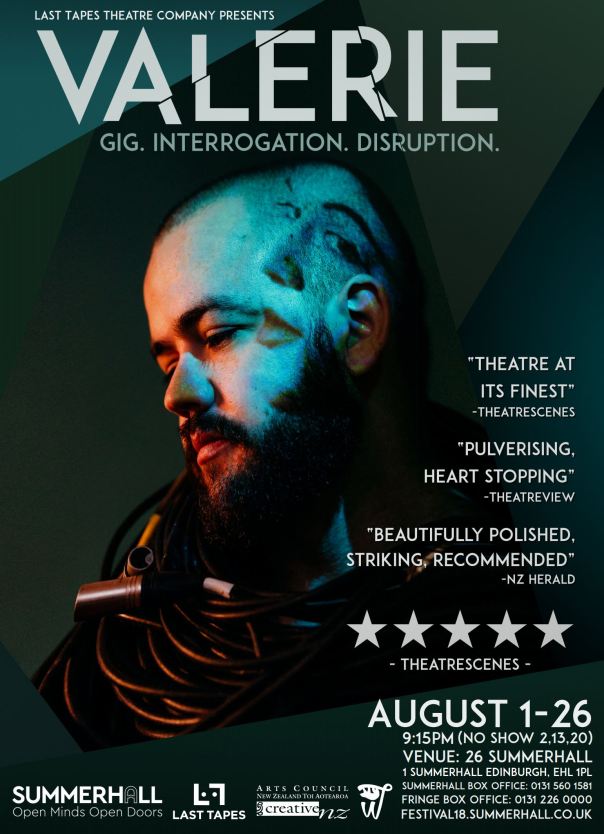
Cherie: Valerie is an investigation of family mythology – what’s passed down through stories, and through genetics. It’s part theatre, part music gig, part science lecture. It uses story-telling, original music, and science to unravel my husband Robin’s family story, and ask whether mental illness is due to nature or nuture, and if you’re aware of that loaded gun whether it’s possible to avoid the bullet. I mostly play the role of Valerie – Robin’s grandmother (I know, Freud would have a field day with that. We even look similar). The form of the show is exciting, and the role of Valerie is mostly concerned with bringing information from the past. I also do the majority of the singing in the show.
What’s your experience with playing a real person who is part of your own family?
Cherie: I’ve aimed to capture the essence of Valerie and the core characteristics she brings to the journey of the show. This isn’t me trying to mimic her, but rather represent her and bring her story to life. It was really special having her in the audience on the final night of our very first season. She’s an amazing woman and it’s an honour to hold her history in this way.
How, why & when does the live music blend with the narrative?
Cherie: The music and narrative are intertwined and interspersed throughout the piece. Not only are there songs that capture the feeling of a narrative moment, but the show is through scored with sound to create atmosphere. Music is a powerful tool and we love to be able to use multiple disciplines to communicate.
Have you or any of the cast ever performed at the Fringe before?
Cherie: No, and we’re really excited to be here!
How is your working relationship with the show’s creator, Robin Kelly?
Cherie: Ha ha, well we’ve been in a relationship for nearly 10 years, so I’d say our working relationship is beautiful, and complex, and has a depth of understanding and empathy that can only come with that much shared experience.
Do the cast socialise outside rehearsals?
Cherie: Absolutely! We all love each other and are genuinely best friends. I couldn’t imagine doing this show with anyone but the team we have.
You’ve got 20 seconds to sell the show to somebody in the street….?
Cherie: Hey! What are you doing at 9.15pm – because you should be coming to Summerhall to see Valerie – I promise it’s worth the ten pounds. It’s part theatre, part music gig, part science lecture. Valerie is an exciting interrogation of what the future holds in terms of inheritance. It’s a conversation about mental health. It’s a question – if your grandfather was mentally ill is it inevitable that you will be, or is it possible to claim an inheritance of resilience from your grandmother? It’s surprising, glamourous, and honest, and I’d love to see you there.
What will you & Last Tapes be doing after the Fringe?
Cherie: We’re rounding off the year performing at two arts festivals back home (we’ll have performed Valerie at most major festivals around NZ this year). I run an auditioned youth theatre company, teach singers, and direct shows, so I’ll be doing some more of that when we finish out touring for this year. Then, hopefully we’ll all be connecting with people we love, and taking what we learn at the festival with us on the next step in our journey with Valerie. In 2019 we hope to be touring Valerie internationally, and also collaborating with other artists to keep learning and to make new work.
VALERIE
Summerhall
August 1-27 (21.15)
Tweets by @LastTapesTC
www.lasttapes.co.nz
An Interview with Joanne Hartstone
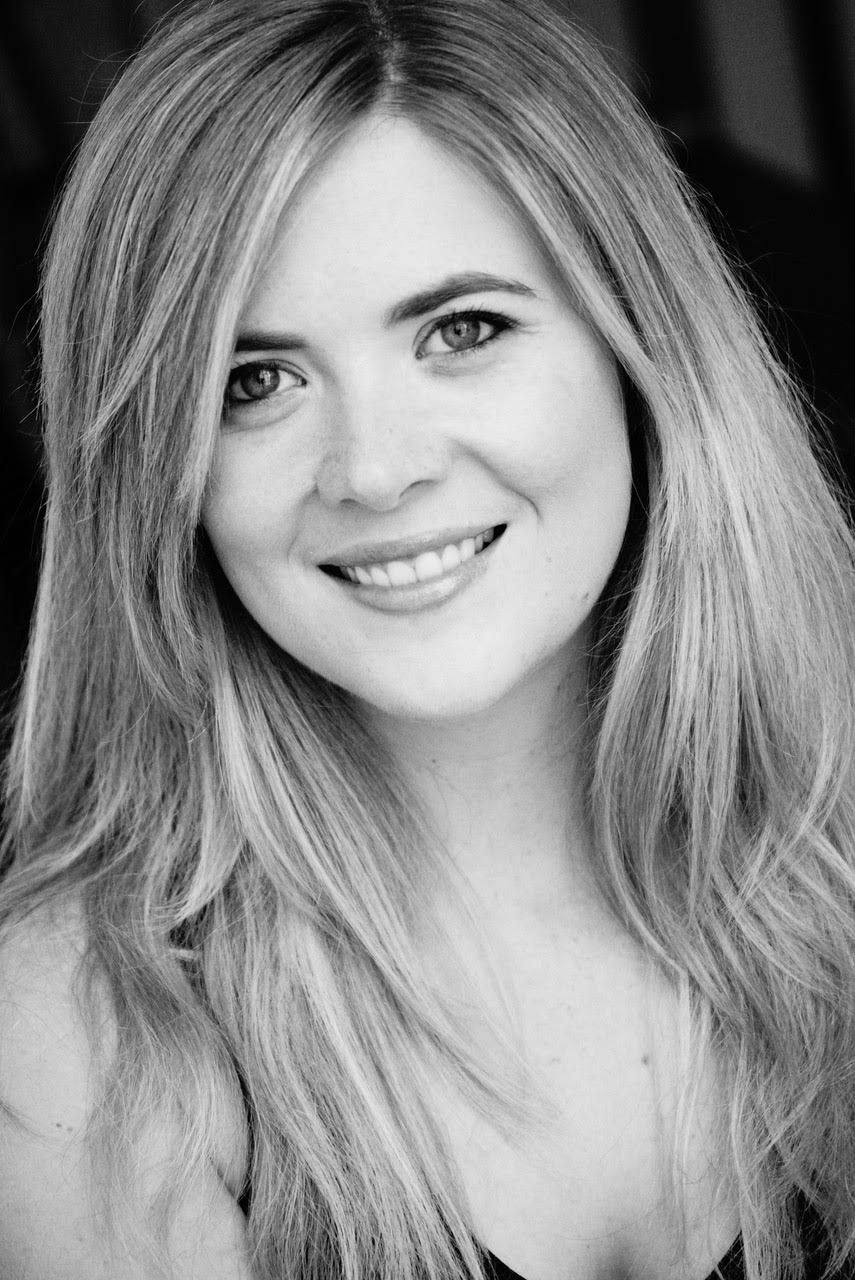
There are not enough superlatives to describe the talents of Australian, Joanne Hartstone, & this year she’s bringing two plays to the Fringe. The Mumble managed a wee blether about her doubling up…
Hello Joanne, so where are you from & where are you at, geographically speaking?
Joanne: I am from Adelaide in South Australia, but I am currently in London (about to travel to Edinburgh)
When did you first find yourself getting into the dramatic arts?
Joanne: I was always performing as a child, dressing up and doing impromptu performances. When I was 4, my parents enrolled me in a dance class, and I loved it! I particularly loved the end of year concerts, and performing became a regular part of my life. I spent the next 12 years training as a dancer, as well as taking acting lessons and singing lessons. In the meantime, my father would take me to musicals and concerts and operas and plays. I was hooked!
Can you tell us about your theatrical training?
Joanne: Straight after high school I was accepted into Flinders University Drama Centre, where I trained as a professional actor under the expert tutelage of Professors Jules Holledge, Michael Morley, Murray Bramwell, Malcolm Fox and Joh Hartog. It was a 4 year honours degree, in which we had practical training mixed with theoretical and academic study. Our class was very small – 5 women and 7 men. Entry to the degree is audition-based, so I was very lucky to be accepted as there were very few positions for hundreds of applicants. We were trained for all performance mediums – stage, screen, improv, immersive, dance, voice – however I found myself mostly drawn to the stage. I loved the process of creating a play and the thrill of performing in-front of a live audience was hard to beat!
You’re washed up on a desert island with an all-in-one solar powered DVD/TV combo & three films, what would they be?
Joanne: Meet Me In St Louis, Gentlemen Prefer Blondes, Singin’ In The Rain
What does Joanne Hartstone like to do when she’s not being, well, dramatic?
Joanne: I love playing with my dog, Molly, and spending time with my family. And I’m rather partial to a delicious meal.
You are quite the international performer, regularly taking your shows across three continents. What is about such a restless adventure that makes you tick?
Joanne: I’m driven to present my work to as many different audiences as possible. In each location, the cultural diversities elicit a range of responses to my shows, and I really enjoy the varying artistic conversation between performer and playgoers. For example, when we played New York in January 2018 with The Girl Who Jumped Off The Hollywood Sign, our timing coincided with the Golden Globe awards ceremony, where women (and men) wore black in solidarity for the #TimesUp campaign. My character has always deliberately worn a black dress. The coincidence was not lost on patrons and reviewers who noted: And, in a piece of prescient staging, she endows Evie with a stoic pride in her fashion choice, a black dress. As if channeling the sisterhood of this year’s Golden Globe’s red carpet, she declares, “I thought black would be appropriate.” As I continue to travel and present my work, I am humbled and inspired by people and places, history and innovations. My absolute favourite thing is when people discover things in my work that I thought no one would notice, or they draw parallels that even I didn’t know were there!
Can you tell us about Hartstone-Kitney Productions?
Joanne: Hartstone-Kitney Productions is a relatively new endeavour between myself and Tom Kitney – an incredible production designer and technical wiz. Our company has formed organically over the months that we have been making theatre together, as well as running a venue, presenting international work and planning seasons. We are a great onstage/offstage team. We have decades of experience in this industry between us, and it is exciting to make plans and continue to grow and develop together as practitioners. Tom has taught me a lot about his side of making theatre, and I am a better producer and maker because of him.
Can you describe your working relationship with Tom Kitney in a single word?
Joanne: Innovative!
You are bringing two solo shows to this years Fringe, what are they called?
Joanne: My two solo shows are The Girl Who Jumped Off The Hollywood Sign and That Daring Australian Girl.
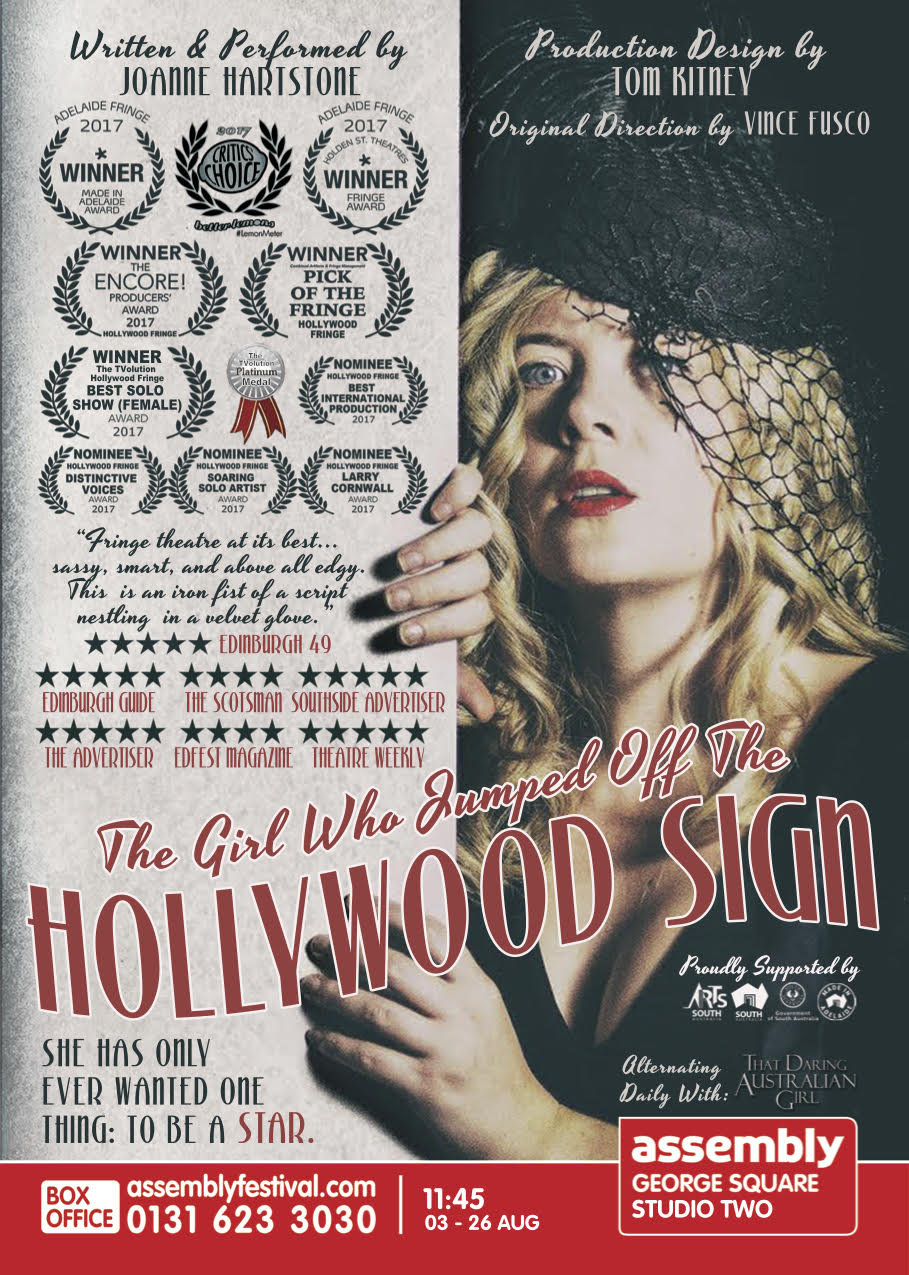
Joanne: So, can you tell us more about, let’s start with The Girl Who Jumped Off The Hollywood Sign, what’s it about?
Joanne: The Girl Who Jumped Off The Hollywood Sign follows the journey of Evie Edwards, an aspiring actress who is determined to have an opportunity to be in the movies. We meet Evie as she is at the end of her tether – she has climbed the ‘H’ of the Hollywood Sign and is contemplating her next move. She reveals the path that has lead her to consider recreating the fateful leap that Peg Entwistle took in 1932, whilst also lamenting the fate of her idols – the women of Hollywood who sacrifice so much to be stars. It is a revealing commentary on America’s Dream Factory, from a point of view rarely observed, mixed with music from the era.
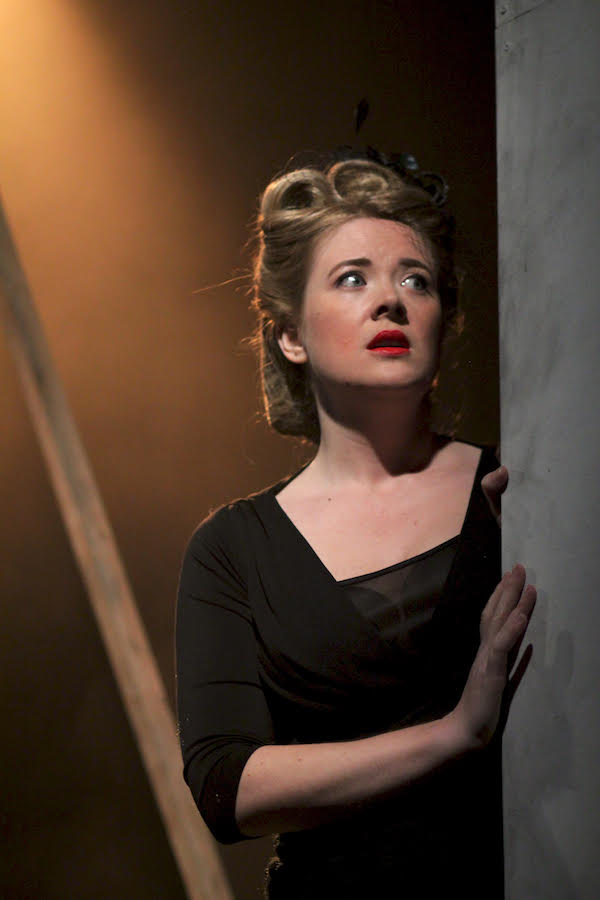 It’s won quite a few awards so far, what are they?
Joanne: It won the inaugural Made In Adelaide award at the 2017 Adelaide Fringe, as well as the Holden Street Theatres award. Then when I took the show to Hollywood and we won the Producers’ Encore Award. We were also awarded the TVolution Platinum Medal and Combined Artist & Fringe Management ‘Pick Of The Fringe’, as well as Better Lemon’s Critics Choice Awards and the TVolution Best Solo Show (Female) Award. The play has also been nominated for a host of other awards including: Best Female Performance (Professional) for the ATG Curtain Call Awards 2017, the Best International Production Award at Hollywood Fringe 2017, the Distinctive Voices Award, the Soaring Solo Artist Award and the Larry Cornwall Award for best use of music in a non-musical show.
What do you think is the play’s secret to its success with the judges?
Joanne: Perhaps the show resonates with judges (and audiences and critics) because is because it is a production that ticks a lot of boxes. The play is set in a fascinating time in history and tells many true stories of famous (and not so famous) people, showing the level of research and detail that has been packed into the monologue. However it is also incredibly relevant, and recent events in the entertainment industry (and the consequential #metoo movement) have made the play even more important as part of these global discussions and reflections. It is also a showcase for the performer, requiring an advanced level of singing competency, vocal dexterity, accent ability, characterisation and character switching, emotional range and immediacy, and to some degree dance and choreographic skill. It is also highly layered, with a spherical structure, which always appeals to an audiences’ thirst for catharsis. Plus it probably helps that (in this case) the writer and producer is also the performer, acting in an accent that is not her native tongue. But aside from all these elements, The Girl Who Jumped Off The Hollywood Sign is a really enjoyable, interesting show that stays in your mind for days afterwards.
Great stuff. So moving on to That Daring Australian Girl, what’s the play about?
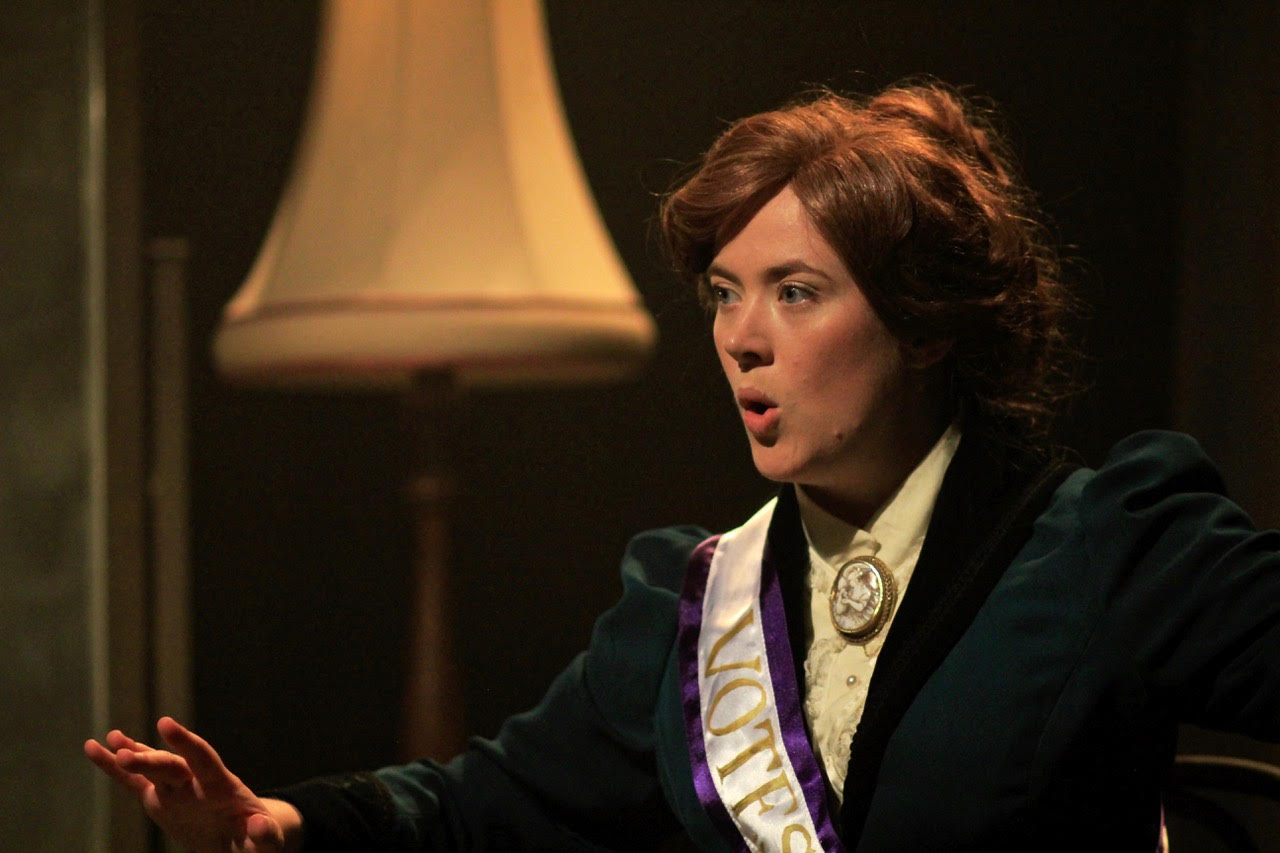
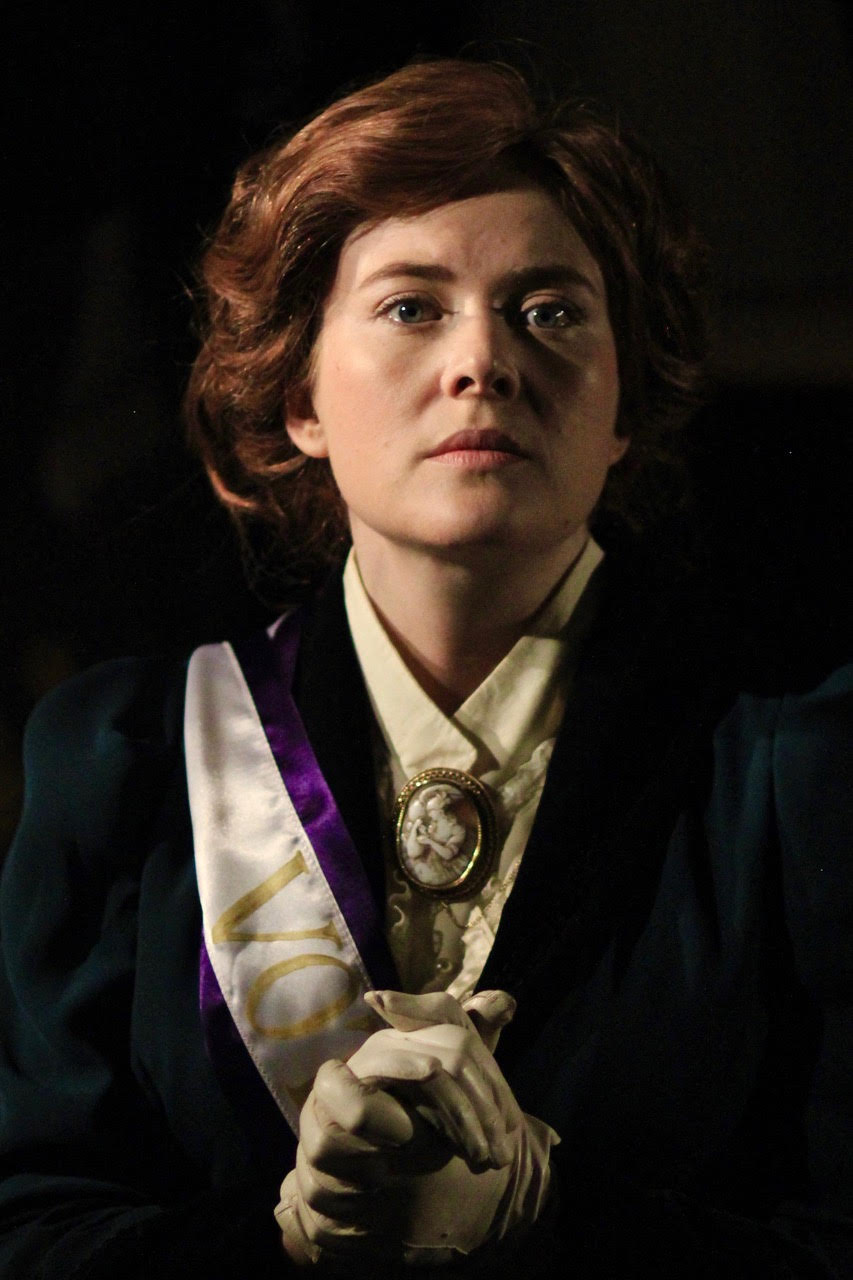
Joanne: That Daring Australian Girl is the true story of Muriel Matters, a South Australian actress who travelled to London in 1905 and became one of the leading public figures of the UK’s Suffragette Movement. Muriel was a teacher, a journalist, a lecturer and elocutionist and was known as the “foremost female orator in Britain”. Muriel became the world’s first aerial protestor when she flew in a dirigible balloon with ‘Votes For Women’ on the side over London. She was also the first female voice in Parliament, chaining herself to the ‘Grille’ in the Women’s Viewing Gallery in the House of Commons. Muriel was the first woman to challenge for the electoral seat of Hastings, and she lived through two World Wars and two feminist revolutions. Muriel’s legacy is that of a social reformist, a woman who believed that change was not only possible, but vital.
 Have you connected with the story of Muriel Matters on a personal level?
Joanne: The parallels between Muriel’s life and my own were immediately apparent when I began researching her life and achievements. I was born mere kilometres away from Muriel’s place of birth – separated only by the North Adelaide parklands and 107 years. She began her career as an actress and elocutionist – I began my career as an actress and a singer. Muriel was a teacher – I am a teacher. Muriel left her home in Australia for the bigger theatrical industry in London – I travel to the UK at least once a year to participate in theatrical festivals. However, I have connected with Muriel on more than our biographical coincidences. Muriel’s ethos, which champions social reform and equality, is also close to my heart. She dedicated her life to the betterment of the community around her, and used her skills to educate, inspire and effect change. Muriel has inspired me to use my skill in a similar way and shown me the value of my work as a communicator and creator.
Among the many accomplishments of Muriel Matters, she was an excellent elocutionist. How are you handling your vocal portrayal of the character?
Joanne: There is only one existing recording of Muriel speaking and her voice is simply from another time. She sounds unreal to a modern ear, which is a challenge for a performer wanting to recreate her as accurately as possible. Muriel sounds like an old-fashioned, upper class, educated Australian who has lived in England for many years, and if I were to copy her voice exactly I feel it would alienate an audience with disbelief. She does have strong Australian diphthongs blended with RP, so I use my own South Australian accent with additional PR rounding out the tone. Luckily I have had years of training on vocal technique (spoken word and singing) and use as many tricks as I can to evoke Muriel’s highly trained “magical” voice, without sounding too structured or technical.

You’ve got 20 seconds to sell each show to somebody in the street, what would you say?
Joanne: That Daring Australian Girl:
The unknown true Suffragette story of the first woman to ‘speak’ in the House of Commons, the world’s first aerial protester and the ‘foremost woman orator in Britain’ – who was actually an Australian Actress!
The Girl Who Jumped Off The Hollywood Sign:
A historical, feminist drama about the Golden Age of Hollywood and the systemic abuse of power in America’s Dream Factory, with songs by Hollywood’s greatest stars: Judy Garland, Marilyn Monroe, Jean Harlow, the Andrews Sisters and more!
Can you describe the experience of performing at the Fringe in a single sentence?
Joanne: The Edinburgh Fringe is exhilarating, challenging, humbling and magical – but as a performer it is marathon, not a sprint!
The Girl Who Jumped…
Assembly George Square Studios
Aug 3, 5, 7, 9, 11, 13, 16, 18, 20, 22, 24, 26 (11:45)

That Daring Australian Girl
Assembly George Square Studios
Aug 2, 4, 6, 8, 10, 12, 15, 17, 19, 21, 23, 25, 27 (11:45)

Tweets by @JoanneHartstone
www.hartstonekitney.com
www.joannehartstone.com
An Interview with Vicki Sargent
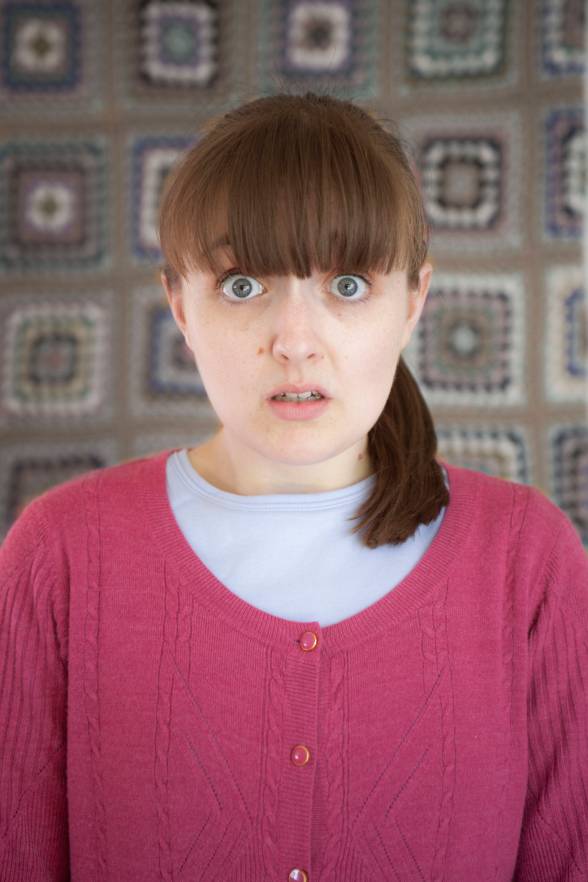
Yes! Yes! Yes! Yes! Vicki Sargent is coming back to perform at the Fringe, & this time she’s bringing a pal. The Mumble managed a wee blether…
Hello Vicki, & welcome back to the Fringe, how’s your year been?
Vicki: Thank you it’s great to be back. It’s been a really fun year; I’ve been dipping into lots different creative avenues from stand up comedy to tap dancing, building my skills set and developing a lot of resilience. I feel more confident, personally and professionally, than ever heading into this years Fringe, which is a lovely mind-set to have. And I’m really looking forward to all of that disappearing the second I start flyering!
Can you tell us about your theatrical training?
Vicki: I trained at City Lit in Covent Garden. It was a nice alternative to expensive full time drama schools and they covered a plethora of acting styles. Also, with it being an adult education centre, I was training with a really diverse group of people aged 18 – 62 and from all over the world and I loved learning with a group of people who didn’t all look and sound the same; we all had different backgrounds and knowledge to bring and share.
Can you tell us about Dressing Gown Diaries?
Vicki: Dressing Gown Diaries is a fun little YouTube series I run on my channel Vicki’s List. It’s literally me sitting about in a dressing gown with a cup of tea chatting about anything from horoscopes to my hatred of dogs (that one created a lot of controversy). I started it last year in the run up my last Fringe show One Woman Army, in which I wore a dressing gown for the whole show. I wanted to challenge myself to just make some regular content and not have to worry about doing my make-up but just being myself and having a laugh!

You’ve got three famous figures from history coming round for dinner. Who would they be & what would you cook; starter, mains & dessert?
Vicki: William Shakespeare, Maya Angelou and Eric Morecambe. I’m a terrible cook so I’d go for something simple like cheesy garlic bread to start, Spaghetti Bolognese for mains and a bake from frozen lemon meringue pie for dessert. I don’t care what my esteemed guests want, that’s all my favourites and no it’s not fancy, but it will fill you up! Shakespeare will lose his mind when he tries Sainsbury’s own brand meringue.
What does Vicki Sargent like to do when she’s not being creative?
Vicki: Sit about in my pyjamas and watch TV to be honest. It might not be cool, but it is comfortable and with the quality of Netflix these days how can you blame me? I also enjoy kickboxing, moaning, and drinking copious amounts of tea.
Last year you brought your show One Woman Army, what have you got for us this year?
Vicki: This year I have comedy play Old Souls which is about a befriend the elderly scheme. My character Rosie is 21 years old and loves nothing more than staying in with her mum watching telly and avoiding having any kind of social life. She may or may not be loosely based on myself. Rosie joins up to the befriending scheme hoping to meet the grandma of her dreams but what she gets is Vera. Vera wishes that she was out in a club, off her face, and dancing till the sun comes up. But Vera is 78 years old and her body won’t let her live that life anymore and she is angry about it. Especially when bright young thing Rosie walks in with lemon drizzle cake and her only passion is reserved for getting the conundrum on countdown. It’s a clash of personalities but ultimately they both have something to learn from each other.

Why did you choose to write a play about befriending the elderly?
Vicki: The NHS says: “more than a million older people say they go for over a month without speaking to a friend, neighbour or family member.” I had seen a few news stories on loneliness in the elderly and I thought it was such a tragic, heart-breaking issue with such a simple solution: befriending the elderly schemes. Volunteers give just an hour of their week to go and visit an elderly person and have a cuppa and chat. I thought if I could show how fun befriending could be through a comedy play it might inspire people to join up.
Can you describe your working relationship with co-actress Janet Garner in a single word?
Vicki: Cushty.
What is it about Dartford which inspires you so much?
Vicki: It’s my home; it’s what I know and it’s where I feel comfortable. I think there is a lot of humour, whether intentional or otherwise, to be found in small working class towns like Dartford. So many wonderful characters to be met and a real authentic, down-to-earth charm that I try to carry with me in all of my comedy work.
How is director Matt Mitchell handling your brain-child?
Vicki: Very well! He’s a writer/filmmaker so he has a great understanding of structure and excellent attention to detail. He can take the simplest piece of dialogue and tweak it into a hilarious joke, which I never knew was there – and I wrote the thing! Janet and myself feel very safe to try things out under his direction, which is especially important since this is Janet’s first acting role.
What do you hope an audience member will take away from the show?
Vicki: I’d be thrilled if audience members came away from watching Old Souls and signed up for a befriending scheme. If just one elderly person feels a little less lonely as a result of this play that would be incredible. I also hope it inspires people to be bolder and braver even if that also means being scared and uncertain.
You’ve got 20 seconds to sell the show to somebody in the street, what would you say?
Vicki: It’s a really funny, heart warming show about a befriend the elderly scheme. Rosie is young but old, Vera is old but young. Rosie wants tea and cake. Vera wants a whiskey on the rocks. It’s a comedy play about friendship, age stereotypes and learning to be brave.
What will Vicki Sargent be doing after the Fringe?
Vicki: Writing a sitcom with Matt Mitchell, making more videos in my dressing gown and performing Old Souls again in some new and exciting places!
Old Souls
Riddle’s Court
3rd – 27th August (Not 8th, 13th or 20th) (17.00)

Tweets by @Vix93
www.facebook.com/OldSoulsPlay
An Interview with The Healthy Oyster Collective
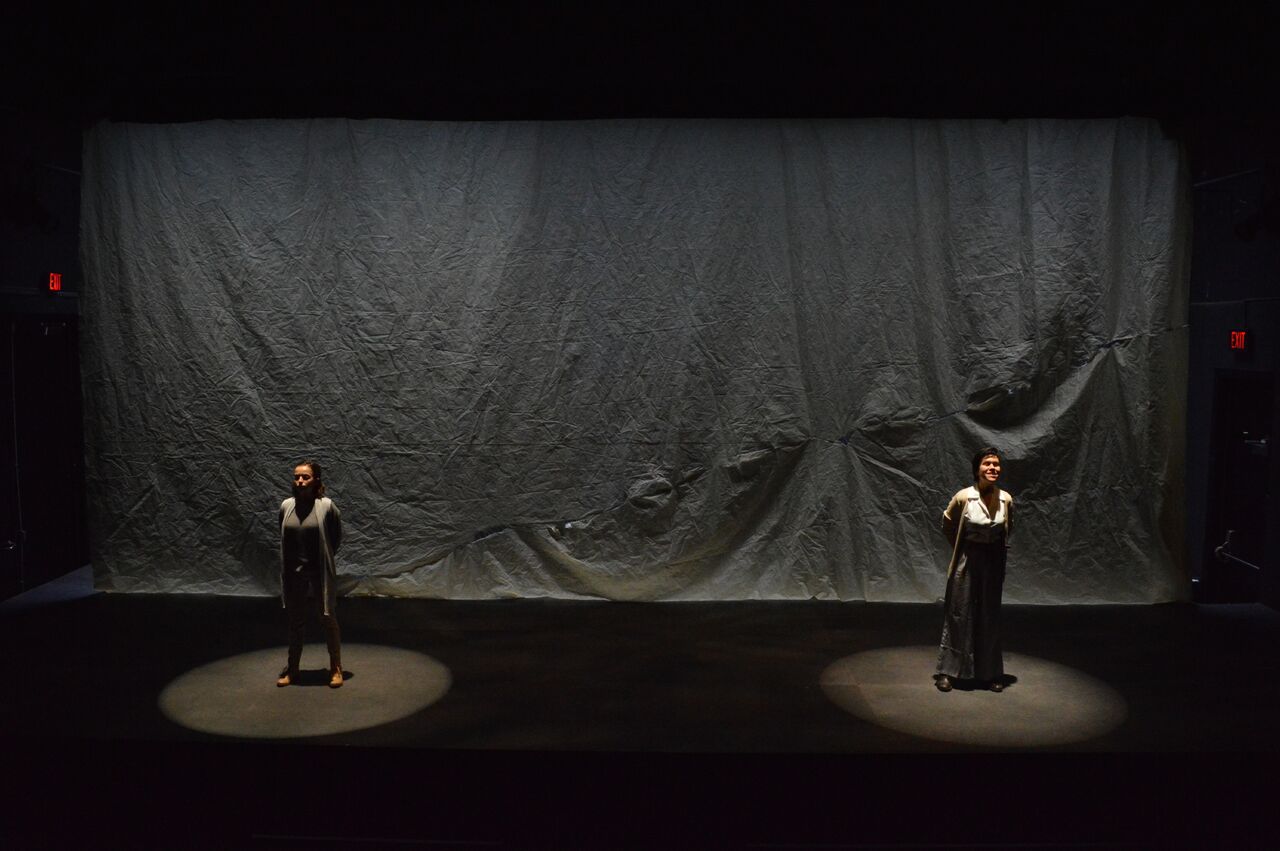
The world is going politics crazy, upon which wave is surfing the magnificent theatrical nous of The Healthy Oyster Collective. The Mumble were delighted to catch them for a wee blether…
Hello Eric, so where ya from & where ya at, geographically speaking?
Eric: I was raised in Southern California, then I was in New England for college. I moved to New York City afterwards, and I now am pursuing my masters degree in Iowa. So, all over the U.S.
Hello Lila, so where ya from & where ya at, geographically speaking?
Lila: Hiya! I’m grew up Washington DC, New York City is home, and I’m in a masters program right now in Iowa. So I guess you could say I’m an East Coast gal in an Iowa body, at the moment.
When did you first develop a passion for performance art?
Lila: All my friends were auditioning for Seussical the Musical in middle school, so I tagged along so as to not be left behind. I was cast in the chorus of inanimate objects where they put all of the kids who were passionate but not talented. The feeling of performing was addictive!

What for you makes a good piece of theatre?
Eric: I don’t know if I can pinpoint what exactly is in a good piece of theatre. I think theatre that excites me, across many forms and styles, is work created from a sense of unknowingness, where the creators don’t begin with a predetermined notion about how to make the piece “work.” I think naïvetée is under appreciated as a process tool.
You’ve got three famous figures from history coming round for dinner. Who would they be & what would you cook; starter, mains & dessert?
Eric: I’d invite over three famous anti-Semites: Richard Wagner, Henry Ford, and Pope Urban II (who called for the First Crusade). I would then make them sit through a full Passover Seder. There would eventually be gefilte fish, brisket, and kugel, but first they’d have to sit through an eight hour service. Call it dinner party revenge.
How did you get into directing?
Lila: beloved professor in university convinced me that I didn’t actually want to perform, I wanted to direct. (I sat in his office to discuss my work in acting class, and tearfully told him “I know what I want it to look like, I just don’t want to do it!”) The next semester, I directed Sophie Treadwell’s Machinal and thought, “Yeah, he’s right.”
Can you tell us about The Healthy Oyster Collective?
Eric: The Healthy Oyster Collective a group of theater artists who create socially conscious works in theatrically playful forms. We’ve been around five years, and we’ve created three full length works – If the Saints Arrive in Germany, Kingdom Crosses Over, and Pastoral Play. bad things happen here is our first project we’re producing outside of the U.S.
Your subject matter is often politically-hewn, where does the compulsion come from?
Lila: I grew up in an activist family, so politics were everywhere. We discussed elections and strategy for getting environmental legislation through Congress around the dinner table. I was encouraged to read the newspapers strewn all over the house. In DC, people talk about politics like people elsewhere talk about sports–it’s all-consuming. So that’s really the lens I bring to all of my work: how does this play plug into the larger world and its power structures?
Your plays have been shown all across the North American continent – are you excited about the appearance of your work in Edinburgh?
Eric: I’m very excited. I’m looking forward to seeing how my work functions in the U.K., what audiences here latch onto that U.S. audiences ignored, what seems superfluous here that to U.S. audiences seemed essential. It’ll be a radically different audience to be in conversation with; I’m curious to see what that conversation looks like.
This year you are directing bad things happen here at the Fringe. Can you tell us about it?
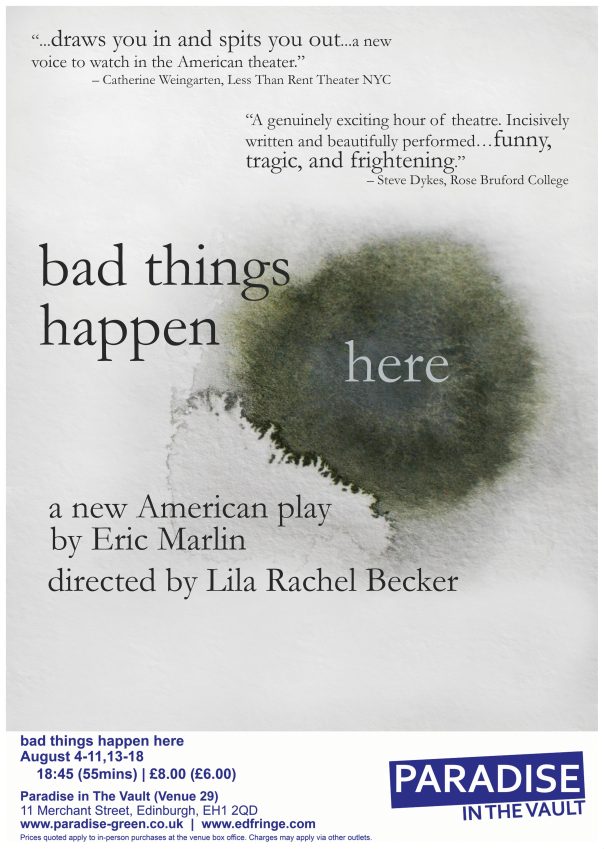
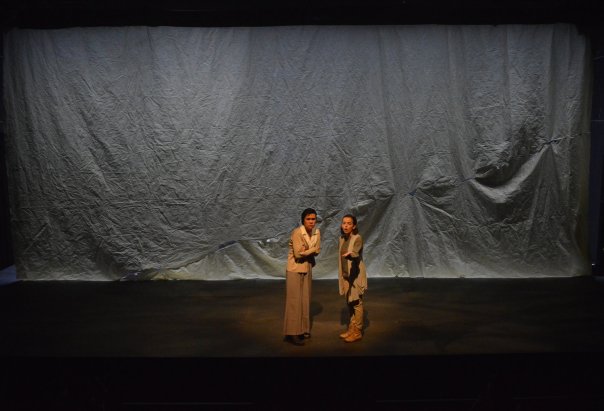
Lila: bad things happen here is a tour of a fascist state loosely based on the Argentine Dirty War. (And, increasingly, on the present-day USA.) Our tour guides are two women, who play 40 different characters between them as they take us through the lives of people of various classes, ages, and political allegiances living under this regime. Unlike many pieces about violent regimes, bad things happen here focuses not on rebels or state agents, but on everyday folks just trying to get through the day alive. Eric has also done a beautiful job focusing on the linguistic changes that accompany fascism–what’s unsaid is as important as what’s said.
How does this play grapple with the current world of Trump and Brexit?
Eric: bad things happen here is an examination of nationalism run rampant, and how that intersects with issues of class, misogyny, and language. I’m interested in how nationalistic rhetoric infects our everyday speech, how words lose and gain new meanings during times of political chaos. Trump, and Brexit, thrive on linguistic corruption and lies passed off as truth – who is considered a “citizen,” what we mean by a “nation.” We’re living in a time where politicians like Trump lie outright without consequence. bad things happen here is, in part, an attempt to get underneath these obfuscations.
 Can you tell us about your stagecraft; the music, sound & stage design?
Lila: Eric and I both feel very strongly about creating a strong rhythm in our work. The stagecraft and technical elements are designed to ensure that nothing disrupted the quick rhythm and accumulation of the play. Eric is very intentional about when information is released to the audience, so paradoxically, the design is abstract so that you’re not getting a ton of detail about place, time, world, etc. from the set and costumes. All of the information comes through the dialogue and relationship between the characters. There’s very little blocking and gesture, the costumes might be something one might wear today, and the design doesn’t acquire specific meaning until later in the play. (And I don’t want to give too much away!) Avi A. Amon wrote the music for the show, which communicates tone and mood rather than location and setting. The design team and actors have done an extraordinary job painting with an extremely limited palette.
Can you describe your cast members in a single word?
Lila: Wow, so many of the adjectives I thought of are gendered female in a condescending way. I’m going to go with what they would be if they were birds.
Molly Winstead = piping plover
Marieta Carrero = cockatiel
How do you think a Fringe audience will receive the material, are you up to speed with British opinion?
Eric: I can’t consider myself an expert on British opinion (or American opinion for that matter!), but I’m optimistic the play will speak to audiences interested in new work. I always have drawn heavily from British writers, such as Caryl Churchill, Edward Bond, and Sarah Kane, so there is certainly an artistic lineage in Britain that bad things happen here is a part of. It’s been a difficult play to work on; it’s also got some silly jokes, and is beautiful to look at thanks to Lila and our designers. And it’s only hour – still plenty of time to grab a beer afterwards.
You’ve got 20 seconds to sell the show to somebody in the street, what would you say?
Lila: It’s as if Caryl Churchill wrote The Handmaid’s Tale.
bad things happen here
Paradise in the Vault
Aug 4-11, 13-18 (18:45)

 Mumble Theatre