An Interview with Blair Christie

Raised Voices comes straight from the Homeless of Edinburgh. The Mumble caught up with the caring heart behind it all
Hello Blair, first things first, where are you from & where are you at, geographically speaking?
I’m originally from Shropshire but I’ve been living in Edinburgh for about 20 years. I moved out to Musselburgh last year.
When did you first develop a passion for theatre?
I’ve always loved writing and performing and have always been creative from a young age. As I’ve got older this has turned in to writing and performing in shows, which I really enjoy.
In a world where you can get entertainment ‘on demand’, what makes theatre special?
Theatre is so real, you can see and feel the emotion of the actors so much more than if you are watching them on a screen. It is also live and adds an air of excitement to the performance. Theatre is also anoccasion, you have to plan to go and actually leave the house and people usually make a day or night of it, which makes it feel that bit more special.
What does your perfect Sunday afternoon look like?
Spending time with my family, I have a young son which usually means an early start. I also like to watch sport, so if there’s football or a Grand Prix on I’ll try and watch that. Around this time of year I will be working on the Fringe show, there never seems to be a time when something is not waiting to be done.
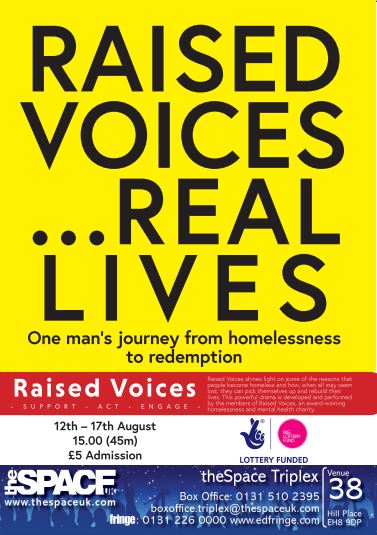
Can you tell us about Raised Voices & your role?
I founded Raised Voices in 2013 to offer creative writing and drama classes to people who have experienced homelessness. As the charity has progressed we are also with people with mental health issues and other people who may find themselves isolated. It’s a really inclusive group we have and nowadays it is hard to define as much as it was previously. I call myself ‘Director’ but in reality I am a bit of everything. I do the finances, produce the shows and I’m also hands on in the running of the group.
You’re bringing a play to this year’s Edinburgh Fringe; what are you bringing to the table?
I’m writing and directing along with my assistant Archie Gray. I also look after the production of the show and I’ll be doing the lights and sound when we are performing.
How have you found working with Archie Gray?
Archie was the first person to come to Raised Voices back in 2013 and I know him very well. A couple of year’s ago I asked if he wanted to become a trustee and assist me with the charity and he jumped at the chance. He is so dedicated and brilliant at what he does and the charity would be a lot poorer without him, as I’ve come to rely on him so much.
What materials were used during the research period?
I interviewed one of our members – Kevin. The show is about his life and how he became homeless. I took in a Dictaphone and spoke with him at length and then used his words to form the basis of the show. With the help of Archie and input from the cast, we have developed the script.
Can you tell us about the cast?
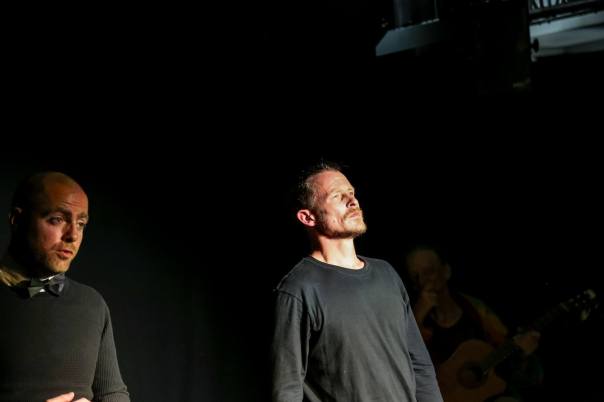
We have a core group of members that have been with us for years, they have all experienced homelessness at some point in their lives. We also have new members that have come on board that have not been homeless but have experienced or are experiencing some other issues in their life. All are not trained actors which brings a real rawness and energy to the performance.
What emotive responses do you expect from the audience?
I think the audience are going to be really moved by Kevin’s story. There are some parts of the play that will tough to watch but ultimately the play is uplifting and shows how he has come back from the brink to where he is today.
You’ve got 20 seconds to sell the play to somebody in the streets of Edinburgh, what would you say?
This show is performed by people who have all had big challenges in their life and they have come together to bring you an amazing story of despair, hope and redemption that will leave you inspired.
What will you & Raised Voices be doing after the Fringe?
After a short break we will be moving on to starting to work on our Christmas Show. There have been mutterings of the group wanting to do a musical, which fills me with a certain amount of dread. Either way we will be working hard to produce a great show for the public.
Raised Voices
SpaceUK Triplex Studio
Aug 12-17 (15:00)
www.raisedvoices.org.uk
An Interview with Alessandro Onorato
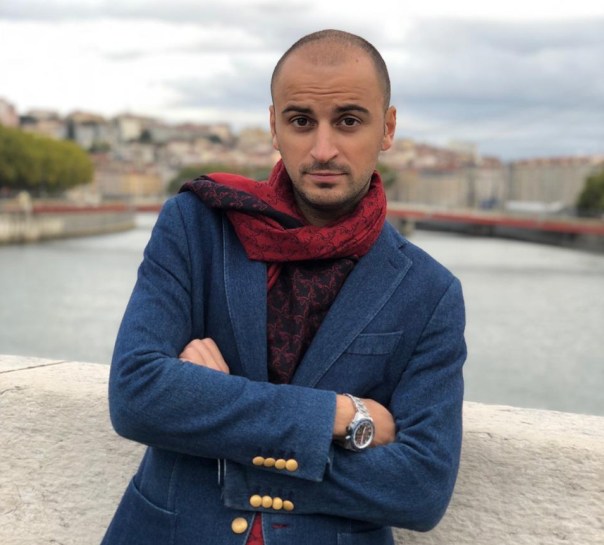
A ‘crazy’ Italian ‘sex drama’ is flying into the Fringe this August
Hello Allessandro, first things first, where are you from & where are you at, geographically speaking?
I was born in Rome, Italy, but I moved to Milan aged 5. I’ve been moving quite a lot during the years, and left Italy several times, but now I’m set back in Milan, where I work with my two theatre groups “Avanzate Idee Teatrali” and “i Birbanti”
When did you first develop a passion for theatre?
It all started when I was quite young, my parents took me quite often to see some comedies and musicals when we were abroad. It was always close to a dream for me. Then it suddenly started: they asked me to write a play, I was 17, I have never stopped since then. I never thought I’d direct a play, but it became the best part of my life quite fast.
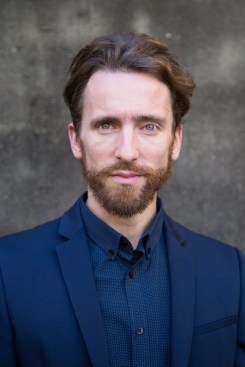
Baraghini Alberto
What for you makes a good piece of theatre?
I would say 4 things overall: the play, the director’s concept, the cast and the rhythm. Today the latter has become crucial: it’s always harder to keep the audience attention to a high level, and a strong rhythm becomes fundamental. It’s a hard task: but if you keep them all very far from the temptation to look at the smartphone for one hour it’s already a success. We live in a world where people like more to watch a 10 seconds story on Instagram than anything else and consider a youtube video of 10 min too long. As authors or directors we need to face reality and make our works as strong in rhythm as possible.
Italy has a rich cultural tradition – what has inspired you the most, & why?
I feel quite ashamed, but honestly I’ve never worked on a play written by an Italian author. Maybe we always have the feeling that what happens abroad is always more interesting, sometimes it’s true but sometimes not. I grew up reading English and American plays. But for novels I am still close to my country: Stefano Benni, Alessandro Baricco and Isabella Santacroce above all – and all contemporary by the way.

Salvodi Alessandra
What is the theatre scene like in modern Rome?
Rome is quite sleepy at the moment, cinema moves faster, and theatre is still quite too much underground and self-referenced, with a few good exceptions. Milan is moving much better and much faster, and has really reached an impressive level on the drama and comedy side. Unluckily, it’s not able to reach massive and international audiences and is still quite weak on some kind of shows, such as musicals. In the last 5-10 years we started to organize our festivals – that is a good step.
You’re bringing a play to this year’s Edinburgh Fringe; can you tell us about the show?
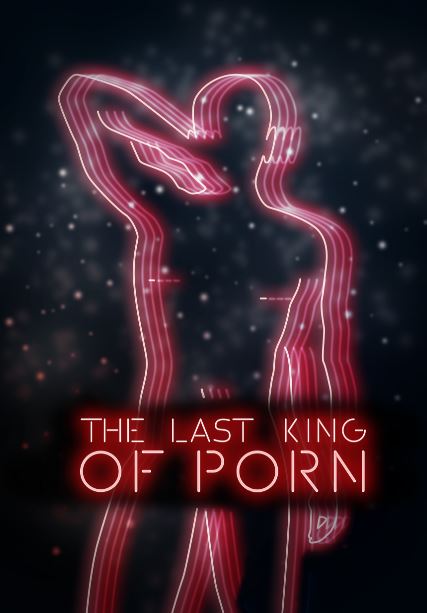
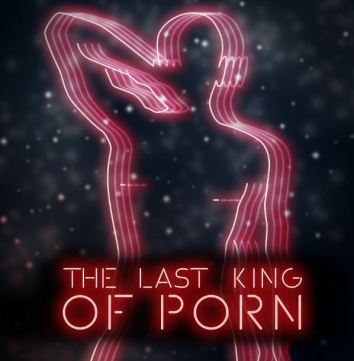
“The Last King of Porn” tells the story of a porn actor performing his last record-breaking movie: a sex marathon over a full day with 100 women. As the most important people of his life meet, we discover that the movie they are shooting is actually a snuff one, as the actor decided to kill himself during the performance. The atmosphere moves in short time from sexy to an anxiety-filled thrilling situation, where the attendees are not who they seem to be and hidden interests by his relatives come out. It’s an explicit drama about sex, love, family, suicide and much more. When I started writing the play I thought it could have been a good chance to dig inside all the dirt that lies behind the world of porn and show it, but then this actually was not enough. The women that spend hours talking, that at the beginning are recognisable only by numbers, waiting for their turn to participate to this sex marathon, confront themselves about their lives, discussing about sex, love and family, and actually show up as knowing each other pretty well.
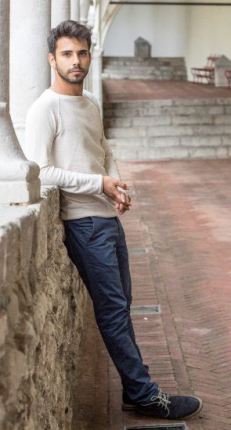
Iagulli Stefano
Where, when & why did the concept of “The Last King of Porn” originate?
It all started by reading, as it always happens for me. I read even 4-5 books at the same time, over 50-60 a year, depends. The biography of the porn star Asa Akira made me start to think it would have been interesting to write a play set in the world of porn – then the inspiration arrived after Chuck Palahniuk’s “Gang Bang” novel. At first I thought about writing an on-stage version of the book. Later I changed my mind and re-wrote the story in a completely different key, with a male actor as leading role (in Italy male porn stars are more famous than female ones) and massively changed characters and the story itself. But the directing idea was still missing – so I left the pages on the shelf for over two years, when at last the idea came: to divide the stage in two and play with shadows: it was after witnessing a Giavanese Wayang Kulit performance, and I thought to translate it into my work throughout an innovative space design.
How do you translate such an x-rated subject to the stage – is it gratuitous or tactful, or a blend of both?
Such a crazy story could live only in the world of porn. I tried to do it in the least aggressive way as possible. The play is for a mature public – for the themes and for the sex scenes shadow-shown – but does not contain nudity nor violence, since sex and deaths are happen only behind the shadow-sheet. And it goes way beyond porn. The theme of orphanage and abandon is quite persistent, and a hidden moral comes out obsessively: one wrong choice can change an entire life, as only one single moment destroyed the life of all these characters.
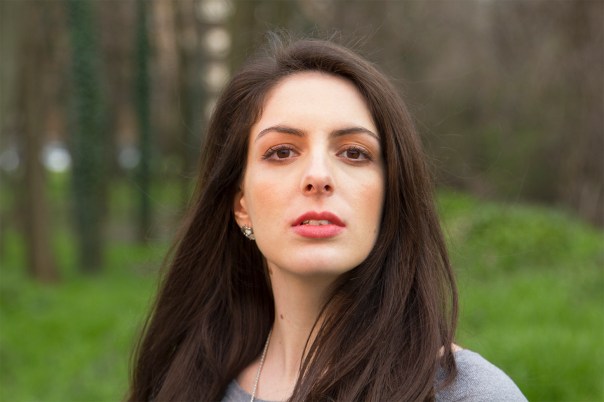
Magni Gaia
You have assembled quite a talented cast, can you tell us about them?
I am very proud of my team. We all work together for the first time but chemistry was immediate. Gaia Magni, who co-directs the play with me, is also an author and director of several awarded plays, and made an amazing work with the girls: Sara Dho; Paolo Grassi graduate, who also worked for the Greek theatre of Siracusa; Alessandra Salvoldi, from Odin Teatre, actress in several shows, plays, tv commercials and music clips; Laura Traina, who acts in some of the most prestigious theatres in Milan such as Franco Parenti and Out Off, and also worked for Asia Argento; plus the performers Claudia Campani and Claudia Veronesi. But I cannot forget the boys! This big cast sees on stage also Alberto Baraghini, who starred in movies such as “L’abbandono”, “Maxi” and “il Caso Pantani” and several web-series and Stefano Iagulli, graduated Nico Pepe, who worked in several productions all around Europe, and also performed at the Podium Festival in Moscow.

Sara Dho
You’ve got 20 seconds to sell the play to somebody in the streets of Edinburgh, what would you say?
Hey! Want to see something veeery different from all the other shows around? The Last King of Porn! A crazy sex drama. Want to lose it?
What will you be doing for the rest of 2019?
As soon as our days in the UK will be over we’ll finally bring our show to our hometown in Milan in September and go for a small tour in northern Italy later on. The group will later split up for other works that don’t see us working together, as myself, I’ll be on stage with the “Macbeth” with the group “i Birbanti”. We are working to close the year with a replica of “The last King of Porn” in Rome. For the future, I am thinking to move back to comedy after this sex drama
The Last King of Porn
Greenside @ Infirmary Street
Aug 2-17 (21:50)
www.ibirbanti.it
Them!
Tramway, Glasgow
June 27 – July 06, 2019
Script:  Stagecraft:
  Performance:
The Tramway was an expectant place as we congregated before the show. As we walked in we were handed ear plugs; you couldn’t have had a better forewarning of the event to follow. It was also testament to the Tramway’s complete versatility as a theatre venue with the whole space able to change at will. The performance event in question was a new show from the National Theatre of Scotland’s Stewart Laing and Pamela Carter. Them! was inspired by the classic 1950’s horror Sci-fi movie of the same name, in which giant mutant ants attack Los Angeles. No doubt then why the poster listed “the audience, the host, the guests, and band and the ants”. All of which elements were thoroughly examined in one way or another as the evening progressed.
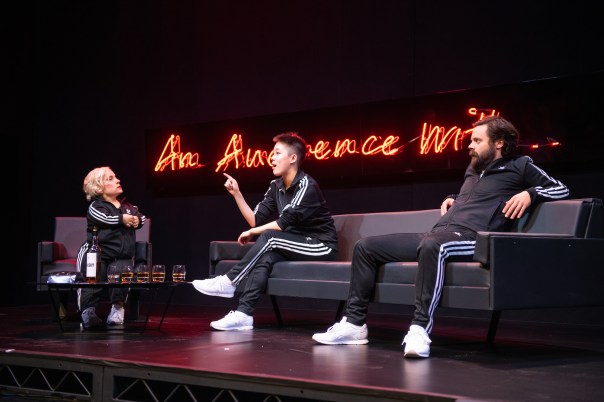
Them! was a talk show, hosted by the irresistible and irrepressible Kirina (Pamela Carter) who began the evening’s interviews by turning to the audience and asking about who we are. An enormous proposition, but that’s just for starters… With Kirina at the centre, the show built with great professionalism, fun, and lots and lots of talking as the artists and musicians offered their own personal take on any and every issue under the sun. Topics were raised and just as quickly flew by as the passionate Kirina, enjoying herself tremendously, delved deeper and deeper, kept us straight as we tried to follow the chaos of the ever changing scenarios.

I have to say a word about the production – the whole enormous stage was filled with everything a major talk show might have: a couch and chair for the interviews, a performance area for the band (Pop Queen Carla, a young Glaswegian Indie band), all combined with clever lighting, spotlights and the large screen hung right in the middle, on which we could watch clips from the original 50’s movie and from the musical tribute remake produced by Stewart.
Again and again, the discussions came back to the question of who we are, what we are, what are we doing here and touched upon themes of loneliness and survival? All the “guests” offered diverse reflections and comments, which could have been baffling, but somehow we were guided throughout and if we got lost we had the sense of Kirina to rely on.

So where do the ants come in? As carefully as we were “captured” we were shown the escape and could choose to go into a tunnel (through the audience) where there was heavy strobing and beat music which seemed almost out of control. My choice was a whisky and the quiet exit which led to a room where there were two large glass tank filled with thousands of leafcutter ants all busy doing what they do – a fascinating watch.
Are we ants? No we are humans but with very similar tasks, strength and beauty. What do we need? What does it all look like? The idea of Them! showed up many times throughout this show in different guises and with deep and careful and skilled writing and creating. In the end the show explored all sides of being human and surviving the world, just like the ants.
Daniel Donnelly

Pink House
Assembly Roxy
Edinburgh
June 28-30, 2019
Script: Stagecraft: Performance: 
Pink House is a new play by New Yorker, Madison Pollack, produced by Edinburgh theatre company Paradigm Lab. I got to see a preview before the show runs at Edinburgh Fringe this August, and whilst first performance nerves were certainly palpable I enjoyed the production a lot, especially Pollack’s thoughtful and emotive script.
Pink House explores the new relationship between a Jewish grandmother, Shira, who immigrated to America as a child and her adopted teenage grandchild, Peri, who she only meets after the death of her estranged daughter. As well as presenting the new co-existence of Shira and Peri and the seemingly insurmountable gulf between them, we see flashbacks of Shira’s childhood. These flashbacks depict a house of women and girls: Shira, her mother, aunt and sister, all with contrasting personalities. And this all-female cast adds to Pink House’s distinctive tone and perspective. The overall structure is chronological, but lacks rigidity, so that understanding of what has happened and is happening unfolds for the audience as the play goes on.
The strongest aspect of Pink House is its tender exploration of ideas around memory, family and what divides and connects people. The play deliberates over what makes someone family, and whether family is something you can choose. While Peri’s mother chose her through adopting her and did not choose Shira, but Peri and Shira are forced together through family connections. Pink House explores Anti-Semitism specifically through these questions of family, divisions and connections. Shira is faced with the childhood memories she has oppressed through the voices she hears (perhaps through senility) and the recordings on an old wire recorder, which her sister made “for posterity”. Memory becomes complicated when you are displaced from your family and culture by immigration and the repressing of trauma. For Shira this bottling up has resulted in cruelty to herself and those around her. And as we see throughout the performance, that certain things deserve to be remembered.
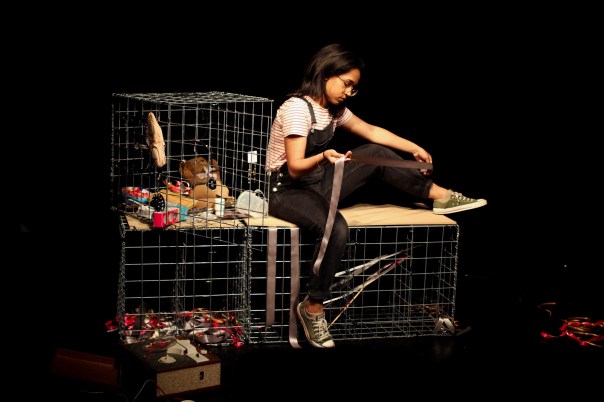
The abstract, minimalist set consisting of metal wire boxes which could be moved to create tables, chairs and cupboards, achieved the perfect balance of simplicity and flexibility required of a festival show. Although the movement between scenes was a little stilted it is sure to pick up pace by the run in August. The abstraction of the set pieces and how they are interacted with juxtaposes beautifully with the more concrete descriptions of the family home settings.
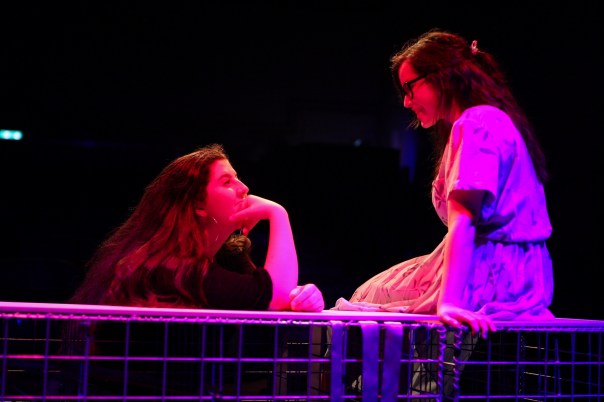
Alice Jackson had quite a challenge portraying both the younger and older Shiras. With no time for a costume change, let alone aging make up, as the scenes flow from past to present, it is all down to Jackson to make the shift clear to the audience. While there was a notable and satisfying change in her interactions with other cast members it would have been nice to see more from her physicality. Ania Myszkowska was particularly enigmatic as Rebecca, Shira’s younger sister, her energetic and youthful performance contributing a lot to the tenderness of the production and the heart-breaking revelations of the family’s experiences.
Pink House has a very original voice, a thoughtful script and some great performances and stage craft. If you are looking for some new writing that is more thought-provoking than provocative this Fringe, then I would recommend getting a ticket.
Katrina Woolley
Last Ferry to Dunoon
Oran Mor, Glasgow
June 24 – 29, 2019
Script: Stagecraft: Performance:
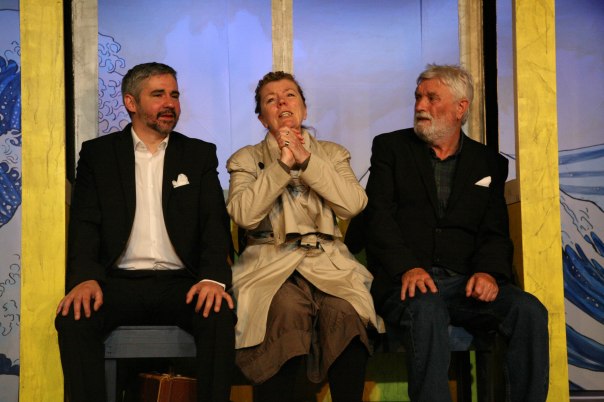
The set glowed blue with a backdrop depicting Katsushika Hokusai’s famous Great Wave print, perfectly setting the scene for us as our three characters sat together in a shelter on a stormy day, waiting for the ferry to Dunoon – it was unclear whether they planned to embark or were waiting for someone who was due to arrive. As they waited, the three – Karen (Linda Duncan McLaughlin), Aiden (Iain Robertson) and the aptly named Johnaboy (Laurie Ventry) – regaled each other with tales of the seaports and coastal towns they had visited, stories that seemed as large as the sea itself.
This week’s PPP was Peter McDougall’s amazing seventh play at the Oran Mor (he also co-wrote the very first) and opened to a full house with an eager and appreciative audience, full of relish for what was to come. And they weren’t disappointed, with the action moving from frolicking comedy to spotlit drama as the actors in turn held sway with the stories they had to tell about well-remembered summer trips down the coast to traditional destinations like Millport, Wemyss Bay, Rothsay.
As the stories unfolded, it felt as if there was more to this than met the eye as the characters revealed more about themselves and you wondered about what the relationship was between them. Karen seemed to be the cornerstone and to have the key that would tie the story together. When the storm exploded, with thunder and lightning roaring and flashing over the stage, the two fellas were thrown to the floor where they remained for a good ten minutes.
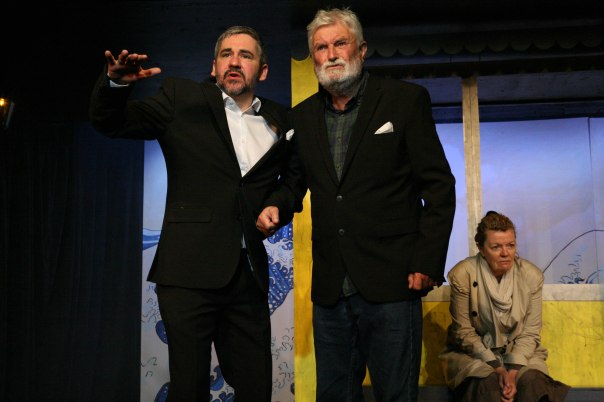
As a twirling twist Karen was repeatedly revealed in different guises, taking off her jacket to reveal an NHS costume, then later shaking out her hair to make her appear like some sort of god. There seemed to be a kind of mythical undertone to this section as she performed various small tasks over the prone men, delivering both blessings and condemnations as she woke them up obviously feeling very rough after their handling by the storm.
It seemed like no time before the hour was up and we were left slightly wondering what just happened – more than just waiting for a ferry while being blown about by the wind and the rain. A romp down memory lane perhaps. An invitation to explore the old and the new and perhaps the mythical in Scottish culture. An entertaining and intriguing experience, full of light and dark, just like the sea.
Daniel Donnelly
An Interview with Matt Rolls
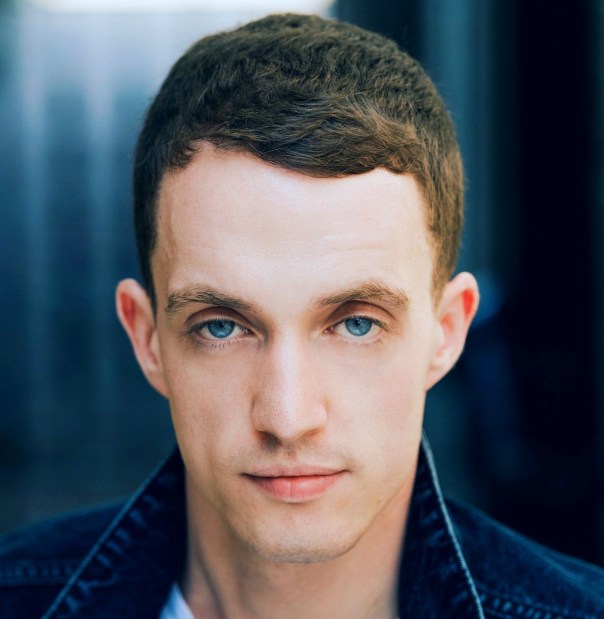
Exeliksi are bringing a gripping new play to the Camden Fringe, the Mumble caught with the man behind it all…
Hello Matt, first things first, where are you from & where are you at, geographically speaking?
I was born and bred in Norwich, Norfolk, a beautiful part of the world! I currently live in Essex, where I trained at East 15.
When did you first develop a passion for theatre?
I think film captured my imagination before theatre. I grew up on James Bond and classic World War II adventure films. They were and are pure escapism for me. From there I knew I wanted to be involved in storytelling in some way, at least as far as I could intellectualise that as a kid, and I did a lot of creative writing. My parents enrolled me at a Saturday drama class at Norwich Theatre Royal when I was 8 and I was hooked. I stayed with them and worked through their youth company until I was 21! Then I got into drama school.
Can you tell us about your time with the Russian Academy of Theatre Arts in Moscow?
I spent a month there in the summer of 2017 as part of an international collaboration the school has with East 15. We worked on Stanislavski’s approach to acting and biomechanics. I played Tuzenbach in Chekov’s Three Sisters, which is a wonderfully complex part and everything I thought I knew about acting was made almost redundant. Play your objectives and find the game in the scene. Everything else, including the lines, are secondary really. Truthfulness evolves organically from your inner intentions in the moment, and the scene will be completely different every time. It was a transformative experience.
In a world where you can get entertainment ‘on demand’, what makes theatre special?
It’s live. It’s in front of you. You can almost touch it (sometimes you can touch it, depending on the show!). Those are the clichés I suppose. But I don’t blame the rise of ‘on demand’ entertainment for any perceived disinterest in theatre. Theatre is still very much by the middle class, for the middle class and it has to change. The class divisions in our present society are enormous and theatre simply isn’t doing enough to bridge the gulf in my estimation. As creatives, I think we’re often more out of touch and narrow-minded than we’d like to admit. We seem to be heading towards a singular political narrative, and I think that’s pretty dangerous.

Can you tell us about Exeliksi, & your role with them?
Exeliksi is a production company I’ve co-founded with my friend, Dimitris Kafataris. It is derived from the Greek word for ‘evolution’, therefore the language that gave birth to theatre and democracy. Theatre, society and politics are intrinsically linked and it’s vital that all three progress right now. So Exeliksi seemed fitting.
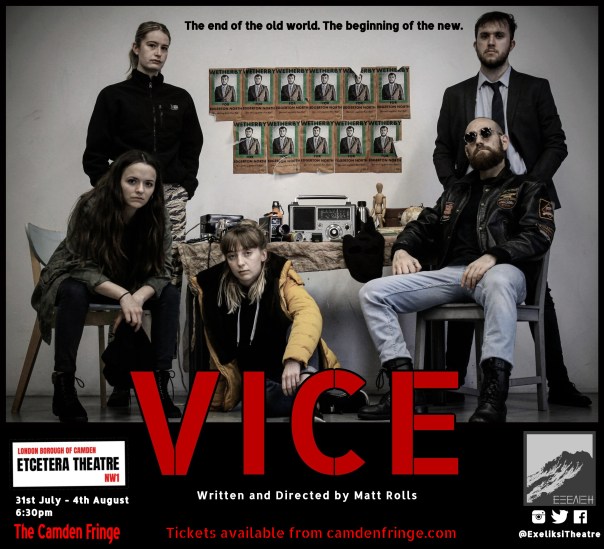
You’re masterminding a new play, VICE, at the Camden Fringe, can you tell us about it?
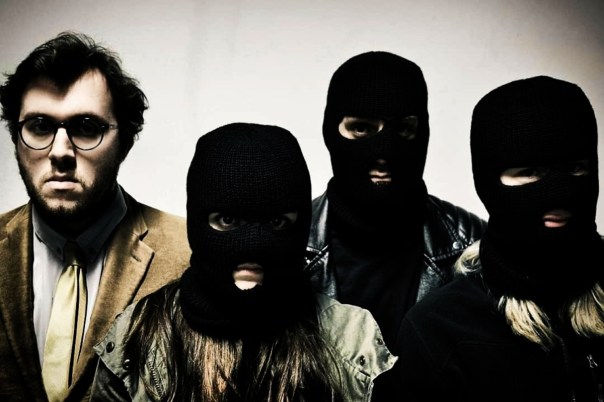
VICE is set just a few years from now, at the time of a civil war in England. It feels very much to me that the world is on the edge of a precipice and VICE was written as a response to that. If we fall, who picks us up? Do we carry on as we were? How do we go about re-modelling the world? But there is a smaller, human story too concerning a father and his daughters, which becomes the main focus.
That’s quite an imminent apocalypse, are you nervous about the current global political climate?
Of course! We all like to think that a war such as those occurring in Syria, South Sudan or Yemen couldn’t happen here. But look at how divided our country is at the moment, along class lines in particular. Look at the response to Brexit. It wasn’t compromise or reconciliation, it was further polarisation and ostracisation. Look at the state of debate and discourse. Look at the Grenfell Tower fire, a landmark, public event in our history where our government failed to take care of our most vulnerable; the poor, the elderly, the disabled, refugees. And for the whole country to see live on television. We all saw it. If we carry on the way we are, I can’t help but fear we’re headed towards further disaster. But I believe there is hope if we can all recognise our own and each other’s capacity for change, instead of picking diametrically opposed sides all the time and letting them define us. VICE is ultimately about reconnection and reaching out to each other.
VICE is your debut play as both writer and director; are you finding the play is constantly evolving?
Absolutely. The cast and I have all had an extra year of training since we first started working on it, so we’ve been able to spot things we hadn’t before, find new approaches and see what works dramatically. It’s been a collaborative creative process with the cast, whom I trust enormously, and I’ve thoroughly enjoyed it.
What emotive responses do you expect from the audience?
I don’t have any expectations and I don’t think it would be right of me to. I can hope though. As I said, the play is ultimately about reconnection. If someone came and saw the show, went home and simply called a friend they hadn’t spoken to for years, perhaps because of a falling out they had, that would be a huge reward for our work. It’s not about going out and drastically changing the world. It’s on a smaller scale.
You’ve got 20 seconds to sell the play to somebody in the streets of London, what would you say?
Come and support a group of young artists as they try and find their voice within this profession! You may laugh, you may cry and it’s cheaper than the West End!
What will you be doing for the rest of 2019?
I’ve recently graduated so I have a lot to sort out! Creatively, I have some ideas for new projects, both as an actor and writer. There are a lot of avenues I could go down and I look forward to the future.
VICE
Etcetera Theatre, Camden
31st July- 4th August (18:30)
www.facebook.com/ExeliksiTheatre
Dusty Won’t Play
Oran Mor, Glasgow
June 17 – 22, 2019
Script: Stagecraft: Performance:
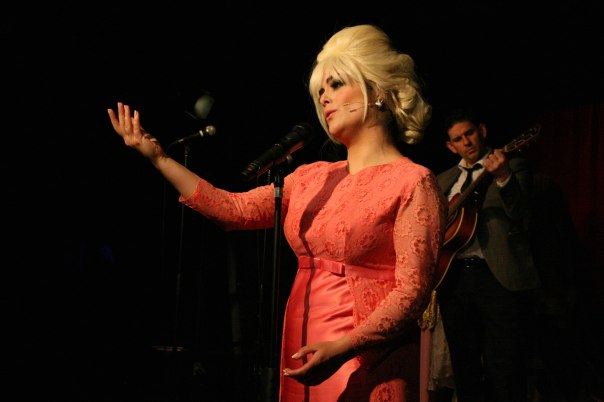
Today’s set was a marvellous confection of soft frilly orange material at the back with red on either side, with something of the look of a stall at the circus. And following on the big background came the big music as we were introduced to the inimitable Dusty Springfield who glided on stage and into song. A tribute to Dusty’s famous 1964 tour of South Africa, this play was written by well-known comedy writer and children’s author Annie Caulfield and is making its second appearance at Oran Mor, the first one being back in 2017.
Frances Thorburn as Dusty – at the height of her fame – passionately refused to go on tour in South Africa and play to segregated audiences. According to the law they would only be playing to segregated audiences, basically a gig without black people. Music and dialogue intertwined with lighting effects to build the plot, a story hard to hear for modern sensibilities.
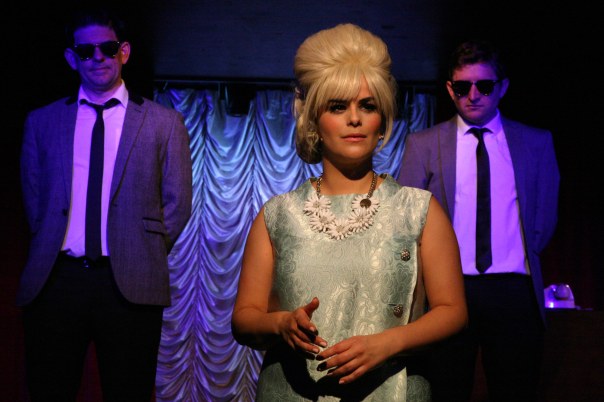
Kevin Lennon and Andy Clark both shared a number of roles, not least Clark’s portrayal of the South African Policeman, out for Dusty’s blood because of his zealous dedication to the extremes of South African apartheid law. Lennon played both Dusty’s band member and her Manager, working hard at watching Dusty’s back and making a very good job of it. They played a gig in Johannesburg to both white and black people where Dusty out-performed herself.
Frances Thorburn’s portrayal of Dusty captured all the magic and power of that unique voice, together with that legendary star quality which she used to battle over great opposition and in the end to triumph over it. Not that she didn’t have many moments of doubt, especially when she and her band found themselves in some seriously sticky situations – this was a South Africa that could be hostile and inhospitable. But in the end they stood firm; with Dusty at the wheel they all found themselves fighting for nothing less than human dignity, or at the very least raising awareness of the issues.
In the songs we laughed, we cried, we were treated to a voice that sang from somewhere beyond, and we laughed at the jokes. With the final iconic song ringing in our ears, we were left thinking that choosing Dusty’s legend was a great way of showcasing the sort of problems we see the world over, because everything changes and everything stays the same…
Daniel Donnelly
An Interview with Steve Cooper
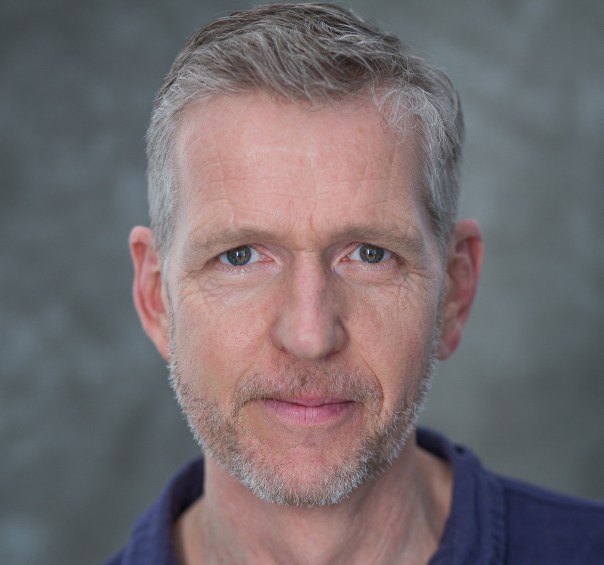
A delicately touching musical comedy on dementia is heading to Edinburgh. The Mumble caught a chat with its creator…
Hello Steve, first things first, where are you from & where are you at, geographically speaking?
I’m based in Ramsbottom, ten miles north of Manchester.
When did you first develop a passion for theatre?
I knew right from infant school when I played one of the King of Siam’s sons in the senior school’s production of The King and I. I kept having to remind the King to pick me up when he forgot. I knew then that I was comfortable on stage. Nothing else I wanted to be but an actor.
Can you tell us about your training?
My training’s been mostly on the job. I started acting 35 years ago when I was 18. Since then I’ve been a jobbing actor and I’ve had some wonderful and some dreadful jobs. All part of the life of an actor. I taught drama for a while and took a late degree in Performing Arts at the University of Northumbria in Newcastle.
In a world where you can get entertainment ‘on demand’, what makes theatre special?
For me it’s the shared experience of the audience that makes theatre special. I love the ‘now’ of theatre; the fact that any given audience will have their own, never to be repeated experience unlike any other is thrilling and nerve-jangling.
You’ve had quite the career on TV, what have been your highlights?
Having a great role in BAFTA winning ‘In The Flesh’ has to be my highlight. To be in a show with heart and soul and have lots of exciting things to do on screen is every actor’s dream. I got to work with some of my screen heroes. I’ve been involved with lots of great TV but nothing beats this for me.
You have written in, & are acting in, a new play which you are bringing to the Fringe, can you tell us about it?
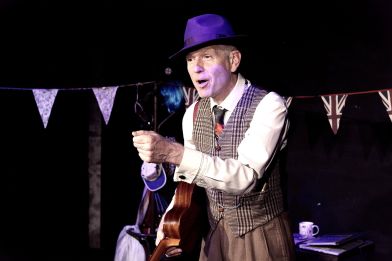
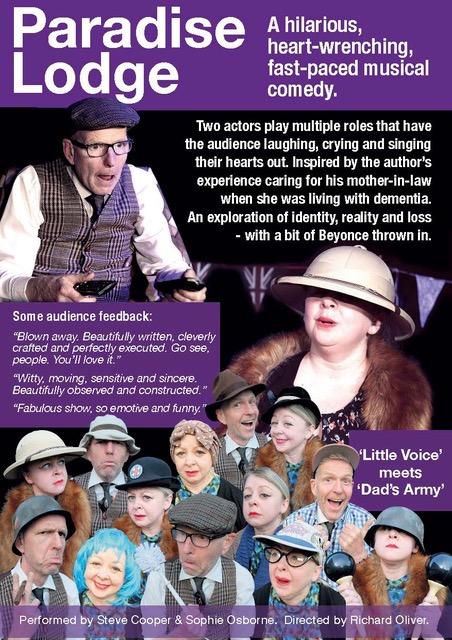
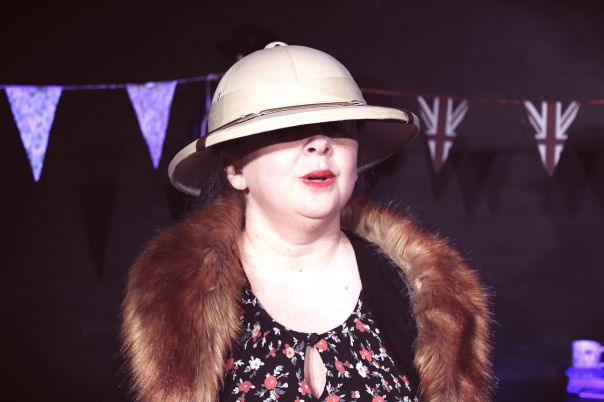
Paradise Lodge is a musical comedy with two actors playing many characters.
A dysfunctional 1940’s duo, ‘The Doodlebugs’ are doing a gig in a care home called Paradise Lodge. We meet some of the care-home residents and hear their stories. As the duo disintegrate, we see how the onset of dementia has affected the lives of those living with it and their carers.
During the writing of ‘Paradise Lodge’, what materials did you use during your research?
This play is based on my experience helping to care for my mother-in-law when she was living with dementia. Writing it has helped me come to terms with what was a very trying few years. It helped me make some sense of it and organise my thoughts. I was apprehensive for my wife’s sake. I knew the whole process would be upsetting for her. It was her mother, Dorothy, who we cared for. After mum died I started putting my notes together and a year later, I had enough of the play to start workshopping. The scenes are all from life. Sometimes word-for-word. Even some costumes and props were Dorothy’s. We both cried plenty through the plays development but we are telling Dorothy’s story and others seem to take some comfort in that.
Can you tell us a little about the rest of the cast?
This is a two-hander with myself and Sophie Osborne. We met doing workshops with Jim Cartwright. Sophie trained at Italia Conti Drama School. Since graduating she’s had many roles, including in 2 episodes of Dalziel & Pascoe, Emmerdale, a 6 month, large scale UK tour of The Turn of the Screw and voiceover work on feature film The Nun. She’s also played Little Voice in Jim Carwright’s Cartwright Cabaret, directed by Jim himself. She set up her own theatre company, Mini Me Productions, in 2015, and has successfully toured her self-penned one woman show, Kissing Frogs, extensively since then. You can currently see her on TV prancing around with retro favourites, Dip Dabs, for Barratts Sweets.
How is director Richard Oliver handling your baby?
I had a very clear idea of what I wanted this show to be before we started rehearsals and Richard has been very sensitive to the fact that I have written and am performing in the play. His outside eye has been invaluable in shaping the final performance and considering the audience’s experience. I feel very lucky to have him on board.
What emotive responses do you expect from the audience?
It’s been reassuring that people seem to get it. I’ve been told time and again that the play is truthful and authentic. That’s important to me. Everyone finds their own connection with the characters. When people are coming back the next night and bringing others with them it shows that they feel ownership of the play. For me that’s the highest praise. From our experience of preview shows I expect the audience to laugh a lot, cry a bit, and occasionally laugh and cry at the same time. And to sing along!
You’ve got 20 seconds to sell the play to somebody in the streets of Edinburgh, what would you say?
If you want to be tickled, uplifted and have your thoughts provoked come see Paradise Lodge. You’ll laugh, cry and sing your heart out.
Paradise Lodge
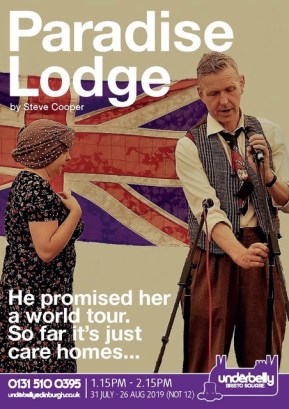
Underbelly Bristo Square
Aug 1-26 (13:15)
www.doodlebugsproductions.weebly.com
Twits, Wits and Bawdy Baskets
Gawthorpe Hall, Padiham
June 8th, 2019
Script: Stagecraft: Performance:
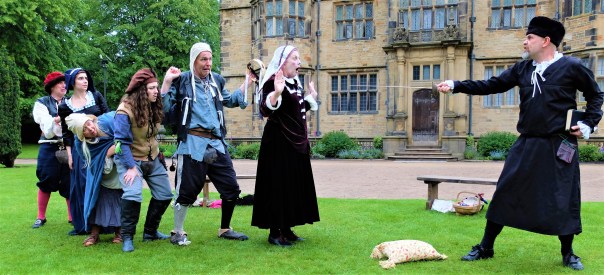
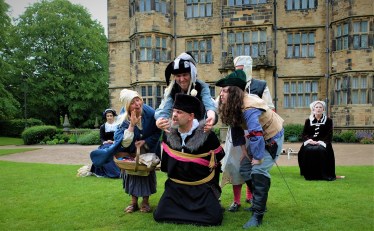 Camped out on a picnic blanket in my waterproofs, within seconds I forgot all about the weather and was fully immersed in a new comedy by Doodlebugs Productions , Steve Cooper’s Twits Wits and Bawdy Baskets. Set right outside Gawthorpe Hall in an open park, we follow a group of “hapless Elizabethan rouges” on their attempt to be a company of strolling players, hopefully grabbing a good bed and grub on their way.
Tom is an eccentric cross-dresser, who claims all parts of the fair lady. Harry, the boisterous confident leading man. has a secret. Merry John is the joker who glues them all together and Sloppy Jen, well, she’s just there for the ride. The only thing standing in their way (other than characters’ apparent lack of talent) is Reverend Shuttleworth, a firm believer that these so-called plays are created by nothing but beggars. After leaving the Reverend tied in an attempt to escape his preaching, the rogues are on the run!
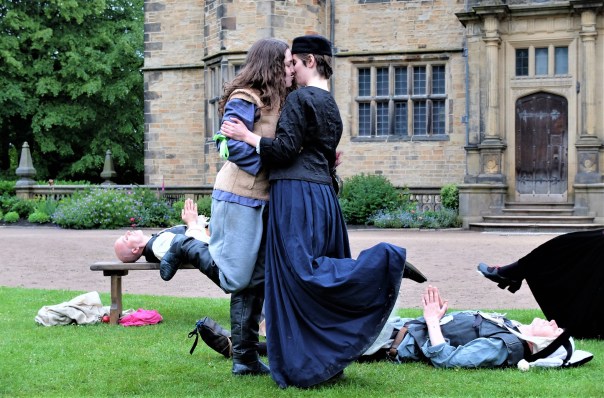
On the other side of things, we had our very own Anne Shuttleworth of Gawthorpe Hall, lost in her own world of reading and writing her own plays, while constantly battling her Mother for her right to marry for love.. Upon the news of her father’s death in London, we discover that Anne’s cousin, the Reverend Shuttleworth, is on his way to claim the Hall which is rightfully his. When the two groups collide, hilarity ensues & the piece provided the perfect combination of a superb cast, acapella singing and quick-witted humour to keep us warm on a rainy Lancashire afternoon! What’s not to love?
Kae-Lei Stowell
Ida Tamson
Oran Mor, Glasgow
June 10 – 15, 2019
Script: Stagecraft: Performance:
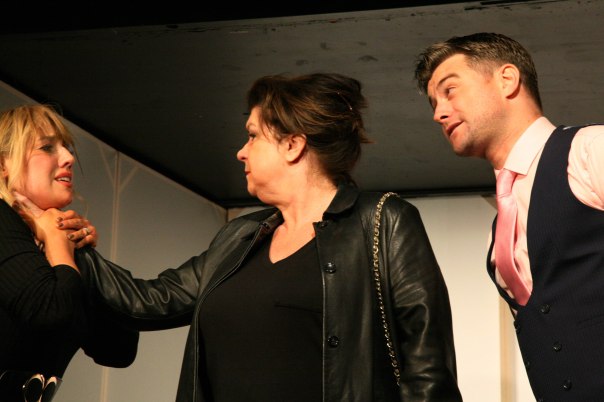
For Oran Mor’s offering this week, the set had a somewhat clinical feel with panels covering the back of the stage and a gap that would act as a door. There was a table with two dark seats and a mug on the table. As the play began, large magazines were projected on the panels. To the sound of rap music we saw Elaine C Smith and Joy Mcavoy join each other already deep in conversation. Smith was reprising the character of Ida, a part she first played in 2006 when Denise Mina’s play was first produced at Oran Mor to great critical acclaim.
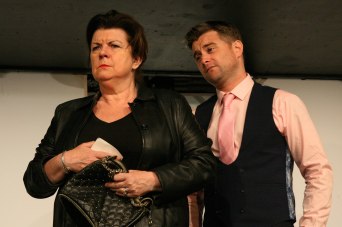
We got the measure of the two women straight away by the contrast in their attire, the middle aged Ida in her less expensive clothes compared with journalist Helen (Macavoy) in her plush business suit. Helen was chasing the story of Ida’s daughter Mary, victim of an overdose. In their conversation it turned out that Mary was dead, wasn’t dead, was dead again, becoming a farcical exchange between them and greatly frustrating Helen as she has became emotionally invested in the Mary situation. Every time the journalist felt she was making progress Ida shuts off and gave out her usual banter to get out of talking about the unbearable details.
Gradually the truth emerged and we realised that Ida’s humour was her way of trying to deal with the great grief of losing her daughter to drugs. Helen seemed to want nothing more than to represent Ida in telling her story, indeed she became quite passionate about that. But Ida remained aloof, never quite trusting this journalist who she felt was really only looking for a good story to boost her own career. In fact at one point Ida was so full of distrust and paranoia that she clasped her hands around the journalist’s throat, nearly strangling her. And it would be a good story because Ida had turned her back on a life as the wife of gangland drugs boss and was bringing up her lost daughter’s children on her own.
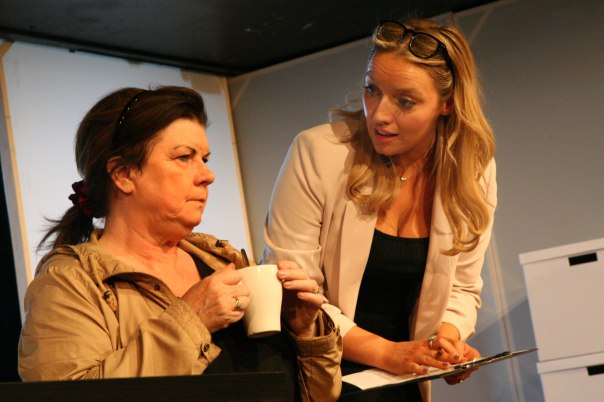
With a nifty change of scene (worthy of larger and longer productions), we were introduced to the character Fletcher (Paul James Corrigan) who it turned out was a rival drugs lord, and the person who got involved with Mary and got her into drugs in the first place. He was planning to move to Cyprus and wanted to take his son, Mary’s child, with him. He demanded that Ida allow him to do so, threatening violence if she didn’t. We saw all of Ida’s inner turmoil as she struggled to find the strength to assimilate yet another body blow made by this unreasonable man, who was already in reality the villain of the piece.
The play concluded with Ida sitting at Helen’s desk with the journalist frantically writing away. Ida had already lost so much, has had to dig deep into her inner reserves of courage and resilience in order to survive, but in the end we are left with a poignant vision of a heroic Glasgow woman who despite having lost so much, found the courage to acknowledge all that had happened and agreed to make her story public.
Daniel Donnelly
 Mumble Theatre