The Aretha Franklin Story

We all need more soul in our lives and there’s been no greater purveyor and innovator than the Queen of Soul, Aretha Franklin. She began as a gospel singer and from a very young age, seemed to have a voice well beyond her years. We’re very lucky, therefore, to be able to hear a similarly powerful and transcendent voice from renowned pop singer, Cleopatra Higgins fronting Night Owls Shows’ The Aretha Franklin Story. This isn’t toe-tapping covers – this is a full on booty-shaking, hollering at the heavens, sweaty, sassy good time. Just as Aretha would have wanted it.
The band rocked through her biggest hits, easily putting the audience on their feet and then brought things down with some tender sweet moments. Documentary clips projected onto the back wall positioned the audience to appreciate the historical context of Aretha’s climb to superstardom and her incredible numbers of awards and chart-topping hits.
But in the end, it’s all about the voice and Higgins has it, no doubt about that – bringing more than a few punters to tears. She has big charisma and a voice that is both soulfully simple and spectacularly acrobatic. It’s everything I hoped for from an Aretha Franklin tribute, but I also hazard a guess that one day there might be a Cleopatra Higgins Story tribute show – let’s wait and see.
The rest of the band are similarly excellent with a tight rhythm section and backing singers with strong enough voices to lead a show of their own. The whole scene at the Symposium is impressive and Night Owl Shows, as one of the major companies there, have built a wonderful community of artists honouring the legacies of some legendary artists.
I recommend people check out their entire suite of shows as there is bound to be some celebrating your favourite musos and you can trust the bands will be superb. Higgins also fronts Night Owl Shows’ The Whitney Houston Story which I will have to catch as well. If she captures Houston to the degree she did Aretha, it will be another unmissable show. Get on it.
Stuart Bruce

Alice in Wonderland Musical

Riddles Court
August 12th, 2023
Laudator Temporis Acti
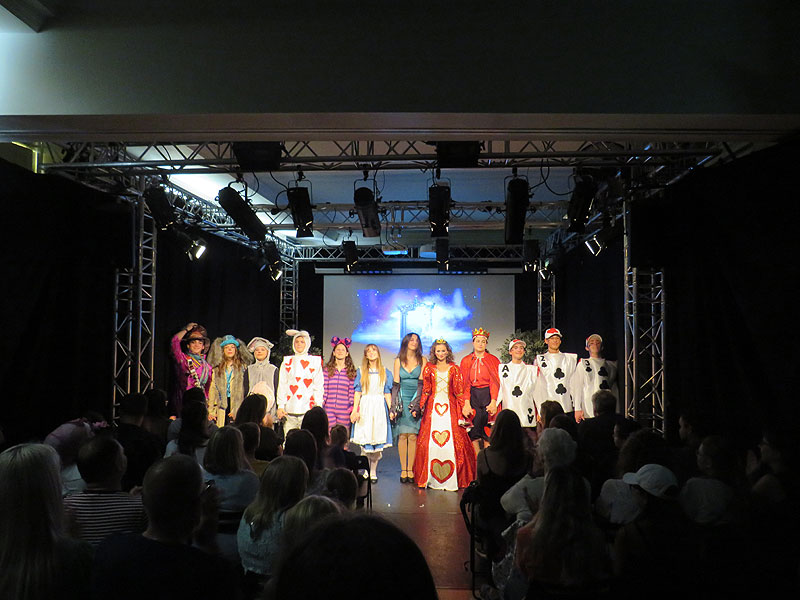
The world renowned classic tale, Alice in Wonderland, by Lewis Carroll, was brought to Edinburgh Fringe Festival by Tim Nelson and the California Musical Ensemble, to the very heart of Edinburgh’s Old Town in the historical court yard that is Riddles Court. In the intimate Thistle Theatre this family friendly show was sure to be a hit with the younger audience as well as the adults, who seemed just as eager as the children.
The diversity of characters in Alice in Wonderland has entertained audiences around the world for generations and this musical was no different. Casted perfectly in their roles Alice (Charity Bielicki) was sweet and believable, which brought warmth and personality to Carroll’s most famous creation. The cheeky Cheshire Cat, played by Emily Crabb, encouraged much laughter from a now transfixed audience. Aesthetics & physicality are the keys to stage characters, but combining that with a voice that defines ones ability to connect all three elements is no easy task. Tim Nelson, however, nailed it. White Rabbit, Caterpillar, Doormouse, the Mad Hatter, the Queen of Hearts and all the other cast members carried themselves beautifully through voice and physical movement.
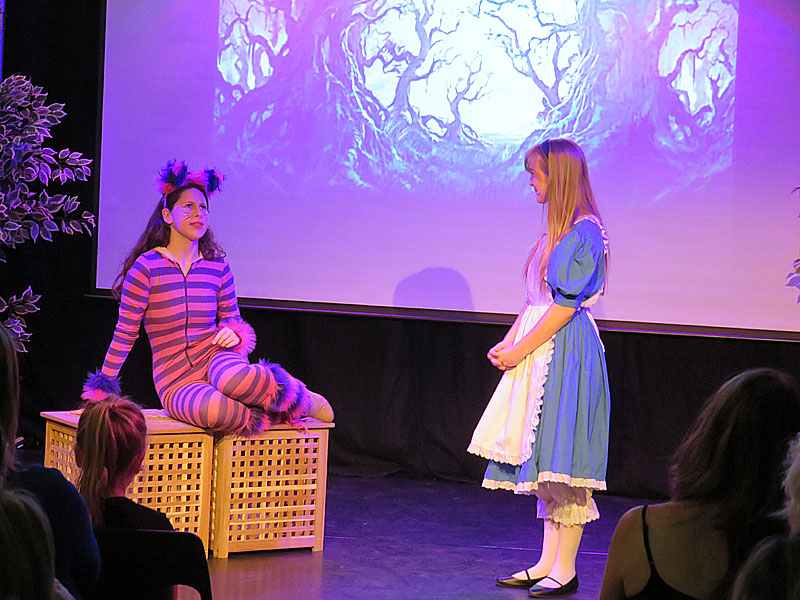
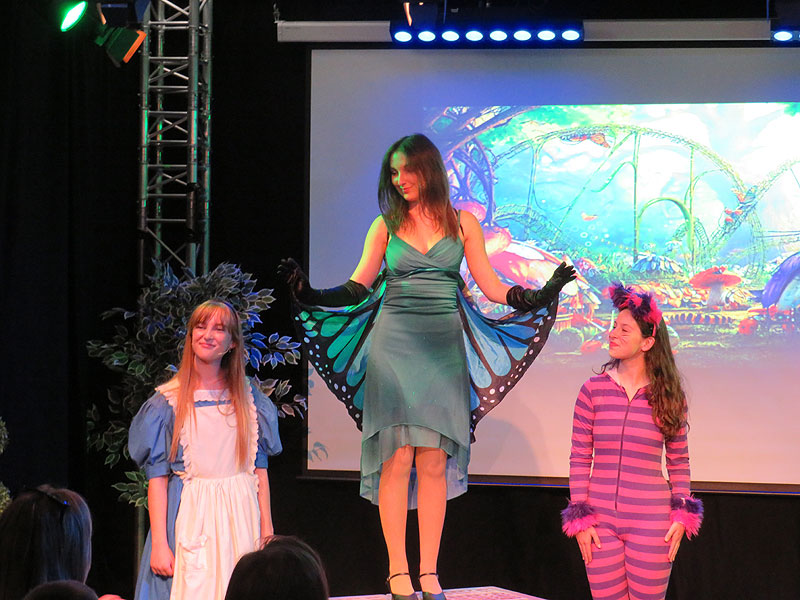
A musical would not be a musical without the music, and with an array of feet tapping singalong songs like ‘Let’s All Go To The Fair’, ‘In My Mind’, and ‘Everyone is Mad’, a feel-good atmosphere was made present and received with open arms. The stage production was crisp and precise. Nothing was left to chance, with every angle being approached with professionalism and fine detail. The perfection, creation and design of the costumes was applaudable and deserving of praise. Colourful, bright and enchanting they had the desired affect bringing the musical to another level.
Daphine Moyes (Narrator) is a natural storyteller. An informing dialogue allowed the delivery of the tale to be easily understood by even the youngest of attendees, and made for a more personal experience. Alice in Wonderland is a light-hearted piece of musical theatre to be enjoyed by the whole family; and with an abundance of colour, fun, wit, cheekiness and joyous moments its sure to keep the children entertained. This musical shone like the sun on its hottest day, and if rainbows could dance then I am sure Alice in Wonderland is where the dancing starts. A beautifully written piece of musical theatre, executed with love and affection that was endeared by all in attendance. With sell-out shows each day the demand was phenomenon, so lets hope Alice will return from the rabbit hole next year and do it all over again.
Raymond Speedie

24, 23, 22


Under Belly – Iron Belly
Aug 12–13, 15–27
Remis Velisque
There was nothing normal about the start of this great play titled ’24, 23, 22 at the Edinburgh fringe’s venue Iron Belly, Cow gate. Situated in the underneath part of the bustling centre the room was black and seemed sparse though its lighting covered the ceiling. The mysterious title had me intrigued so I picked what would turn out to be a riveting hour in the hand of two actors and a DJ on a laptop.
Energy levels were present from the moment you walked through the door where the charming duo enthusiastically greeted us with touching momentum. Ruth Page (Fran) and Joe Matty (Brendan) hurled themselves into a frantic dialogue where the ever spinning Brendan flew into a story of catastrophe for him in fact he was taking us through the very final day of his life.
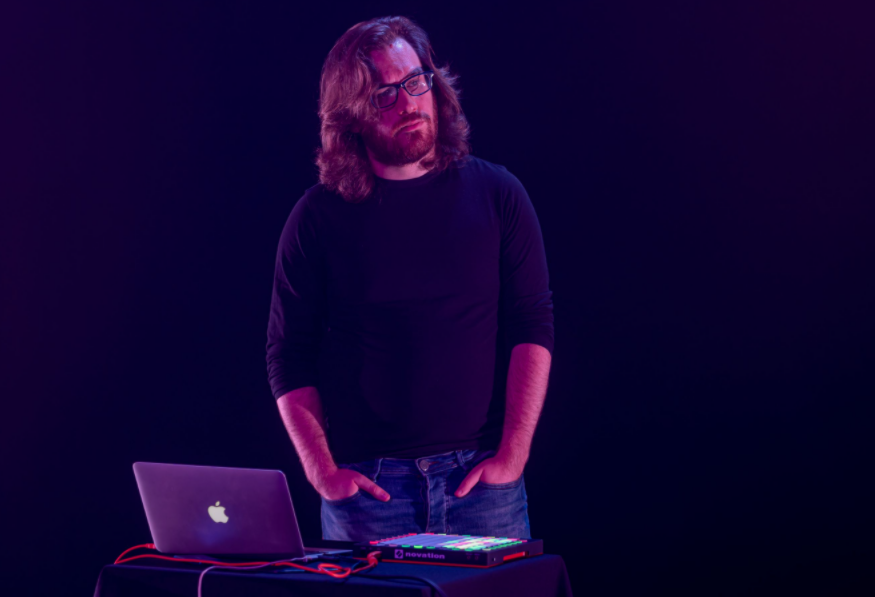
He was terrified, confused and uncertain but he bellowed his thoughts with a fast diction, rapping to the laptop beats behind him and making movement at speed that gave proceedings a touch of action. And that action was the protagonist as the shared dialogue was revelled in by these actors who thus far seemed to have no connection.
Fran’s world was also pivoted upside down though her part offered a calamity of normality or what it is for people performing in the world today. Though the pace was often extreme care was taken in this diction so following the words and plots was easy and enjoyable.
Both Ruth and Joe are young yet their success in theatre is commendable as they have created ways to make sure their personal interests in theatre and beyond are being used to pave a remarkable journey for both.
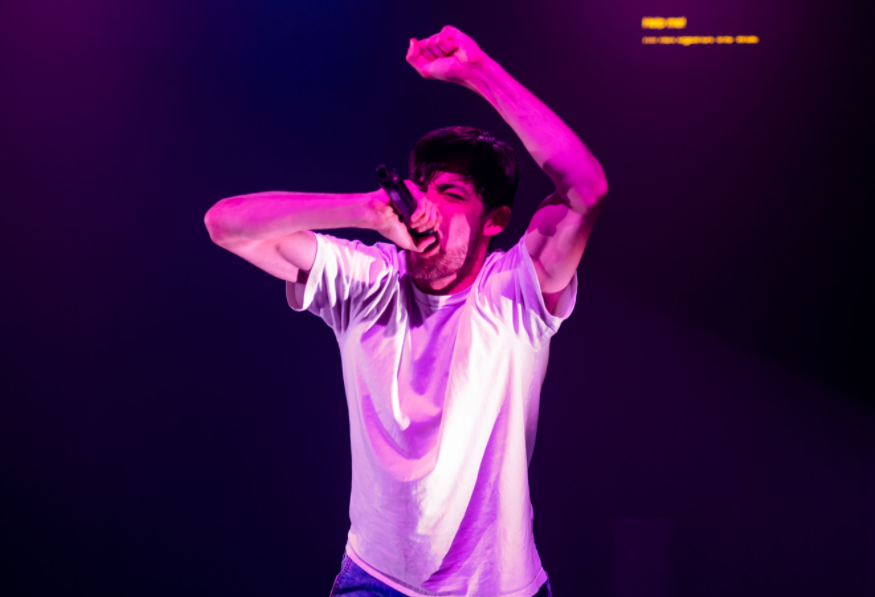
Their collaboration for 24, 23, 22 has proved to be a project that has caught the attention of British theatre and they have brought it to this year’s Fringe. Their passion steamed forth with obvious utter dedication to a very impressive level able to really get to the core of character, conversation and frustration.
Especially for Ruth’s who’s suffered a world falling apart! The balance of respective situations began separated then to bubble and merge together making my thought contemplate a steady stream of perplexity even as if I was taken aback by the outstanding performance.
With all the aims flying around it came to a kind of completion of everything theatrical cut into shape by dynamics that roared in a very human, tactful, no holds barred and unafraid pleasure in cutting a hold of us with an extra sense of wonder. This streamed through very capably. This was a great play, meshing sadness with control and certain sudden senses of the fear of life falling apart in its realties.
Daniel Donnelly
The Trials of Galileo

Greenside @ Infirmary Street
Aug 14-19, 21-26 (10:15)
Caeli Anarrant Gloriam Dei
Written and Directed by Nic Young. Performed by Tim Hardy.
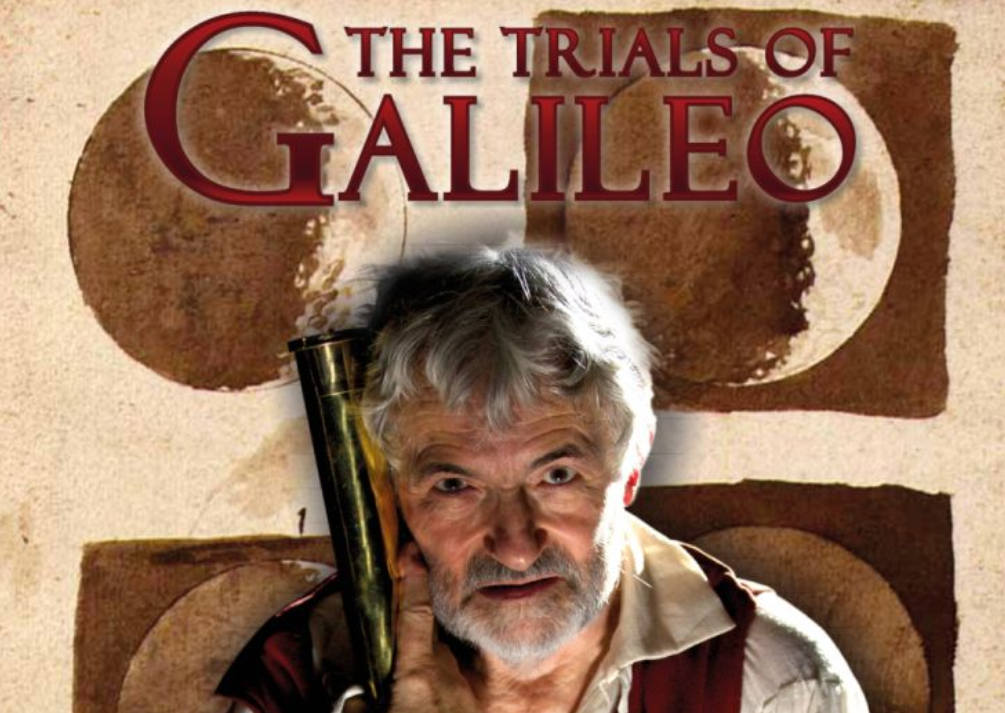
Tim Hardy is a marvel in this period piece, The Trials of Galileo. The Edinburgh Fringe is filled with raw storytelling from alternative artists and thus one sees a great many performances from untrained actors. It is most refreshing to enjoy the wonders of high-level craft from a classically trained actor with vast professional experience.
Hardy’s skills of diction and characterisation culminate in a presence on the stage that would not be out of place beside the likes of Burton, McKellen and O’Toole. He is the best of the classical acting tradition, with a mellifluous tone and musical, poetic delivery. His pacing is wonderfully smooth yet dynamic, a delight to the ear; his characterisation authentic and honest. I felt like I was living vicariously through the character, experiencing the journey of the great Galileo being indicted for the hideous crime (sarc.) of practising science in a theocracy.

The unfairness and violent subjugation of free-thinking in the 17th Century was well-established by Nic Young’s script. We saw the anguish in Galileo, so powerfully portrayed, but the connection to contemporary assaults on rationality, were not made. This was probably for the best, to let the individual audience draw their own connections to life today – which is what I did afterwards.
The religious zealotry of the Catholic archdiocese in the year the trials took place, 1633, can be compared to any number of ideological movements and tribes in contemporary society. Is this most similar to the way the extreme left and right cancels and de-platforms their opponents? Conspiracy theorists often evoke Galileo when spruiking their claim of victimisation and being excluded from participating in debate. The play offers much food for thought as we get an inside perspective to what it must be like to have a vast world of complexity and expertise reduced to superstitious over-simplifications.
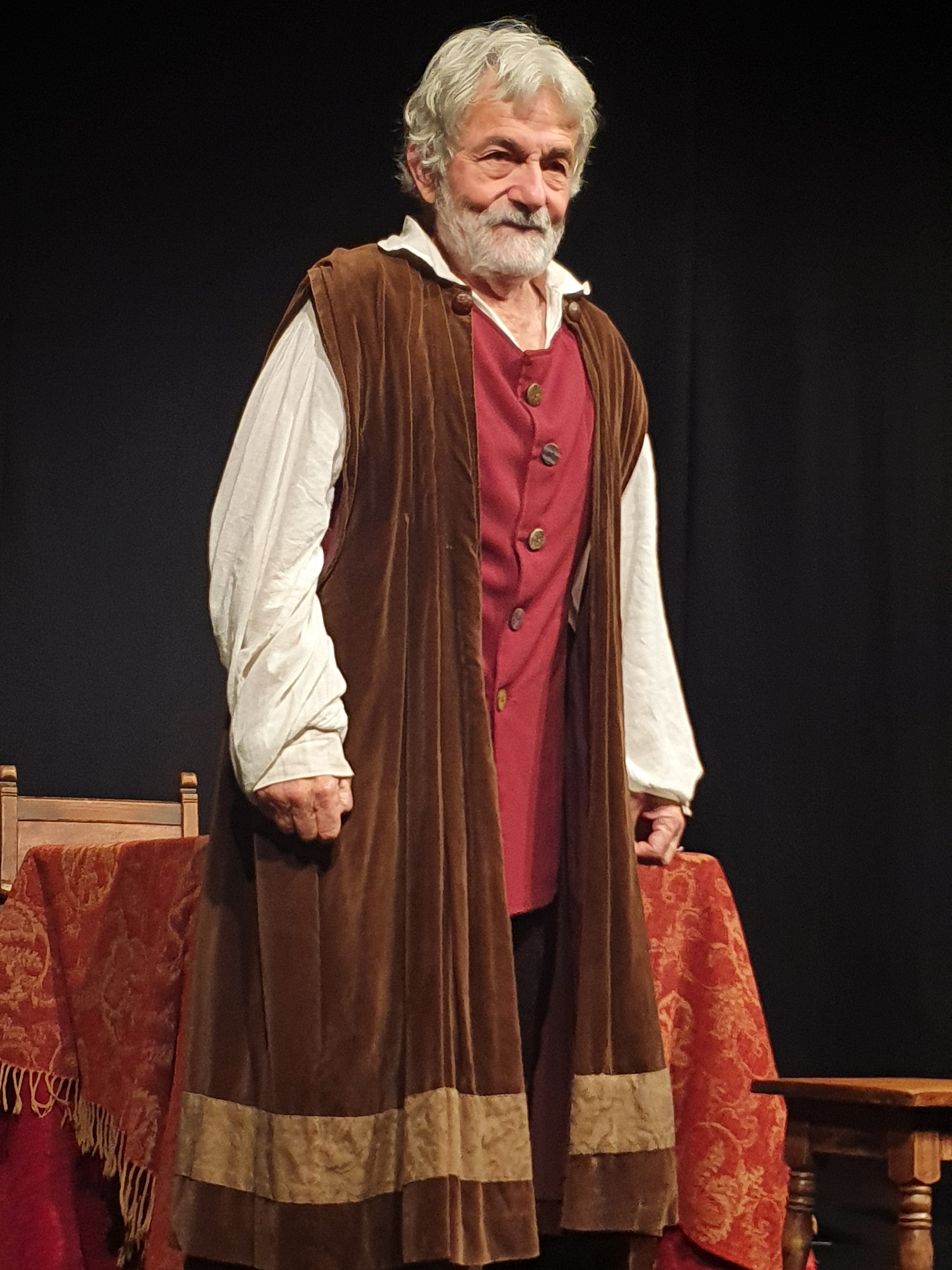
Galileo has to surrender, crestfallen in the realisation there is no hope when authorities are fixed to an ideologically-based mindset. The play is not anti-faith either, as Galileo maintains his piety while convincingly arguing that the majesty of God’s realm is perfectly maintained whether the Sun revolves around the Earth or the Sun. Young carefully parses key lines of scripture to give the audience a lot to ponder about in terms of how one exactly chooses to interpret language and where ideology trumps rationality – very relevant to today’s problems and the ‘war on truth’.
This show is a must-see given the relevance of this them. I was deeply immersed in a beautifully crafted imaginary world. I think there is scope for expansion, more clearly telegraphing time jumps and increasing movement and dramatisation in the direction. Understandably, that would risk creating a trade-off with historical accuracy as well as butting up against the limitations of the one-person format, however I believe artistic licence and adventurousness must be to the extreme side of the spectrum – to squeeze more drama from a show that has someone as capable as Hardy is at the helm.
This piece is presented in the morning at the fringe ’23 and I would encourage every true believer in theatre to make this their first stop on a day undoubtedly filled with variety. If not simply to bask in the mastery of Hardy, a bright light in the firmament; a tragedian of the highest calibre.
Stuart Bruce
The Quality of Mercy: Concerning the Life and Crimes of Dr Harold Frederick Shipman

theSpace @ Surgeons Hall
Aug 10-12, 14-26 (17:35)
Fortiter in Re, Suaviter in Modo
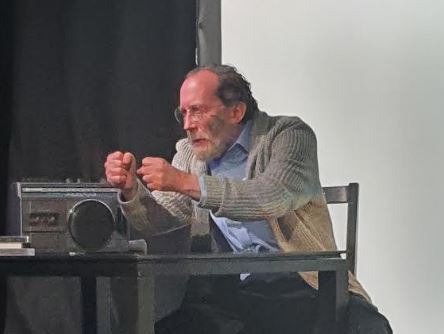
The Quality of Mercy is an important piece of historical theatre, revealing the true horror of Britain’s most prolific serial killer. With an intimacy only theatre can deliver, Edwin Flay has written and acts in an impressive character study of Dr. Harold Shipman, known as Dr. Death. This is a particularly personal project for Flay given his own grandmother was one of Shipman’s victims. One gets the sense of the play as an important chronicle, to unpack a terrible saga so that we might avoid a repeat of history.
Conveying such a villainous figure without making him cartoonish is a huge challenge. In this case, Edwin Flay has built a masterful performance and an impressive piece of one-person theatre. He has the courage to present Shipman with enough normality so that he can carefully explicate the twisted pieces of the man and thus unfold the full horror incrementally. A very powerful effect is achieved, which is especially important for helping the audience understand how Shipman could have operated for so long without reprisal – quite simply, he seemed to be normal.
That is the biggest achievement of this play in my mind – to make plausible and understandable such a horrific character, so that the full creepiness can be witnessed. Prior to this point, I could barely conceive of how such a person could exist. This is sort of like visiting Auschwitz where one is taken inside an evil world and whilst an unpleasant experience, it is nonetheless instructive and necessary. We see a serial killer in the flesh presented believably, which is an experience one hopes to never have for real but in the theatre, is a perversely thrilling ride.
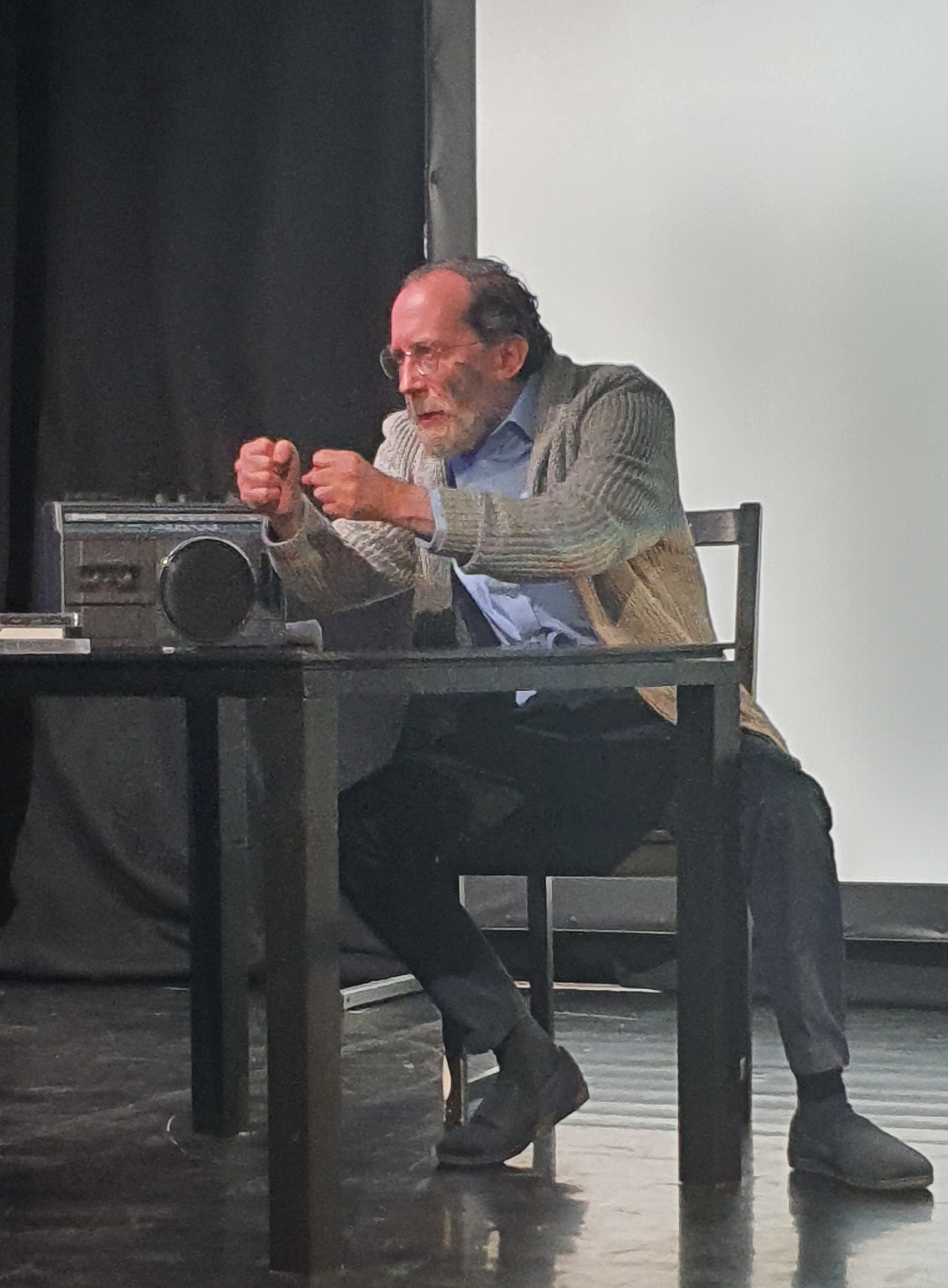
We see what can happen when a psychopath holds the trusted position of a medical doctor for many decades. One hopes we have individually evolved a sixth sense to pick up when something is seriously off with someone. It’s a feeling in the gut, raised hairs on the back of one’s neck – a physiological survival mechanism. Flay’s performance gave me a similarly disturbed feeling, which is a testament to the theatrical power of this piece and one of the many reasons why you should go see the show.
Where else can you safely bare witness to such a dark aspect of human nature, learn about it, and then step away into the day, free of its power? That is the transportative power of theatre, to take us inside worlds that we would otherwise never get to experience and which we can learn from without undue adversity. I deliberately did not research Dr Harold Shipman properly so that I could experience the power of having the complete biographical details revealed to me during the show.
Director and dramaturg Bernie C. Byrnes takes full advantage of the shocking scale of the crimes, crescendoing to a horrifying conclusion by projecting more of the victims names on the upstage wall as we observe increasingly creepy behaviour from Shipman. The names fill the wall and the gravity of the tragedy dawns on us. It is a deeply disturbing climax which must be seen firsthand to properly appreciate cathartically. This play delivers a profound experience whilst performing an important service and honouring the memories of the victims. It is not to be missed.
Stuart Bruce
Better Days

La Belle Angele
Aug 10-13, 15-26 (13:30)
Esto Perpetua
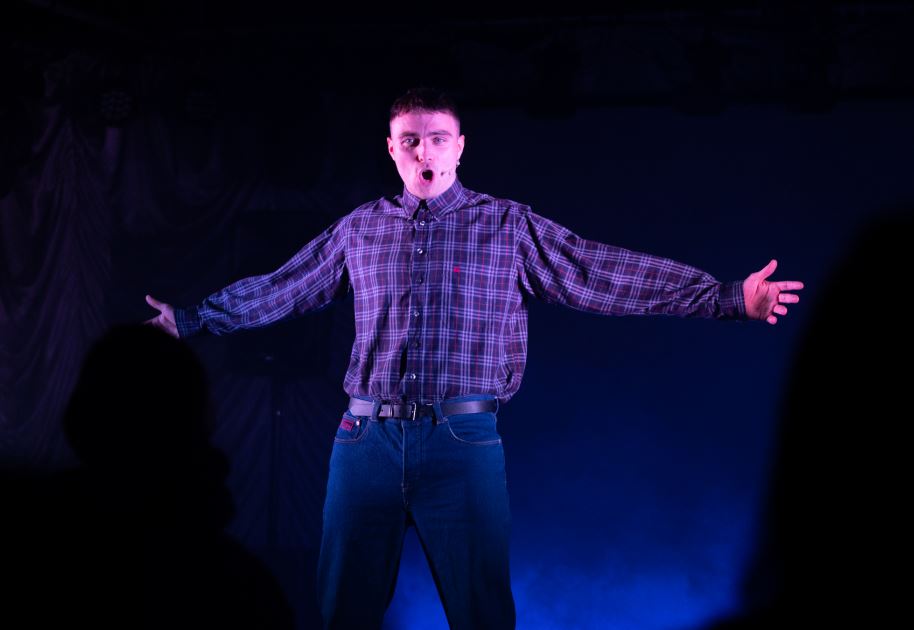
Any play that starts with Mani’s well funky bass bit from I Am the Ressurrection that kicks off the big jam at the end of the Roses’ first album will do for me, like, & so my initial instinct proved. It was indeed quite ironic me sitting down in La Belle Angele for the first show of its daily program, Better Days, for I’d been on & off it since Saturday & my head was in some reyt bits. I’d taken something or other at some point or other & thus found myself flying far easier back in time to the late 80s/early 90s, when Better Days was set… to when the soliloquizing ‘Danny’ of this solo show began his journey from lager-swilling, hooligan-battering casual, to euphoric raver at the Dancing Dawn of that glorious New Age, when the pills were pure & the buzz was amazing & the love dripping down from the heavens mingl’d with the sweat of loved-up clubbers rebounding off the ceilings.
The piece comes from the now well-establish’d pen of Ben Tagoe, & it open’d down Leeds way about 6 months ago. Set in some nameless northern town, its got that anonymous run-down shit-hole streaking with all the colors of the rave rainbow kinda vibes going on. The drugg’d up period in which the play struts its stuff to some reyt bangin early 90s, bass-thumping, arm-waving classics coincides with my own ‘cultural’ awakening lets say, as a Burnley boy down the Lazerdrome in Peckham, London, having my first initiatory half-pill, follow’d not long after by trips with the Barnoldswick posse to the Orbit in Morley. I was well on board with this play, like.

“Guru Josh – what kind of a name is that? Start listening to that shit & yer out”
Danny’s Dad
I was also digging Ben’s bounding script bubbling with hip-hop standard rhyming, all pouring from the flawless tongue of Danny’s addictive & inspiring performance. Danny is play’d by a certain George Martin, who pulls off all the nuances of the play – highs & lows, darks & lights, pure & gouchy – with an impressive skill set & a confidence that belies the fact that this is first professional stage job. He has never really actually studied drama – a pure natural talent to light up a pure natural script. A casting director friend of Ben’s had spotted him in a workshop and recommended him, just like they were buzzin’ on a dance floor somewhere. “This is my new best mate, Ben, he’s well sound & can act like fuck!” “Nice one, I fuckin’ love you brother.”
It’s not all about the boys, tho’, Danny’s love relationship, & just how beautiful ecstasy-induced love can be, plays a prominent part of the play; as does Danny’s relationship with his dad & his innate & difficult to shed love of thuggery. All in all a cheeky masterwork, whose only drawback is that it’s on far too early in the day. I’d love to see this being perform’d to a room full of ravers – me being one of ’em.
Damo
Andronicus Synecdoche

Zoo Southside
Aug 9-13, 15-20, 22-27 (20:20)
Similia Similibus Curantur
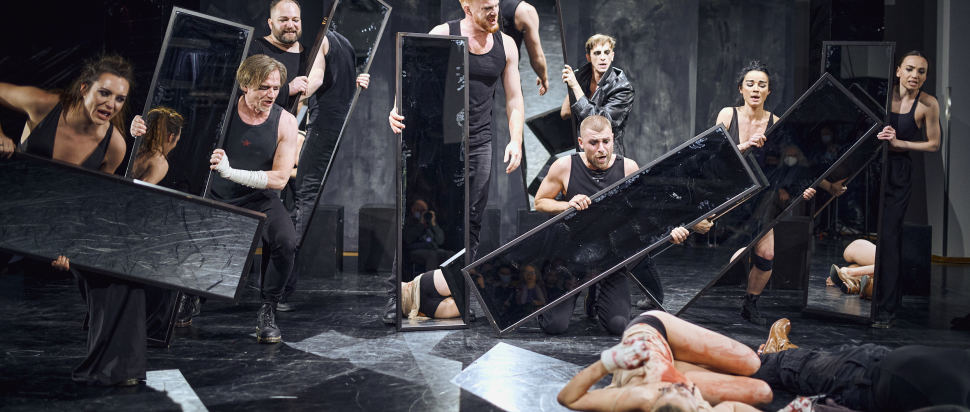
Rome! Rome! Rome! So much history and intrigue fills the imagination with ideas of love, fine living and prosperity. History teaches us that while peace is a great idea, history is actually an extremely violent place, and the proof can be witnessed in Andronicus Synecdoche, the incredible play brought to us by Polish company ‘The Song of the Goat.’ Hosted by the beautiful auditorium that is the Zoo Southside, this piece of theatrical genius explores the darker side of Romans Emperors and their continuous struggle for power and control.
The inspiration behind Andronicus was Shakespeare’s Titus Andronicus, adapted with a new & diverse approach by 12 electrifying cast members, who continually had the audience transfixed at every moment. The room was dark and had an eerie feel to it; the anticipation was to be felt throughout the whole theater; silent and engaged the atmosphere was magical. Like a runaway train, Andronicus takes us on a journey full of suspense, rage, hate, love and the most important ingredient – war and ultimate death. With every turn and move the cast was accompanied by an harrowing and echoing music that pushed the actors into a more deadly state adding to the intensity that was evolving in front of us.
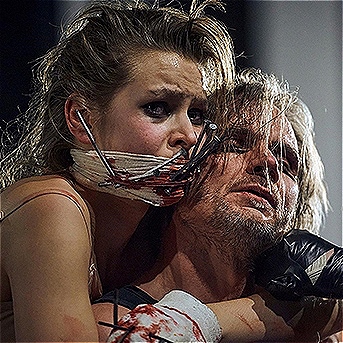
Titus, Tomora, Queen of the Goths and Lavinia all featured highly in this production. Like each link in a chain they serve a purpose, each with their own strength and weaknesses, and it soon becomes clear that this chain must be broken, at any cost. With a simple yet empowering stage set, each character delivers a mesmerizing performance and besides who needs big props when you can act as brilliantly as the cast proved they can, while at all times he choreography was precise and executed with professional excellence.
Delivering verse after verse of haunting. yet heart warming opera style vocals, the hairs on my arms were reaching for the heavens, a place destined for some who seek revenge in Andronicus. Your son could maybe burn like a stick of incense; your tongue maybe be removed; and a 1,000 cuts may cover your body – but truth is blacker than death & that’s the price you must pay for the struggle for power.
This tale delivers on all fronts; lust, sex, violence, treason, revenge, death, destruction of souls, scaring, wounding, deceit, conflict and betrayal – all of which have been stirred up into a cocktail of theatrical mastery. The result is a bloodbath of Emperors and Villains, with no real winners or losers other than the cast members and production of The Song of the Goat.
An amazing and entertaining piece of theater that will have an audience pining for more. A must see at this year’s Edinburgh Fringe Festival. Andronicus Synecdoche might even evoke some present day similarities to the world we live in. The continuous fight to be the one on top…
Raymond Speedie
One Week in Magaluf

theSpace @ Surgeons Hall – Theatre 1
Aug 9-12, 14-19 (18:35)
Non Licet Omnibus Adire Corinthum

Amy Nic’s One Week in Magaluf is a sheer delight! I really lov’d the fact that its form’d by pure feminine energy, no men involv’d anywhere, both on stage & behind, which really does create a welcoming & vibe-nurturing buzz.
This earthy funball of joviality is also an aesthetic treat, lots of costume changes & visual gags. This fly-on-the-wall account involves a lassies trip to Magaluf; four twenty-somethings returning to the island for another bout of sunshine & sexual chicanery. Thing is, this time, life-changes back in Britain will now be affecting the holiday, which starts to crack & divided into fractious fractions.
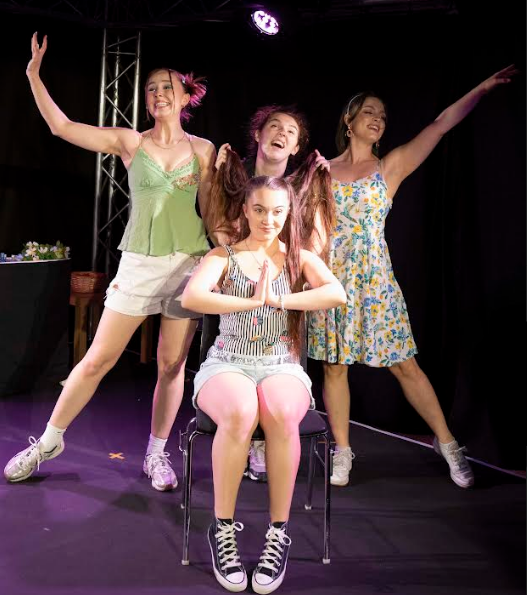
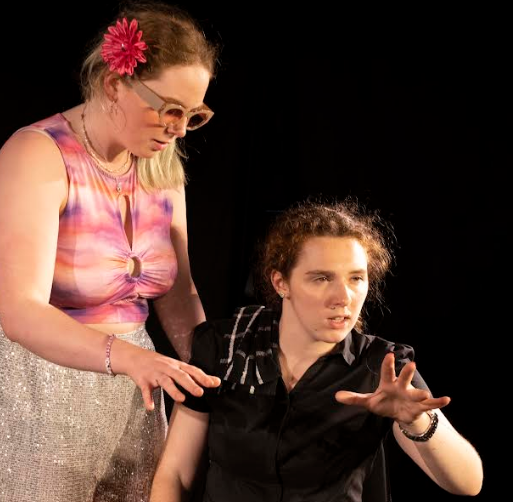
Luckily for us, the play is just downright hilarious, really well written, while beautifully sung & choreographised rewrites of famous pop songs keep the show hurtling along at a fast pace. Scenes vary as we follow the adventures & misadventures of our little group, from hotel room to beach to bangin’ bar. Among the multitudinous lines of snip-snappy dialogue, my favorite was the metaphor of being a sea-turtle, swimming the seas of life – alone & iron-clad – absolute poetry!
“Someone remind me to get more condoms, I can’t afford to get as much chlamydia as last time”
Each actress performs their role consummately, while especial praise should be given to the writer & director Amy Nic herself, who pulls off several characters, whose best is Julio, who was an actual Commedia dell’arte avatarial improvement upon Benidorm’s Solana barman, Mateo Castellanos. Come the mature resolutions at the ending, I even had a tear or two bubbling up, for One Week in Magaluf had the brilliance of connecting its characters to our own selves, so universal is its humanity, so engaging is its delivery.
Damo
Letter to Boddah


theSpace @ Surgeons Hall
Aug 9-12, 14-26
Maxima Debetur Puero Reverentia
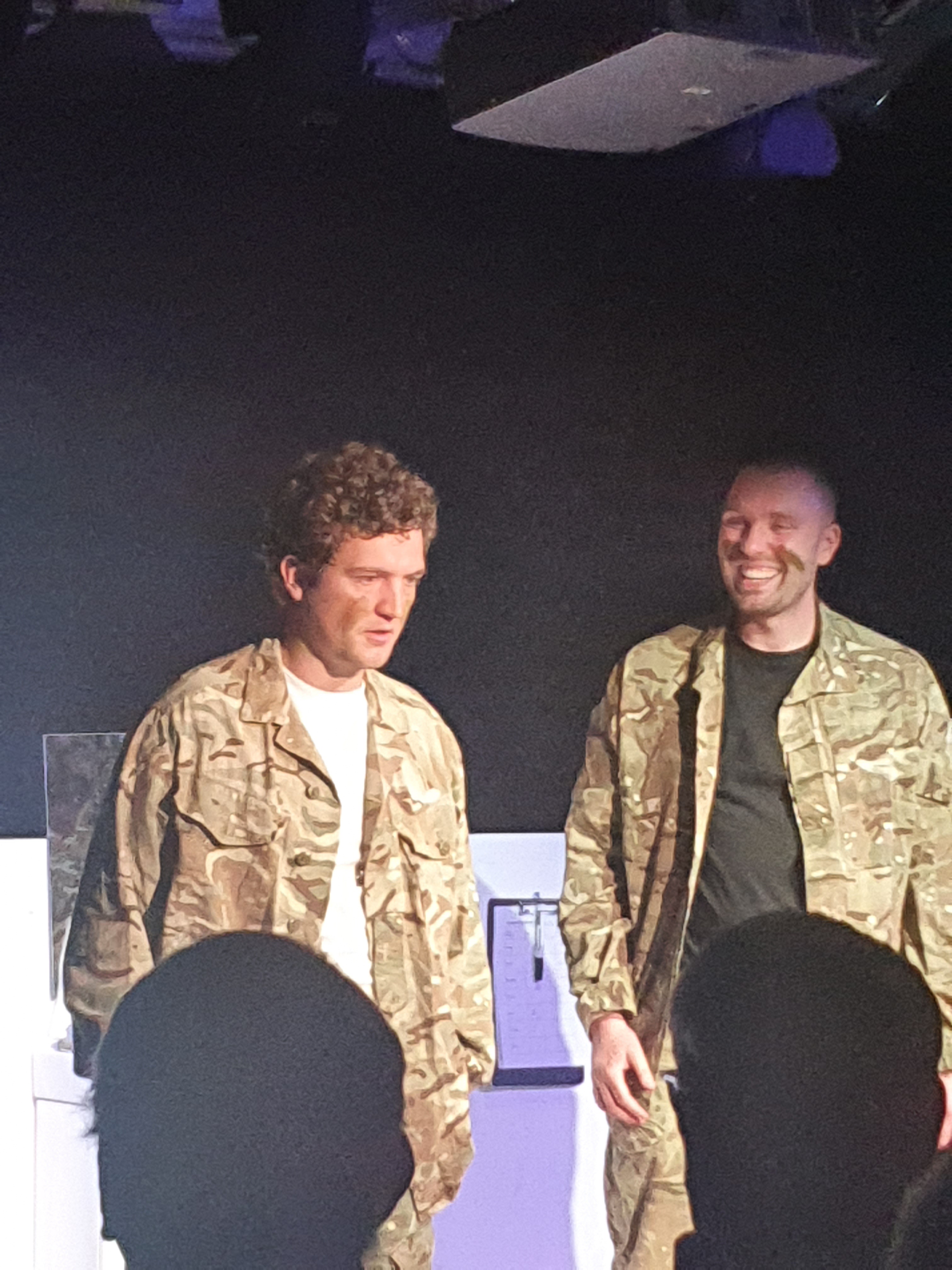
Boddah was Kurt Cobain’s imaginary childhood friend whom he wrote a letter to before committing suicide at the relatively young age of 27. This one act play, Letter to Boddah (by Sarah Nelson), is a suicide note of sorts but don’t worry, it’s also a comedy. Therein lies its greatest strength which is of course a big challenge, to play both sides, light and dark, entertaining in the middle of the day whilst also respecting the dramatic premise. This play achieves that superbly well given that it’s genuinely funny as well as being profoundly dark – and the audience responded accordingly.
The comedic elements, for me, were the most powerful because they had the effect of loosening up the audience so that darker material can be explored. That is this play’s strength – it doesn’t depress the audience but is still highly dramatic and respectfully explores the characters’ plight. That was the element I found most disturbing, even more than the situation of the piece – two young men in a public toilet in Tesco with explosives and ill-intent. As I was charmed by the characters, I had to keep reminding myself of the dark events unfolding.
This is a great example of writing that connects regular life, which we want so badly to be joyful, with the broader narrative underway in wider society, which at the moment is suffering immensely from decades of austerity. The setting of a disabled toilet in Tesco serves as a metaphor for the dysfunctional container that is predatory neoliberal capitalism in Britain. The characters are incited to act against the forces that oppress them, which in combination with continual references to their stifling domestic life and history of trauma, represents the fraying ends of the social fabric. These young men, bursting with masculine humanity, find themselves with nothing but pain and regret from a world that has no place for them. They clearly have all the pieces within to make positive contributions to society but society has left them no way out but to reach for violence as self-expression.
If that sounds bleak, that’s because it is and so it should be because this is daring theatre – instructive, discomforting and unafraid to go to a dark place so that we might open our hearts to those who struggle. My instinct to laugh and reach for the positive and resist what was happening, exposed the human bias to ignore the suffering of others because it’s unpleasant. What does that say about the compassion of society itself? We’re exposed to tragedies in the news and on the street, on a daily basis. We could do more yet we laugh and turn away.
That, to me, was the ultimate tragic premise that I drew from the piece. I couldn’t help noticing that I wanted to learn more about how bad their history must have been in order to fully believe they could be alienated enough to commit violence. Some of the flashbacks and allusions I found a little clunky with the result being that I don’t think the play elucidates the “why” for the characters enough. However, maybe that’s the point. I left the theatre with the questions of “why” and “how” clinging to me, dogging me, which admittedly did make me realise that is often a natural human state – to not be able to empathise and really understand why enough to help people in crisis.

The actors have pretty much the hardest challenge in acting, to play an authentic extremist – deluded enough to believe violence can be a useful contribution but also human enough to be relatable and understandable. Kyle Fisher and Jordan Reece navigate this gauntlet admirably, maintaining enormous energy and commitment throughout. It’s a tightrope they successfully managed to traverse, given that if they are “too real”, the comedy might not work and the audience could close up – losing the power of balancing comedy with tragedy. Instead, they are able to inspire the laughs and shift gears to embody the dark reality of the experience. Impressive.
Prepare to be challenged. The play is a clarion call for compassion. How could things every get this bad for these characters, for this generation, and we have seriously not been able to do more? Like the Greek tragedians millennia ago, the vital role of negative character arcs and protracted adversity on stage, is such that we might fully be confronted by the story and thus confront our own nature.
Stuart Bruce

Abbey’s Box

Greenside @ Infirmary Street
Aug 8th – 12th, 14th – 19th, 21st – 26th
Parce Sepulto
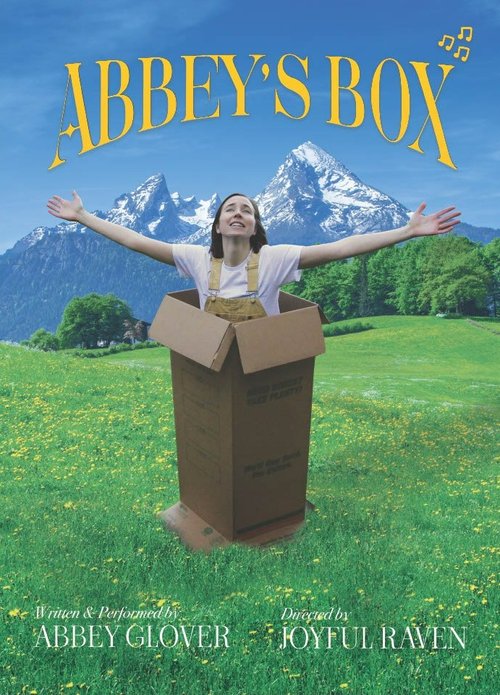
‘Abbey’s Box’ by one Abbey Glover is a show at the Fringe that covers many topics but struck me as being a play about requited love. She sat on a stool in the room (Greenside @ Infirmary street) with a great smile and a deep look of such love in her eyes, that also held a friendly stare as her audience filled the vacuum.
There was a very spacious attention and attitude there before we had even sat down. As soon as she spoke we heard a clear and ringing American accent, honouring the Fringe’s International appeal. It was just her though through a few delectable dialogues she plucked a long cardboard box as if from the audience.
She climbed in and out of this box to frequent stage timings. She used simple props to bring a illusionary side to proceedings and her first trick was to stand on the stool and appear giant like, but this was the introduction to her man crush (I can’t live without you) Daniel that she discussed in reverence.
A powerful intimacy was ever present, with the small room seeming to fit perfectly in its high ceiling and square proportions. Her costume was brown dungarees with a little label that stated liberty, I should have guessed why she included that little detail but it only dawned on me later on. Our sense of her solitude (at least on stage) had a great driving momentum of sensation as her story of dialogue poured forth and gathered itself, I was mesmerised in its metric delivery and good form.
Even as she stepped inside her box we saw her shrink in form and use it to shield certain portions of life difficult to manage she felt hard to comprehend. When she fooled around it was meaningful as she was ever full of promise, she and Daniel partnered up and dealt with the wealth of the world together, he for her and her for him.
But her box she still held in place as a firmament that gave her sacred space even if only as a barrier to be knocked down. It was a play about self knowing and the sheer thunder it can create. Offering an insight or vision into her developmental characters or personalities that dwell within and are called for in the very throes of her existence, and her intimacy was nothing less than that, denoting facts by example, thought by thread and acts by courageous letting loose of the animal or fiend behind or inside her. I took it all in with delight, her quiet moments of total gentleness where receiving her words was a pleasure, and watching her movements and gesticulations as a treasure.
All became more and more intimate, and so happened with a kind of surreal involvement a cementing of bond ship, and friendship between us: her and her audience, cleverly whiling away and unthreading content. Her eyes could stare and did peeking into yours directly and with somewhat discomfort. Most enjoyable, very astute and very sensitive, she grew in size and shrank in size ever focused on this man she loved and ever materialising her very presence on stage, well worth a quite intense hour of classic though modern theatre
Daniel Donnelly
 Mumble Theatre