La La Land: On The Stage
It seems that more and more often, Hollywood is looking to theatre stages for inspiration. Mamma Mia just returned to the screen with its “Here We Go Again” sequel, and did so to the tune of largely positive reviews. And in the next few years there’s talk of adaptations for the likes of Cats, In The Heights, West Side Story, and Wicked – not to mention new reboots of Disney films-turned-Broadway shows like Aladdin and The Lion King.
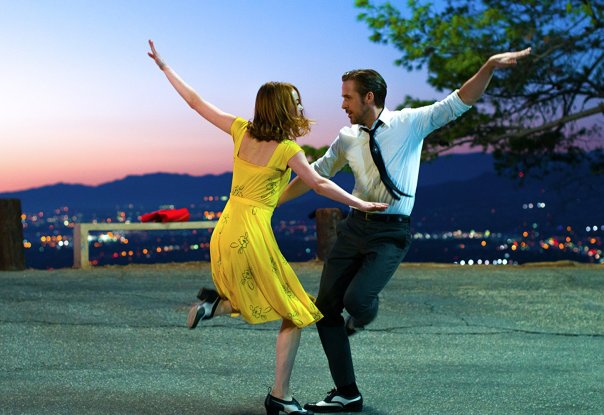
What we see a little bit less of these days is adaptation going the other way – from screen to stage. That’s not to say it doesn’t happen, but the reverse seems to be more common for the moment. We’re likely to get an exception in the next year or two though, as the original musical movie La La Land appears destined to appear on stages in London, New York, and, if those go well, around the world.
To refresh your memory, La La Land came out late in 2016 and immediately became the darling of Hollywood. Directed by the young and incredibly gifted Damien Chazelle and starring Ryan Gosling and Emma Stone, it chronicled the lives of two young adults in Los Angeles chasing different dreams in the arts. Widely expected to steal the show at the Oscars because of its celebration of Hollywood and the sheer joy it seemed to evoke in audiences, it actually wound up being upset by Moonlight for the Best Picture honor. Even so however it proved that a completely original modern musical could take the cinematic world by storm.
The film’s nearly universal appeal seemed to come from its purest aspect, which is to say the songs. Even an LA Times piece that was harshly critical of the movie’s message about young musicians in 2017 stated that few movies as “dumb” about music as this one are also as alive to its emotional potential. The article’s point was that the film’s message contrasting sellouts with genuine artists was somewhat childish or outdated – but that when the movie boiled down to its original numbers, it shined nonetheless. This sort of critique wasn’t unheard of, but it did represent the minority opinion. Even so however it demonstrated exactly how this show could work on Broadway.
A stage version of La La Land would almost certainly be stripped down a little bit in terms of plot and dialogue, and would emphasize the music that people will remember from the film. It’s even been suggested that new numbers will be added, which should provide some depth for a score that, if it can be criticized for anything, might be a little too repetitive. The formula of highlighting songs above story, and adding more music to the project, actually sounds like a winning concept for the eventual stage musical.
We haven’t heard much in the way of specifics about when this is coming or where it will debut. But a La La Land stage production has more or less been confirmed, and this is a reminder that it’s almost certainly coming in the near future.
Old Souls
Riddle’s Court
3rd – 27th August (Not 8th, 13th or 20th) (17.00)
Script:  Stagecraft: Performance:
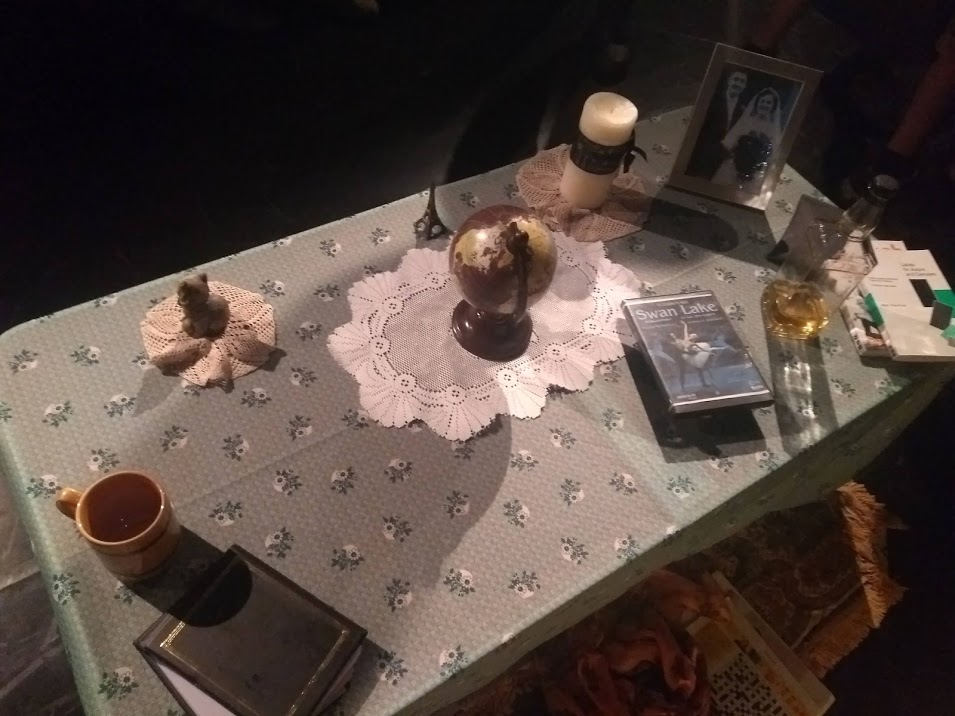
Last year I found myself watching a young actress in a solo comedy show called One Woman Army in one of the more obscurer Free Fringe venues. Her name is Vicki Sargent, & this year she’s back with something quite different. She’s moved on from finding humour in personal retrospective, & decided to entertain us with theatre. Hearing her writing & watching her act through Old Souls has just proven to me this lady is still a blossoming talent, & a year of creative maturity has presented us with something quite magnificent. I’m not sure when, but at some time in the future Vicki will be creating a timeless classic.

But this is 2018, & what she has for us this time round is a delightful fly-on-the-wall window into a young persons visitor scheme to counteract old-age loneliness. Meet 21-year old Rosie (Vicki) & cantankerous, sarcastic, Irish Coffee loving 78-year old, Vera, cannily played by Janet Garner. The irony is this – while Rosie is a bit, well, dull, Vera has lived life to the fullest, becoming a dancer in Paris at the start of the sixties when she had been 21. Alas, the passage of a half-century had stripped her of friends & family, arthiritis is wracking her body, & all that remains to comfort her are the ‘the memories of when she was brave.’
Old Souls is divided into several scenes, marked by blouse changes & subtle differences in the two actresses’ interchanges. There is also a subplot – Rosie’s application to a baking school – but the real beauty of this play is just watching the two ladies bicker over Countdown & crosswords.
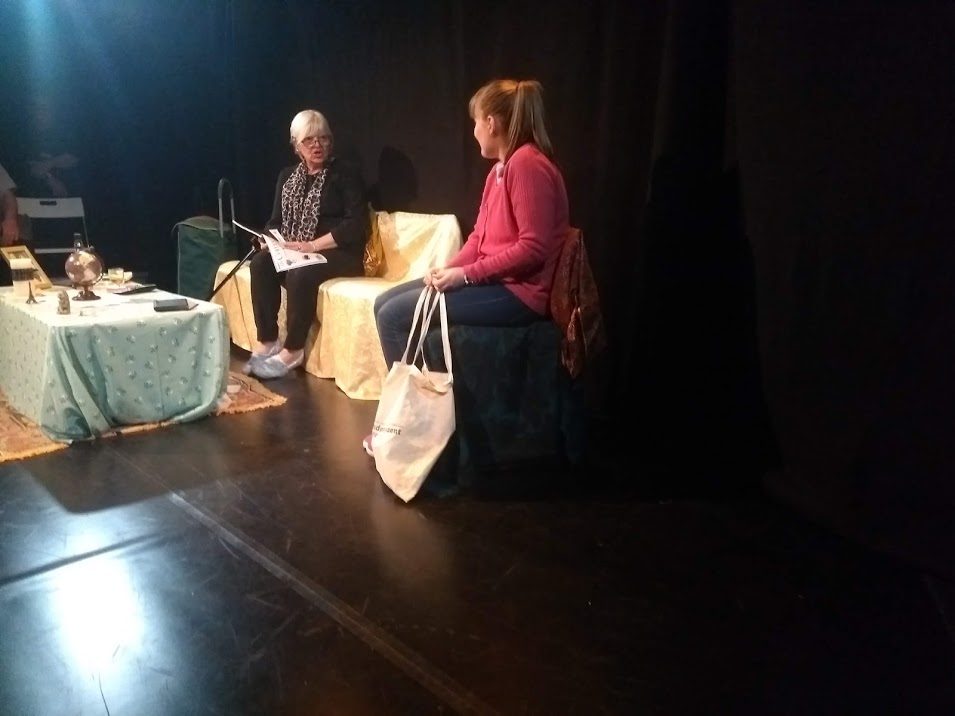
It’s a clash of personalities but ultimately they both have something to learn from each other.
Read the full interview…
Edinburgh is the UK’s loneliest city for the elderly, & while millions of people are coming together during the Fringe to mingle & make fun, thousands of others are simply sat at home, watching TV, not having spoken to anybody else for days. Compliments, then, to Vicki, who shows just how much our elders have to offer – they may not be as spritely on their feet, but they have wisdom & they have many a tale to tell. This soft ‘duel’ between Entitled Millennials & Post-War Austeritites is perfect for all – witness an Indian family in the audience whose teenage boys were laughing just as much as their parents. Old Souls is excellent, yes, & funny to boot, & coupling it up with a visit to the renovated Riddles Court in which the cosy theatre is situated is like the perfect Edinburgh cocktail.
Damo

Pamela’s Palace
Principal Edinburgh George Street
August 2, 5, 6, 9, 10, 12, 13, 15, 17, 19, 22, 23, 24, 26, 27
Script: Stagecraft:  Performance:
This morning I took a walk around Yester Woods near Gifford with my wee dog Daisy, deliberating on the marking for Interactive Theater’s newborn baby, Pamela’s Palace. Was I really going to give a vernal work-in-progress five stars? Was that really the right thing to do? Then I remembered something important. I had taken my wife to the show, & as we were leaving, I was practically begging her to tell the girls at her work to organise a Fringe posse & all go out together to see Pamela’s Palace. In that moment I was vicariously experiencing the Mumble’s 5-star litmus test – if one feels compelled like the Ancient Mariner to tell everybody you know (or the wife knows) to see a show, then its the definitive 5 Stars.
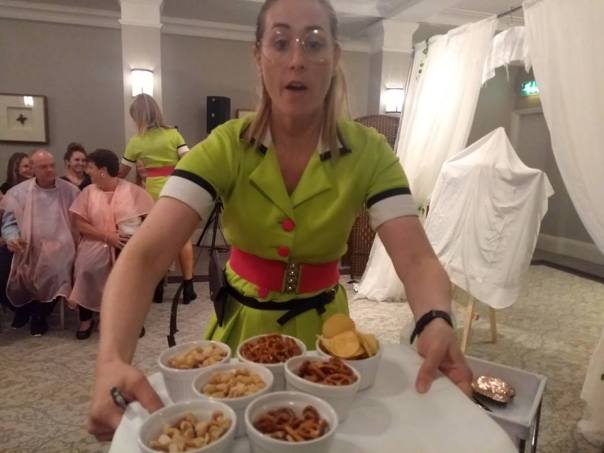
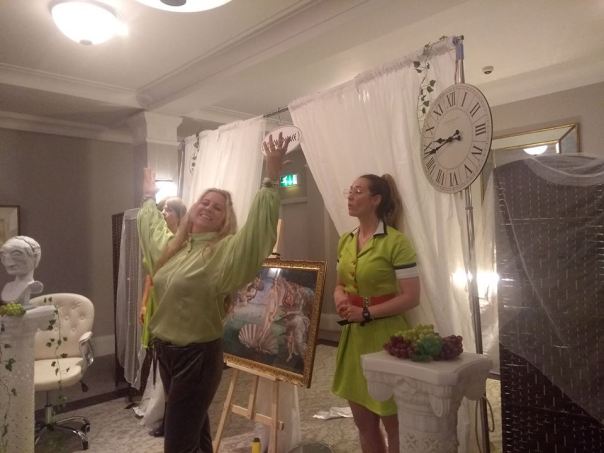
Meeting upstairs in the pleasure-to-be-at Principle Hotel, some of the audience are befrocked in pink smocks as we are led down to a traverse style setting of chairs, with the salon spread out quite jazzily between us. This was only the sixth ever show – a 3 night run in Brighton, & three so far in Edinburgh – but God did create the world in six days! Apparently there have been changes made after every edition, which indicates a serious sense of professionalism in an extremely unserious setting. Welcome to Scissors Palace, ran by the deep-tann’d, bling-jangling, Vogue wannabe Pamela Jones (Donna Gray). Its Salon Of the Year awards time, & she’s pulling out all the stops with an ubersassy Classical Greece theme.

Also working at the Salon are Tiffany (Katie Grace Cooper) & Bronwen (Ayesha Tansey), one gregarious, one demure; both top actresses & all together the complete trio, when not pulling off proper bangin’ Beyonce-level dance routines, positively bounce off each other & the classy script & roleplays created by the funny-bone knocking Katie Grace Cooper.
We’re working with an all female cast (even directed by a lady) and we’re looking at topics that are affecting women today – age, beauty, the pressures of being a woman, strength, weakness, vulnerability. It’s just about being human in an unforgiving world but it definitely brushes cheeks with feminism. It’s also so much fun!
Read the full interview…Your reviewer completely fascinated with the absolute mayhem that erupts towards this brilliant show’s conclusion
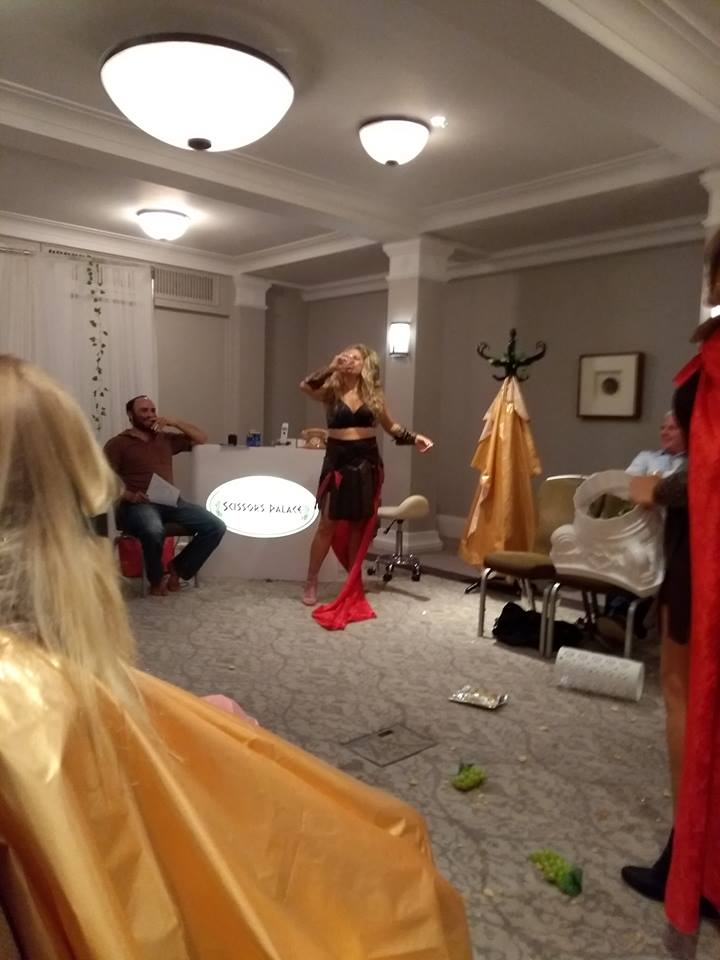
Interactive Theatre International are the guys behind the ever-brilliant Fawlty Towers & the Wedding Reception. The one drawback is that with those shows being food-inclusive, a few folk are priced out of the superslick comedy acting of the ITI contingent. On the other hand, Pamela’s Palace is a much more doable £15 – there’s a glass of bubbly & some nibbles thrown in too – which is a price well worth paying to see the same actresses in action who pull off so well the ladies in the Wedding Reception, & Sibyl in Fawlty Towers. Indeed, Pamela is quite simply the Sibyl of this millennium, & lets hope the dangerous drama that is her Palace runs & runs like the others. As for this Fringe, the volcano has only just exploded, & the lava has not yet set. One expects as the ladies find their feet & the full measure of their personal & audience interactions, the show will just get better & smoother &… well… I’ve just seen it & its wonderful stuff!
Damo

bad things happen here
Paradise in the Vault
Aug 4-18 (18:45)
Script: Stagecraft: Performance:
Bold, unexpected and gripping, Healthy Oyster Collective’s ‘bad things happen here’ is a brilliantly-acted feast for the imagination. Set in an alternative universe where strict curfews, round-the-clock CCTV and constant police (known as ‘dogs’) supress speech and thought, ‘bad things happen here’ follows the lives of multiple nameless individuals as they conform or rebel against the system. There’s no denying that the prevalence of The Handmaid’s Tale, Black Mirror and Stranger Things have made dystopian theatre and film fashionable. Indeed it seems that we the public relish wincing at the nightmarish woes of characters trapped within a cruel alternative universe, forever suffering and never escaping. What makes bad things happen here so brilliant, however, is the way it manages to get all of the dystopian stuff in without losing us as an audience – it cuts so close to the bone that we can’t suspend our disbelief too much, and the show is all the more powerful as a result.
bad things happen here opens with us being thrown into a rapid, quick-fire exchange between two individuals (Marieta Carrero and Molly Winstead) as they worry that the police are closing in on them as they are trapped in their home. Playwright Eric Marlin cleverly demonstrates the level of repression within the system as the language that the characters use throughout the show becomes infrequent and stifled: a clever choice which demonstrates just how severe the government’s grip has become. The delivery of said language is faultless, with Carrero and Winstead exchanging dialogue almost melodically in a way that only serves to make what they say more powerful. From reporting a rape to a clinical yet frightened doctor, to a married woman demanding sex from a sex worker, communication is efficient and, when necessary, emotionless. Both Carrero and Winstead navigate these shifts effortlessly, delivering magnetic performances throughout: Carrero’s funny but horrifying detachment in the role of a factory supervisor and Winstead conveying vulnerability and fear with brilliant subtlety were particular highlights of the show.
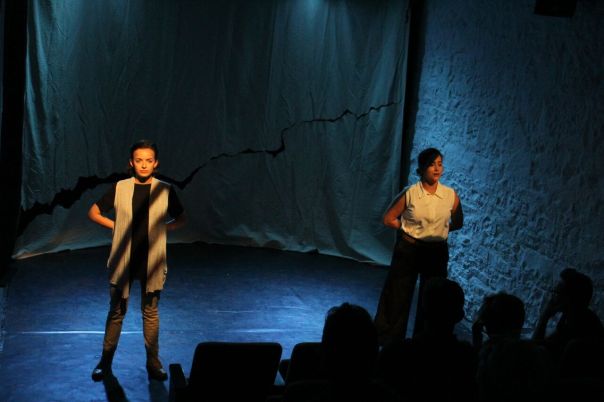
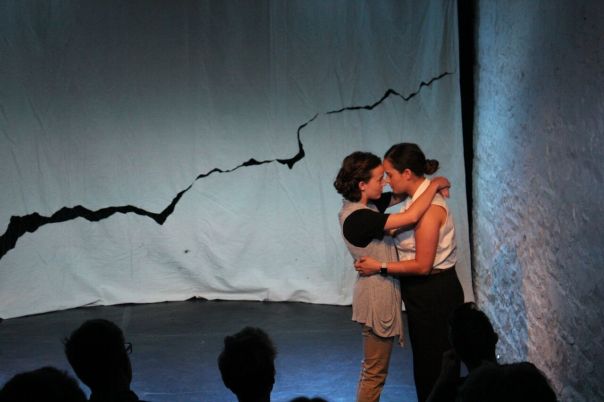
Dressed in grey and white costume, with the lighting alternating between bright and clear or fractured and hazy, tech, costume and lighting design is simple and effective. One scene is lit entirely by torches pointed at us: an excellent turning of the tables as we become the subject of the piece. A simple jagged rip through a white bedsheet acts as startling backdrop that the actors never disappear behind: rather, we become their oppressors as we keep a trained and watchful eye over them for the entire show. Though the script perhaps sometimes suffers from occasional moments of cliché – for example, the metaphor of ‘cogs in the machine’ is perhaps taken too literally at times – the show manages to elegantly capture the human descent into compliance within an oppressive system.
The staging of the piece is expertly executed by director Lila Rachel Becker, who never has Carrero and Winstead linger on moments of tragedy or humour, but rather keeps the piece thumping with energy throughout. Marlin’s pacey and intelligent script demands this energy, as we are constantly hearing uncomfortable things – the peak of this being Trump quotes about women embedded into the script, which place the piece back into the realm of necessary and important. Here, Marlin is proving that bad things do indeed happen here long after the actor’s final bow, and it is this sentiment that elevates this production from dystopian fantasy to an urgent and brilliant reminder that theatre can and should be political.
Lucy Davidson
The Odyssey
Greenside @ Nicholson Square
Aug 6-10 (09:00)
Script: Stagecraft: Performance:
An epigram inscribed into the tomb of the 6th century BC Athenian tyrant Pisistratus, records; ‘Pisistratus, great in councils, I who gathered together / Homer, who had formerly been sung here & there.’ Nobody knows just exactly how the Rhapsodes, & the Children of Homer delivered those tales sung here & there which distilled into the Iliad & Odyssey; but in the depths of pre-Classical history, & on account of the great reams of dialogue contained in at least the Iliad, there shimmers the fleshy, dramaturgical kernel upon which the hard shell of Homeric narrative has formed. Thus, I found myself experiencing some kind out-of-body timewarp when I witnessed this theatrical retelling of the Odyssey, gone back to a time when the poem or play or whatever it was, was acted out in the halls of Mycenean nobles.
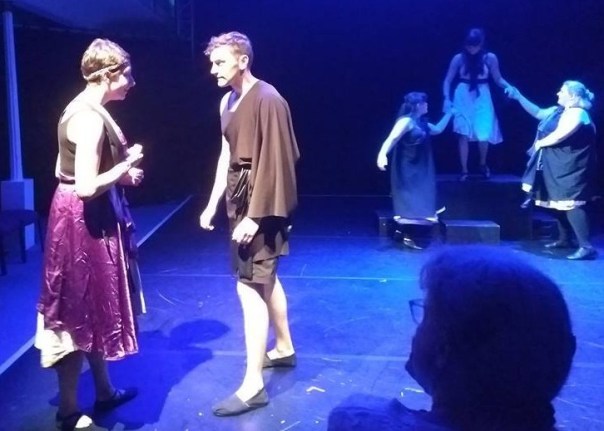
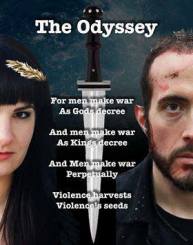
This Odyssey has been brought to the Fringe by Ragnarok Productions, & only lasts 40 minutes. That is an extremely rapid retelling, & yes, the action is fast-paced, but never too fast, quite exhilarating to watch really. The cast is young & vastly female – there are six young women to a single man – which rather does fit in with the general vibe of the Odyssey. Among the many strong female characters in the poem, the true star & heroine has to be the goddess Athena, who dominates the action from beginning to end. It takes a special actress to play goddess, but Ragnarok’s very talented Jennifer Drummond was insatiably excellent in the role. The rest of the cast were of a fine quality also, each had their star moments, & all members of the company delivered the fluid couplets of iambic-pentameter that had been restitched by Nathaniel Scott, the impresario of Ragnorok. In a recent interview with the Mumble – he described the creative techniques behind the redacting the Odyssey to just forty minutes.
I worked with the iambic pentameter translation done by Chapman. The goal of that choice was to work in metered storytelling in deference to the story song traditions of oral histories, but keeping it in the meter with which many actors were already familiar. The process involved reading the swaths of the Odyssey, reading commentaries and articles and a variety of translations until I could condense twenty pages of content into a page or less of text.
Read the interview here…
For me it worked & it didn’t. The Odyssey is divided into two spirits – the adventures & shipwrecks en route to Ithaca & then the nostoi on the island itself. The Ithaca sections were done brilliantly – announced with a foot stamp & a boldly bellowed ‘ITHACA’ – but the adventures were far too hurried to follow properly, especially if one is unfamiliar with the stories. But that is the only criticism & one must really say at least bravo for the effort. Reach for the stars & see where you end up. As a spectacle, the musical couplets were never dull or awkward & the shapeshifting physicality of the cast was exhaustingly entertaining, like neutrons buzzing around an atom. I also really enjoyed the shadowplay of one scene, showing that Ragnarok can handle any dimension of the theatrical experience. As an artistic whole, this Odyssey seemed very much like a dream, as if Coleridge had just read the Odyssey, dropped some laudanum, then reimagined it all again in the ethereal substrata of his consciousness. Altogether, a really enjoyable piece.
Damo
Feed

Pleasance Dome
August 6-14, 16-27 (14.00)
Script: Stagecraft: Performance:
Feed is a four-person theatre production by Theatre Temoin and The Lowry Everyman Cheltenham, co-written by Eve Leigh and Erin Judge, and directed by Ailin Conant. It’s a compelling and timely play addressing some of our more disturbing contemporary trends, specifically taking a hard look at the damage social media is wreaking on our individual and collective psyches. The performance begins with a compelling speech about the internet and social media, rather resembling a Ted Talk, by the SEO expert (played by Johnathan Peck). The audience is instantly pulled in by his rapid change of accents with eerie sound distortions placing us on edge as he proclaims ‘attention’ to be the most important commodity at this stage of our global capitalist economy.
As we cut to the anniversary of two lovers (Louise Lee Devlin and Yasmine Yagchi), we can easily relate to journalist Kate (Devlin) being continually distracted from the present moment by the incessant buzzing of her phone. The vibrations herald notifications announcing her article about a boy killed in Palestine that is beginning to sweep the internet. Awkwardly, Kate has stolen a photograph from her girlfriend to use in this article knowing it is of another boy. When the truth emerges, their romantic anniversary descends into a bitter fallout that kickstarts the chaos of the rest of the show. When a young woman (Nina Cassells), a YouTube makeup artist sensation, expresses emotion in one of her videos over the boy’s death, she is drafted into the power moves behind the scenes of the internet. The play takes a truly sinister turn in a scene where she cuts her arm, drawing blood in order to encourage us to ‘feel something real’ for a child killed in conflict across the other side of the world. As she jumps onto and begins to steer the bandwagon of #feelfornabil, it’s a jab at our society’s fleeting, insubstantial hashtag outrage that often results in more damage than good.
Because the majority of the play is set in cyberspace, it allows for a great amount of freedom and creativity in the representation of online life. The set and the use of sound effects were innovative and effective, creating an immersive and disturbing experience. The scene where a critical text conversation is acted out, complete with inane sounding emoticons, is a stark reminder of how ungrounded and bizarre much of our daily communication now is. The references to the current political divisions, messianic movements and lack of constructive dialogue on the internet are all on point. The play is a stark warning to us all to wake up fully to the ways in which late-stage capitalism, and most specifically the amoral ‘attention economy’, is hijacking our minds, wrecking our values, efficacy and relationships in the process. The show begs us to reflect on our own complicity in allowing the suffering of the marginalised to become our narcissistic reward as our capacity for human empathy becomes increasingly narrowed.
There’s strong and compelling acting from all four actors from Theatre Temoin, trained in Lecoq pedagogy, with an emphasis on physical theatre and the use of masks. Theatre Temoin is a socially engaged theatre company, where the devising is non-hierarchical and emerges from discussions with communities. If the show seems at times a little OTT, remember that the viscerality of the production is part of a theatre tradition specifically designed to create strong, physical reactions in the audience. Mr SEO expert transforms into the quintessential imagined troll, stoking ferment in the background, the personification of a modern day Satan in a green feather headdress. As he envisages a future of grotesque mash ups of clickbait subjects, he stokes a ‘Lord of the Flies’ style mass descent into demonic infantilism. Indeed, following one of the mantras of the show, behaviour “without any adherence to morals, ethics or other forms of content moderation of monitoring”.
One scene is reminiscent of Childish Gambino’s This is America video sequence, showing what an effective tool the continual distraction of the attention economy is as a distraction from full understanding and engagement with some of the worst injustices of our modern world. With one individual character managing to hold on to sanity and a sense of morality, the show asks questions about how we might start to resist and move away from our current situation. By the end of the show, I was seriously considering deleting all my social media accounts. So when we were asked us all to head to Twitter to encourage others to come to the show it raised a few bitter laughs. Feed is a thought-provoking and clever piece of theatre, so try and catch it if you can!
Lisa Williams
How to Swim In Hollywood
Greenside, Infirmary Street
Aug 5-11,13-18 (22:00)
Script: Stagecraft: Performance:
Alice Syvlester is a young woman unafraid to announce her most intimate sensations, to advance well-preen’d angels of sensuality into a theatre as she delivers her brave & brainy monologues. She has also been stricken by the Muse-Goddess, & unlike most dramas of today which seem spoiled by moments of poetry, Alice is quite the opposite, for her sporadic Pegasus flights transcend her general narrative with ease, ebullience, & beauty.
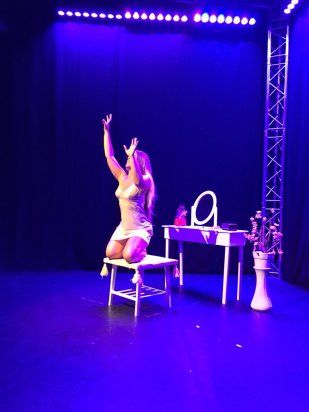
Last year she brought us a Sylvia Plath themed piece, & this time round we have a lyrical libation to the burgeoning femininity of a young woman caught up in the post-hippy hangover of Seventies LA. Around & over & into this setting Sylvester spins a yarn of consummate quality. You just feel cool when you’re watching her; I had a glance around the audience & all were enraptur’d at her physical movements, her facial dancing, her assured tone & the supple world in which her character, Daisy, dwelt in. For Daisy, the butterflies formed in her tummy via juvenile romance, flutter’d away & never came back.
I wanted to write a piece that shows how cultural norms regarding beauty standards and gender ideals strongly influence sexual exploitation, and the way we understand it.
Read the full interview here…
I loved her set; a simple but effective combination of dressing table & ingenious lighting from the Greenside crew – & Alice in her frilly nightie flouncing about unfurtively. She also knows how to command a physical silence; the dialogue pauses & she just stands there or sits there drawing us all in like a black hole until she bursts the spell with a flick of the head, a raise of the eyebrow, a curl of the lip… & the verbal continuation of her work. There is something opiate in the watching of the acting of Alice Sylvester – you dare not blink, you can barely breathe.
Damo
An Interview with Nathaniel Glein Scott
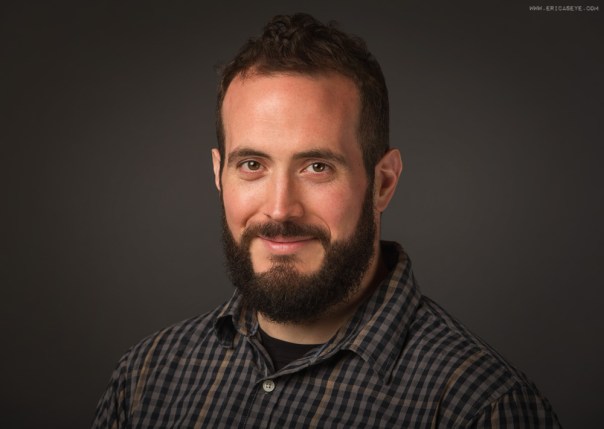
It is the mission of Massachusetts’ own Ragnarok Productions to highlight themes of rebirth with stories that exist on the line between the crumbling of one world and the flowering of the next…
Hello Nathaniel, so where are you from & where are you at, geographically speaking?
Nathaniel: I was born in Seattle in the US. I was raised in Portugal, Romania, and have lived in a variety of locations around the United States.
When did you first develop a passion for theatre?
Nathaniel: I have always had a passion for storytelling. I wrote/directed/produced my first stage play (called “Benedictus”) as a 14 year old in Romania.
What for you makes a good piece of theatre?
Nathaniel: The biggest opportunity theatre provides is the audience being present. It makes certain kinds of storytelling possible that do not work anywhere nearly as well in film or as printed words. My ideal theatrical performance is one that seeks to consider the presence of the humans on the stage and humans in the audience and connecting the two of those in effective ways. Besides that, I adore theatre that is bold and has a reason of being other than just being. I would rather go to any play that tried three dozen things with varying degrees of success than one that took no risks or brought no originality.
Can you tell us about Ragnarok Productions?
Nathaniel: Our company’s name was taken from the Ragnarok myth, the story of the climactic final battle in Norse legends. The ultimate conclusion of this narrative is that the seeds of the world to come are planted in the world that came before. It is the mission of Ragnarok Productions to highlight themes of rebirth with stories that exist on the line between the crumbling of one world and the flowering of the next. It is our goal to bolster the courage to keep looking ahead and foster hope in renewal.
You are bringing two shows to Edinburgh this August, can you tell us about them?
Nathaniel: The artistic collaboration which brought us to this stage (pun intended), was made up at the outset of three different companies working under the umbrella of Ragnarok. The two shows are incredibly different tonally, but definitely operate on a shared journey theme.
What is your role?
Nathaniel: On the broader scale, I am the founder and managing director of Ragnarok Productions. With this particular set of shows, I was a producer for both, and was the writer on “The Odyssey of Homer”
Could you tell us more about your adaption – which text did you use & how did you use it?
Nathaniel: I worked with the iambic pentameter translation done by Chapman. The goal of that choice was to work in metered storytelling in deference to the story song traditions of oral histories, but keeping it in the meter with which many actors were already familiar. The process involved reading the swaths of the Odyssey, reading commentaries and articles and a variety of translations until I could condense twenty pages of content into a page or less of text. The edit of the play that will be taking the stage in Edinburgh is a slightly pared down version.
The cast is predominantly female, what is the back story?
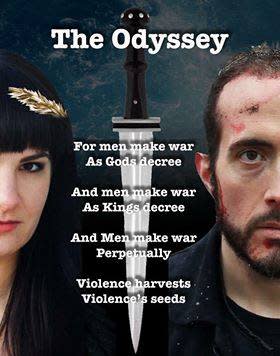
Nathaniel: It became a story of learned patterns of the glorification of violence in paternalistic cultures and is told by a predominantly female cast. As such, the notion of having Telemachus played by a male where the rest of the world around him was portrayed by female actors.
How did you nurture the adaption into life?
Nathaniel: Knowing that the script was densely written, it was always the intent in direction to keep the piece moving and vital to which end, its visual roots are drawn from physical theatre traditions.
You’ve got 20 seconds to sell the Odyssey to somebody in the street….?
Nathaniel: The play is a new work AND a classic. It’s ancient AND has a critical and timely thematic exploration. It’s relentless in its pacing and will draw you in and get you closer to home with images to remember, poetry and songs to echo in your head, and a group of talented actors and production team to applaud.
The Odyssey
Greenside @ Nicholson Square
Aug 6-10 (09.00)
www.ragnarokproductions.com
An Interview with Mick Cohen-Carroll
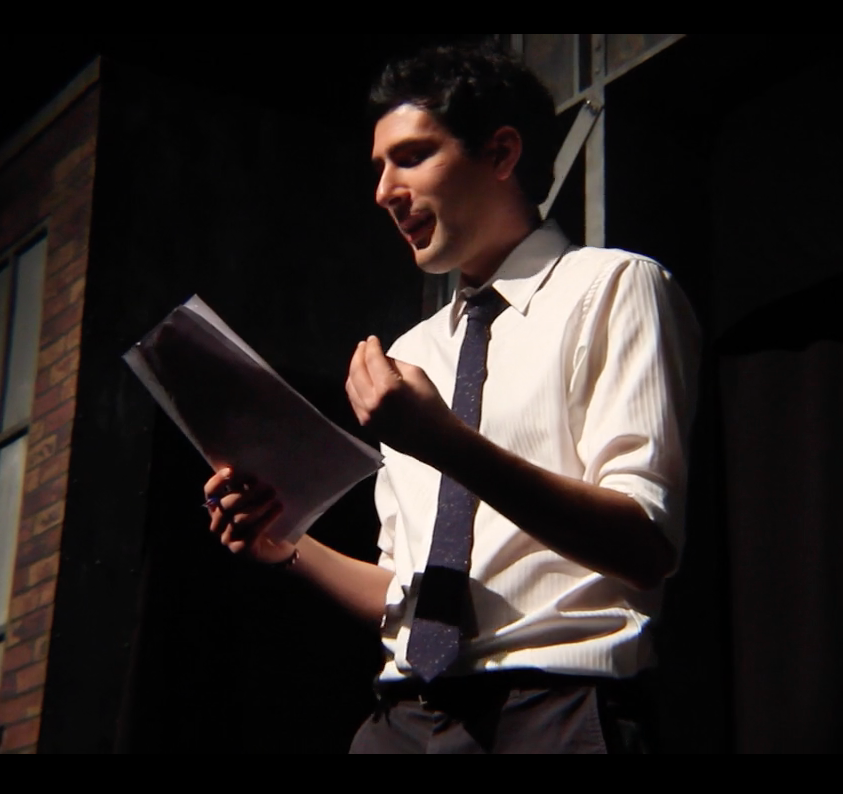
Mr Cohen-Carroll is the quintessential cerebral entertainer & the Fringe & the Mumble are very happy to have him here in Edinburgh…
Hello Mick, so where ya from & where ya at, geographically speaking?
Mick: Hi Emily! GeographicalIy speaking, I live in Chicago, though I grew up in Paris. Where I’m at mentally though, I’m not sure.
When did you first develop a passion for theatre?
Mick: When I first started doing improv classes in Paris, which led to some physical theater work.
Can you tell us about your physical theater experience in France?
Mick: Yes, I developed an interest in slapstick, mime, mask and being a clown. Expressing with just your body can more powerful or emotional and you don’t have to rely on words.
What for you makes a good piece of theatre?
Mick: Something that makes you think, dream, or inspires you.
I’ve heard you pontificate upon the absurd nature of humor; can you summarize your thoughts for us?
Mick: Here’s an equasion:
(SURPRISE + DISCOMFORT) x TRAGEDY + TIME = HUMOR
PERSPECTIVE – SCHADENFREUDE x HIGH STAKES = HUMOR
HUMOR + HUMOR = 2HUMOR
2HUMOR = ((SURPRISE + DISCOMFORT) x TRAGEDY + TIME) + (PERSPECTIVE – SCHADENFREUDE x HIGH STAKES )= TOO ABSURD
HUMOR = ABSURD
You seem to be something of a comedic philosopher, so can you tell us we laugh at all and what is the brain’s role in it?
Mick: At the end of the day, it’s interesting to think about the why. Our collective experiences can definitely influence whether we find things funny. Things in our past, the types of friends we have. But I believe there also exists a visceral response to some things beyond nature, conditioning or culture. Some things, like physical humor are universally appreciated, and my desire with Me Talking Mostly is to explore that sense of universality. I believe I try to that with all my work.
Can you tell us about Pinky Swear?
Mick: Yes! Pinky Swear is my guitar and comedy duo with my friend Joshua. A “Very Best of Pinky Swear” album will be out shortly.
What does Mick Cohen-Carroll like to do when he’s not being, well, dramatic?
Mick: Well, good question. Love running, playing guitar, it’s important to take care of yourself and to “treat yo self”.
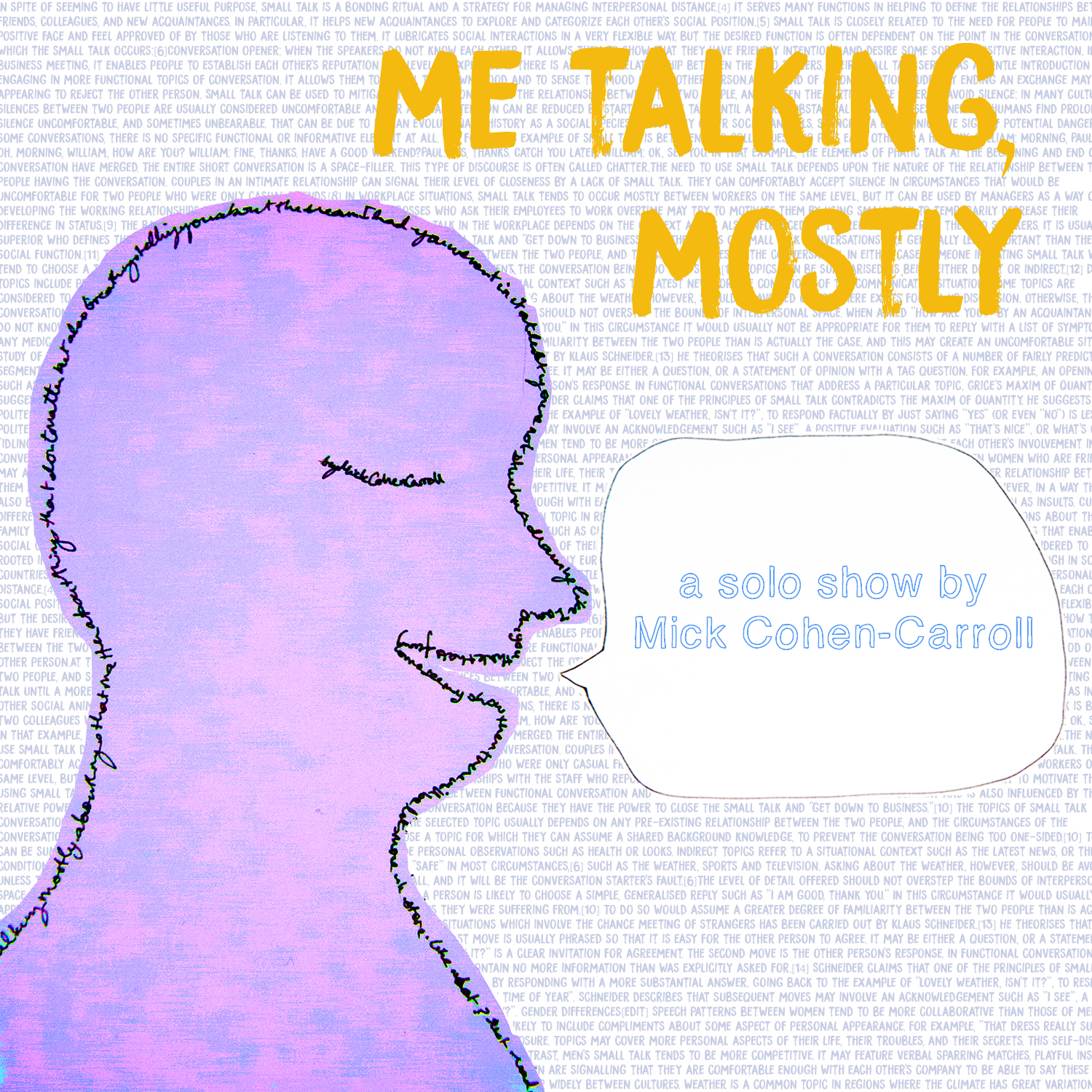
You are bringing your solo show, ME TALKING MOSTLY, to this year’s Fringe; can you tell us about it?
Mick: I did this show in Chicago and New York already and it’s gone really well! I mess around with the audience quite a bit and create an interactive experience through storytelling, improv, music, poetry all surrounding the theme of modern comedy and audience expectations.
What do you hope an audience member will take away from watching Me Talking Mostly, on what levels do you want to connect with them?
Mick: I’m hoping to connect on an intellectual and emotional level, that they take away a sense that it’s ok to be break the rules and to question.
You’ve got 20 seconds to sell the show in an Edinburgh street….?
Mick: Absurd Chicago humorist makes you laugh, cry and question the world. Also, get ROCK HARD ABS!!! for this show will make you laugh so much, you’ll strengthen your core.
What will you be doing after the Fringe?
Mick: I will either go on tour with the show or get my PhD in applied mathematics. Don’t know which yet.
Me Talking, Mostly
Paradise in The Vault – The Annexe
Aug 4-11, 13-18 (20.10)

www.cohencarrollmick…
An Interview with Lily Bevan
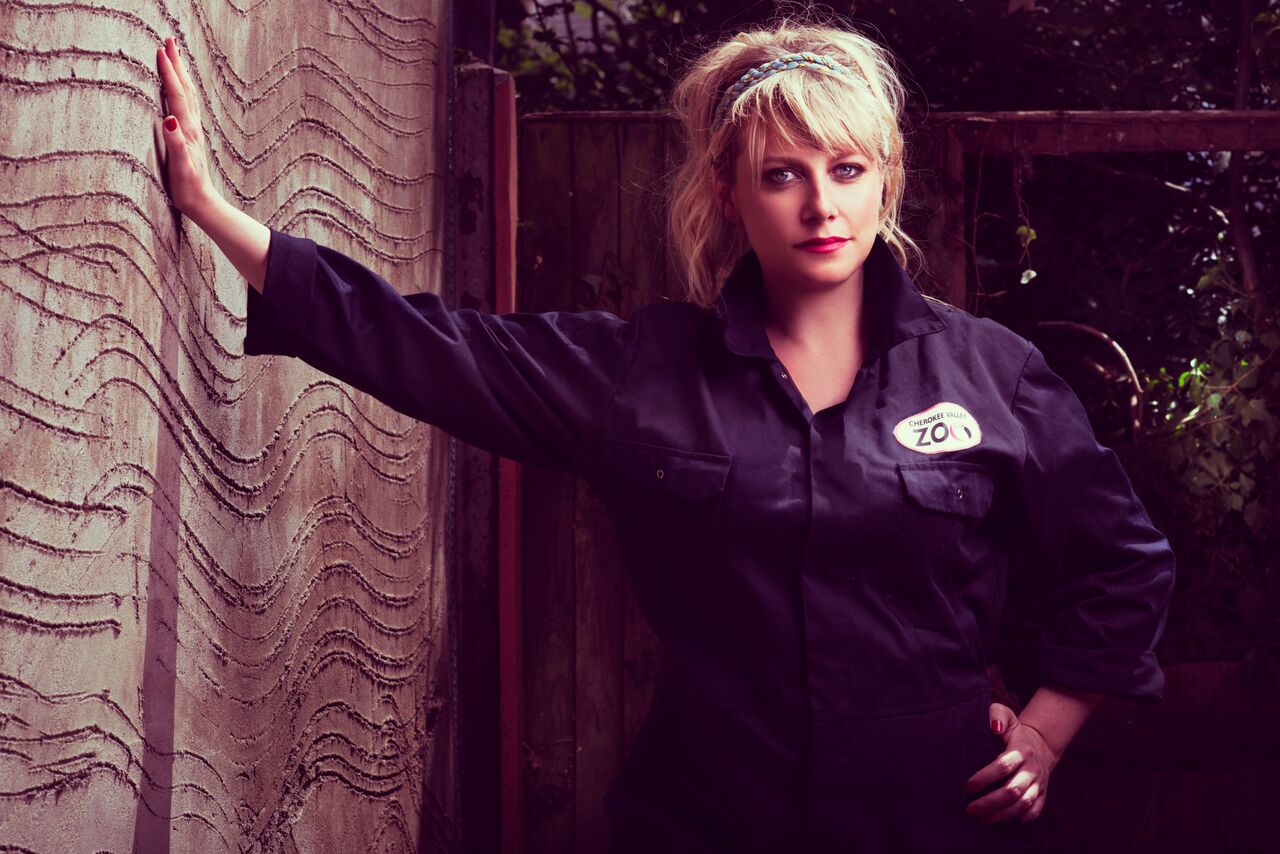
It’s been three years since Lily Bevan wowed the Fringe with her Pleasant Pluckers. The Mumble wonders what she’s got for us this time around…
Hello Lily, so where ya from & where ya at, geographically speaking?
Lily: I’m half from Tooting in London and half from Suffolk. Now I live in West London. When I was little my Dad raced greyhounds at Wimbledon & Walthamstow dog track, so I feel partly like from I’m from a kennel.
When did you first develop a passion for performance art?
Lily: When I was at school and played a rock in the school play. I felt very solid, very sure. And after school I was ready to go straight to drama school but I went to university first, to be on the safe side.
Can you tell us a little about your training?
Lily: I trained at RADA which was fantastic. The course is really varied, so we were doing sword fighting, period dance, method training, improvisation, choral singing, flamenco – I found a lot of it a real challenge.

What for you makes a good piece of theatre?
Lily: I love seeing things I’ve never before seen on stage. Like in Carol Churchill’s plays often there are gender swaps and they jump back in time, and people surprise you and the language is inventive. Surprise is wonderful, and vulnerability. I don’t like it when it’s just people stomping about.
What does Lily Bevan like to do when she’s not being theatrical?
Lily: I do yoga, and walk by the river. I like drinking wine with friends. I just watched all of Love Island which was a colossal waste of my time. I like galleries and talks and exhibitions. I like cake.
You were in Edinburgh in 2015 with Pleasant Plucker, how did it go?
Lily: It was brilliant. It was a steep learning curve as it was my first time performing alone but it taught me so much. The show went on to the RADA festival at the Bush and was then published by Samuel French.
You are bringing a new play to this year’s Fringe, ZOO, can you tell us about it?
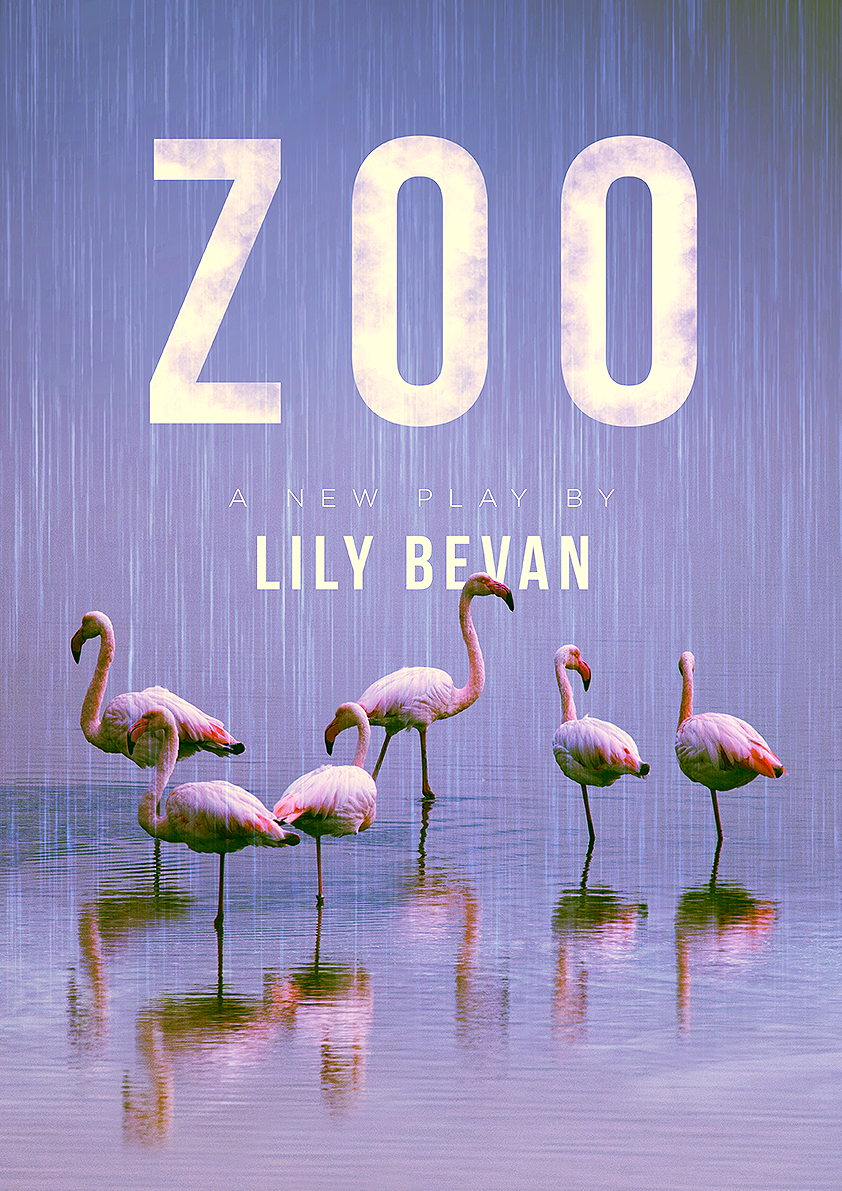
Lily: Zoo is about two women, Bonnie and Carol – one in America and one in the UK, who both work with and love animals and who have both had a tricky time with people. It’s based on the real story of the hurricane hitting a zoo in Miami last year and how the zoo keepers responded. The story then jumps to Yorkshire and another animal chapter. When the going gets tough – their friendship helps them through. It has high winds, flamingoes, bats, giant otters and lot of laughs. It’s performed by me and fab actress Lorna Beckett with cameos from Jim Rastall, Robert Moutford and award nominated comic Mike Wozniak.

When do you know you have just given a good performance?
Lily: When it feels like it all made sense and the audience are with you.
How have you changed as a performer & director in the three years since Pleasant Plucker?
Lily: I am more experienced at performing my own work. I have directed more devised and improvised work. I have thought more about what I want to make work about.
Can you describe your working relationships with co-director Hamish Macdougall & co-actress Lorna Beckett?
Lily: Hamish is a fantastic director. He directed Joe Morpurgo’s show ‘Hammerhead’ which I thought was brilliant. He’s good fun, and very clear energetic and has a great eye. Lorna is my best friend in real life. She is the kindest calmest person I know and an excellent actress. I feel so lucky to work with both of them.
You’ve got 20 seconds to sell the show to somebody in the street, what would you say?
Lily: This is a comedy drama – with flamingos, bats and a hurricane. It’s set in Miami and North Yorkshire. It’s unusual, poignant and daft. And it’s at 11am – so won’t clash with much. Bring your flat white in.
What will Lily Bevan be doing after the Fringe?
Lily: I’ve just been commissioned to write a new play for the Globe, in London. It’ll be part of the Winter Season called ‘Dark Night of the Soul’ , based on Dr Faustus.
ZOO
Assembly George Square Studio Four
August 2nd – 26th (not 13th, not 20th) (11.00)
 Mumble Theatre