An Interview with Ed Brody
 Hello Ed, so where ya from & where ya at, geographically speaking?
Well I grew up in Cornwall but I’m now in London.
When did you first find yourself getting into the dramatic arts?
I always wanted to be a rock star when I was younger and like every teenager played the guitar, but soon realised that I wasn’t good enough! I started acted when I was 21.
What for you makes a good piece of theatre?
Something engaging. Something that keeps me focused. I have a notoriously short attention span!
What does Ed Brody like to do when he’s not being theatrical?
To travel. Watch t.v and read I guess.
You’ve been washed up on a desert island with a solar-powered DVD player & three films. Which would they be?
Ok, definitely Jurassic Park. Although that might be a bad idea if I’m alone on an island? Return of the Jedi and Lost in translation.
When did you first realise you could write for the stage?
I guess when I wrote my drama school dissertation. I put penthouse on a smaller scale and people liked it, so I made it longer and brought it to the fringe.
You have recently appeared on the BBC (Father Brown/The White Queen. What are the fundamental differences between acting on screen & on the stage?
Screen is far more subtle. Stage is bigger and louder, more people to reach.

You are the creator, & also an actor in, Penthouse: A Poignant New Production Challenging Perceptions Of The Banking Underworld, which is on right now at the Fringe. First things, first, why the elongated title & what does it mean?
Well actually it’s just called Penthouse, the rest is the blurb.
Can you tell us more about the play & its dynamics?
So I wanted to make a play which focused less on the industry and terminology side of business and more about the bankers themselves. We did a lot of research into bankers and traders and we found the results amazing. Penthouse focuses on them in a situation of desperation.
How much personal experience has made its way into the play?
Myself and the cast know a few and the stories they’ve told us of what’s really happened are amazing. In terms of my own personal experience, very little!
How are you all finding the Fringe experience thus far?
Exhausting! But I love it up here. Still looking to find time to do some exercise.
What does the rest of 2017 hold in store for Ed Brody?
Well I’d like to continue writing more as I have some ideas in store. I’m also hoping to go a quick holiday at some point if I’m not too broke!
You can catch Penthouse right now at the Fringe
The Space @ Niddry Street : Aug 4th-26 (16.45)
Lord Dismiss Us
TheSpace@Surgeon’s Hall
4th – 26th August
Script:  Stagecraft:
  Performance:
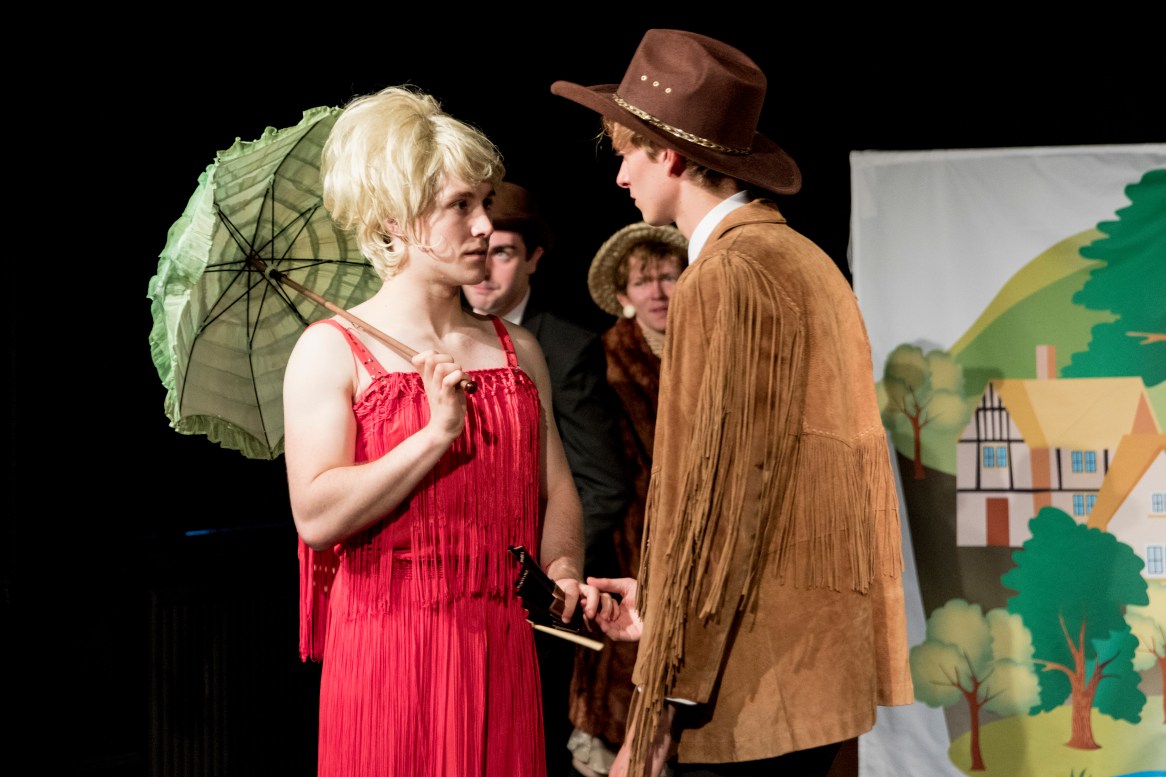
When the doors to the Space opened we were hustled in by a cast member who told us to take our seats as quickly as possible. I was reminded – as I suppose was the intention – of school discipline from long ago, but obediently did what I was told. From the start, the dialogue and narrative were cloaked in a kind of metaphysical grey which was in turn reflected in the bland colour of the costumes – blazers for the boys and gowns for tutor Eric Ashley (Tom Lloyd) and Headmaster Philip Crabtree (David Mullen). Marking the 50th anniversary of the legislation which partially legalised homosexuality in England and Wales, this was the first stage adaptation of Michael Campbell’s tragi-comic 1967 novel set in a boy’s public school.

Under Glen Chandler’s deft direction, the story of the novel was brought to life in a grand style, full of bold expectation, enhanced by the excellent ensemble cast. As the plot unfolded, it focused on each character in turn, engaging us even deeper in the action and making us hungry to know what would happen next. Overall there was an air of experimentation in the way the play came together, guiding us around the story with visions plucked straight from the book itself. Even the stage, which remained unchanged, contrived to reflect definite distinctions between the scenes. And as we learned more about the character of each actor, so their vices became more familiar to us, and so we were drawn in even deeper to the scene in front of us.
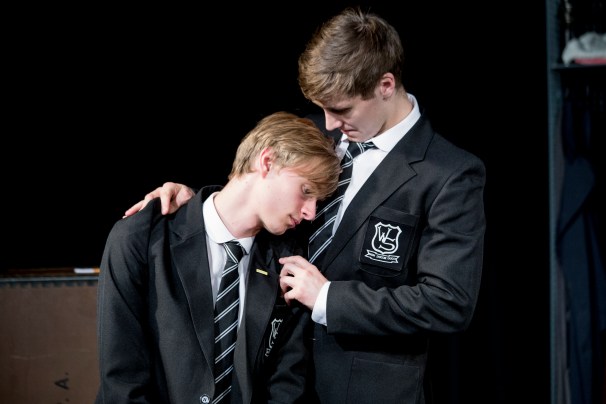
Was it a funny story or a tragic one? Did this Boys of the Empire production deal with the issues in a serious or humorous way? To be honest I’m not sure, perhaps only the author could tell us for sure. From my point of view the suffering of the boys demanded a sincere approach and the acknowledgement of something profound. I think one of the ways the play did achieve the necessary mature depth of understanding was by including a variety of academic dialogues on classical topics between younger and more mature members of the cast. These were cleverly inserted at points which would enhance both the plot and our understanding of the characters.
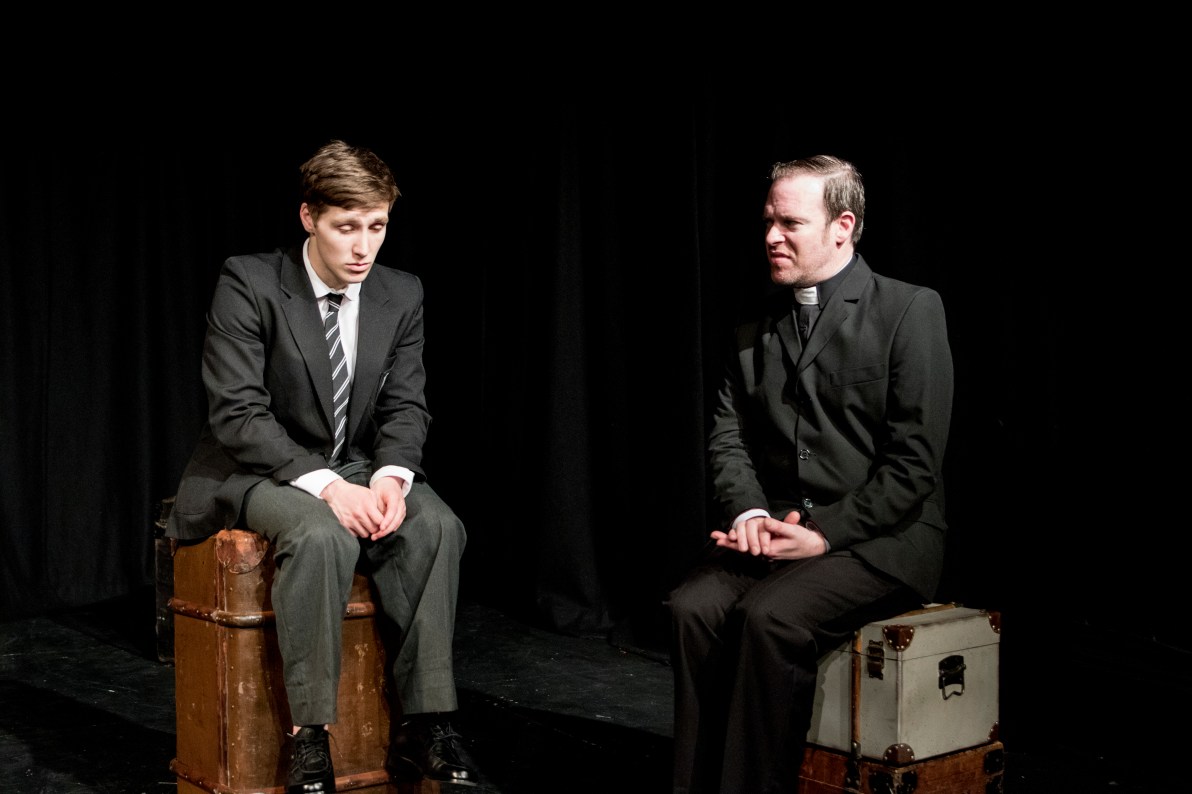
The main focus of the play falls on the young protagonist, Terry Carleton (Joshua Oakes-Rogers) as we witness the expression of his love for another boy, and in equal measure, his dismay. The dilemma he faces poignantly reflects the issues that were current at the time, and in many ways remain so today, despite a more tolerant society. Much of the tension in the novel, and in the play, comes from the conflict between trying to reconcile the murky truth of gay love and the need of the School to play it down, as embodied in the tight lipped stance of the homophobic Headmaster and his deeply religious wife, Mr and Mrs Crabtree. We were also presented with some of the myths and facts surrounding public schools and the Church. All of which served to present the issues as rigorously as possible.
But it’s not all doom and gloom – a religious figure, the Reverend Cyril, played as a double character with the Headmaster provided much needed comic relief and offered punch lines that the audience lapped up in gales of laughter. The Reverend plainly had his own issues regarding homosexuality, which did not however stop him from sermonising and coloured the confessional scenes with two of the boys who were in need of guidance about the feelings of love they had for each other. Every student had a story of his own and each was presented almost effortlessly and with great humanity. With the emphasis placed not on discord but on trying to come to some sort of accommodation between each side, we could thus find ourselves in sympathy with both sides of the argument. In the end Mr Crabtree concedes to his wife that the issue probably wouldn’t resolve itself, stating that in the next term at Weatherhill School the subject would once again have to be confronted after no doubt being repeated. With strong endearing moments of innocence and intimacy, this play is a must see at the Fringe.
Reviewer: Daniel Donnelly
 Photography : PBGSTUDIOS
Venus and Adonis
CPrimo
2nd – 28th August
Script: Stagecraft: Performance: 
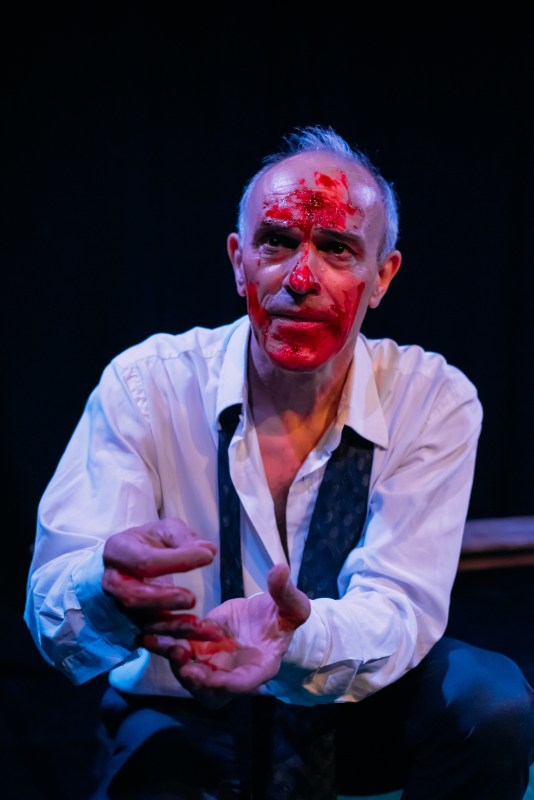
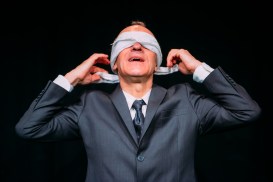
We arrived with the expectation of seeing a dramatization of Shakespeare’s earliest narrative poem, in fact his first smash hit! As we took our seats we were confronted by a solitary figure in a crumpled suit seated on a bench. Preparing himself and the audience for the show, the figure pretended to go over some notes that sat on his lap. When the action started, Actor/Director Christopher Hunter literally exploded into life in a highly strung, thundering performance that kept us enthralled from beginning to end. I can honestly say I have never seen anything quite like it before. This creation, from The Noontide Sun & Close Quarters Productions, served to prove once more, if any proof were needed, the greatness infusing Shakespeare’s text, reaching down to us through five centuries with as great an effect as if it had been written yesterday. Hunter’s performance offered us a highly erotic illumination of the poem’s dialogue, cutting through any notion of political correctness. It was a wonderful marriage of performance artist and actor, which came together like a great noon tide, absolutely filling the stage and the room with philosophical revelry.
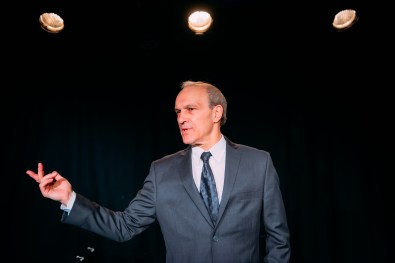
If the content of was meant to shock, I would say it certainly succeeded. The powerful story of sex and desire gripped you from the start, then drew you deeper down to the depths as the tragic tale unfolded. Addicted to the idea of the love of Adonis, the wretched Venus finally dragged them into a state where for the sake of this love he would lose all of his innocence and beauty and, in the end, his life. Shakespeare wrote Venus and Adonis at a time when all the London theatres were closed due to the plague outbreak in 1592. Perhaps these tragic circumstances heightened the young writer’s perceptions, lending further poignancy to the dark and disturbing themes and the power and sensuality of the writing.The sheer lavish virtuosity of Mr Hunter’s performance was utterly compelling as he single-handedly portrayed the dialogue between the ill-starred lovers with a breath-taking freedom of movement entirely devoid of any embarrassment or awkwardness. Firing on all cylinders, constantly moving, gesticulating, using his whole body to show us the characters of the aging goddess and her young lover. The splendid language was laid before us with a wonderfully accomplished delivery that oozed meaning, beauty and depth. And all at a level of never giving enough and always discovering strength even in weakness. If the production had swelled any further, you felt the room would have burst!
Shakespeare’s legacy is surely to bring out only the best in acting and production, and this performance is no exception. In fact the joyful and fearless presentation, delivered at very close quarters in an intimate space, brilliantly succeeds in enhancing one’s understanding and appreciation of the work. I suppose that a large part of the appeal is the feeling that you are really enabled to have an intimate relationship with the words and what they really mean in a very direct way, without the distraction of any modern technology or gimmicks. This is a bright hour of excellent, fast paced, passionate and exhilarating entertainment. A real treat!
Review : Daniel Donnelly
Photography : Mihaela Bodlovic
Not About Heroes
Pleasance Dome
Aug 15, 17-22, 24-28 (12:00)
Script: Stagecraft: Performance:
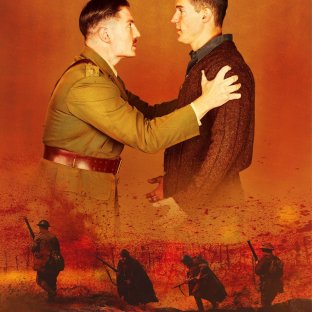
 The Welsh – ie Newport’s Flying Bridge Theatre – have brought a play about two English poets to Scotland. Of course, Edinburgh is the play’s natural home, for exactly a century ago, at Craiglockhart, two young officers struck up a kindred friendship. Destiny & timing had chosen them to be the funnel-mouths of the zeitgeist, to record for eternal posterity the true feelings, shapes, moods & all of that vaulting expressionism of the dreadful horrors which swirled among the First World War trenches like sneering banshees in a storm. Both Daniel Llewellyn-Williams as Siegfried Sassoon, & Iestyn Arwel as Wilfrid Owen, present a lively, aesthetically authentic, & occasionally sugary account of that seminal meeting, played out among a busy, polyscenic set. It was under Sassoon’s wing that Owen strode out from under his sickly-sweet Keatsian pastiche, into a fully-fledged & unique poetic voice that is immeasurably brilliant & hopefully never to be repeated.
As a piece of theatre, Not About Heroes is at times devastatingly beautiful, & others as if source materials were simply being repeated ad verbatim on stage. The former found its supreme realisation in two excellent & extended scenes; the first being when Sassoon signed copies of his book for Owen’s friends & family; & the second where he helped remould ‘Anthem for Doomed Youth‘ from Owen’s almost finished draft. From here we follow the growth of their friendship into the famous & catastrophic finale in the futile fields of Flanders. For those wishing to gain the full story, Not About Heroes is pretty near perfect. However, just as the Trojan Cycle tells the complete story of Troy, in which the Iliad is the stellar moment, then this play would have gained more from just focusing on the Craiglockhart period, when the creation of their poetry, exploding in tantric pulses, was in its purest state. Not About Heroes reminds me of a yacht race, where the play reaches the cardinal points, but on occasion takes too wide a berth, thus elongating the whole into the still seas of ‘tad-too-long.’ Saying all that, it is a timelessly important cultural story & one extremely well told, & should become the seminal theatrical account of a meeting of poets as important as when Wordsworth met Coleridge in Bristol, 1796, & Shelley met Byron at the Villa Diodati in 1816.
Reviewer : Damo
Fall of Duty
Sweet Grassmarket
Aug 7, 9, 11, 13, 15, 17, 19 (17.40)
Script: Stagecraft: Performance:
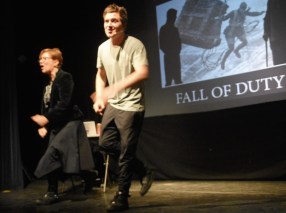
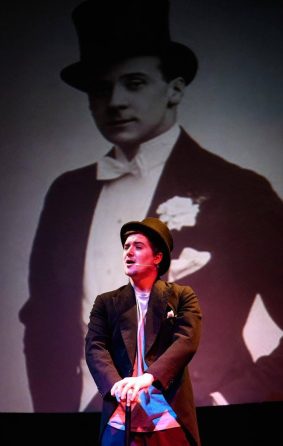 A war story, a friendship story, a mother and son story and a historical story, Fall of Duty is a slick mix of media presented bare bones by two players. The story begins with a video call of a mother, Sue, trying to convince her adult son, Jack, to put down the video game controller, get out of bed, and get involved with the world around him. Sue is an academic, interested in historical lesbians, and has received funding to do research and put on a show about World War I era entertainment duo Elsie Janis and Basil Hallam. Jack is reluctant to join his mother’s project, but as he starts research on Basil he finds a synchronicity between the historical life and his own.
I enjoyed the juxtaposition of modern and historical in the show. Jack’s world of video games and rap music is injected with 1914 theater music. Hearing the story of Basil Hallam and Elsie Janis made me think that in their time the entertainers gave relief to the soldiers facing the horrors of war. Today, video games make war an entertainment for people who are ignorant of any of those struggles, waged only a century ago. The actors do a great job of bringing to life the music from 1914, even helping the audience to sing along. This is a unique story of a mother and her son’s modern relationship, and also a riveting look into the lives of the people who fought in WWI.
Reviewer : Michael Beeson
Thrill Me

C – Too
12th – 27th (Not 14th)
Stagecraft: Book: Performance:
 This theatrical masterpiece takes place in Chicago in 1924 and tells the true story of two young men who embark on committing the perfect, Nietzsche inspired crime through murder!!! Richard and Nathan are best friends but also tentative lovers. Chicago, in fact, is a unique place in which the first organization for homosexual rights in America was established here in 1924. This allowed the free flowing openness of their relationship to blossom. Fast-forward to 2017 & the stage is set out well, props are inviting to thought and transmogrify an eerie atmosphere about a full auditorium. The tension in the air is palpable to all present. Accompanying the actors is a well-written and devised musical score played out with incredible dramatic impact. Period clothes and haircuts set the characters on fire !!!! Then all is quiet…
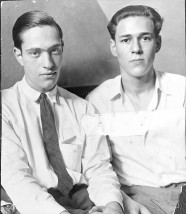
Nathan Leopold, Jr. & Richard Loe
Thrill Me is a piece of historical truth, hardly known in 21st century Europe, but was once the ‘Crime of the Century‘ in America. Any insight to the darker side of human nature always intrigues the willing minds of a curious fellow human beings. Thrill Me provokes you, twists you, bends you and at times catapults you into a world of unanswerable questions. With a splash of wit and humour tossed in to lighten the mood in pockets, the tension is slightly subdued but never gone. You become transfixed and thrown into a murky world of violence, love , betrayal, child killing and treachery.. Bad faith can wait…

A musical piece of theatre with the art of storytelling at the center. With a flawless delivery and execution of the songs and lines, Richard and Nathan become more believable with every word. A dark tale of two obsessive men that are fueled by so much destruction, which evidently causes the ultimate fall from grace. If you wish to be tried and tested from a psychological point of view, “Thrill Me” will take you to that place. Explosive & intense is a mere understatement. A play that leaves you speechless and gets under your skin can only be achieved through great research and acting, & Thrill Me offers this in abundance. Put aside the subject matter and you are left with a spellbinding & beautifully crafted take on a delicate story of death and love.. a must see at this years 70th Edinburgh Fringe.
Reviewer : Raymondo

Mia : Daughters of Fortune
Summerhall
Aug 8-27 (14.45)
Script: Stagecraft: Performance:
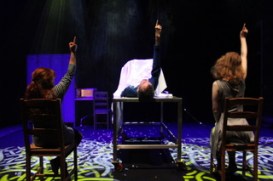
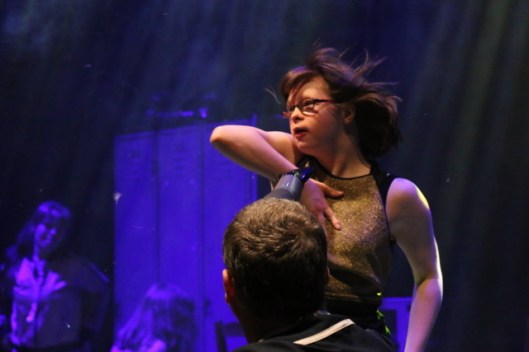
Can you imagine expecting a baby and having a government official grill you about if you are truly ready to have that child? In Mia: Daughters of Fortune we see that this is reality for a person with learning disabilities who wants to be a parent. Performed by four quite excellent learning-disabled actors, this play excels in putting the audience inside the souls of the characters. Through story telling, dance, live music, videography, a science lesson and a game show we see parenthood through new eyes and feel emotions we didn’t know existed.
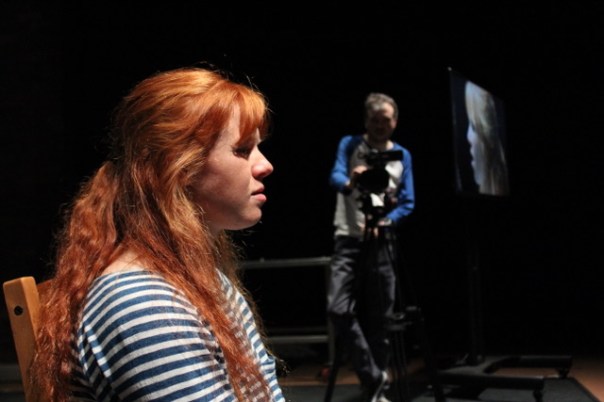
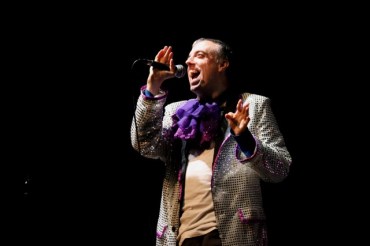
Mia: is entertaining, while taking a hard look at learning disability parenthood. When a learning disabled person is expecting a child, they are sent through pokes and prods in the health care system, which add stress to an already difficult time in a woman’s life. One scene plays a video of a beautiful mother playing with her smiling baby, and the mother says that because she is learning disabled, she was never really sure that she would get to keep her baby. She had to live with the fear that a social worker would decide she was unfit for motherhood. We should not be adding more difficulties to pregnancy, it is not good for the mothers, not good for the babies, not good for the social workers and I am sure that the intention is not to make pregnancy worse.
I left the show wondering how I can change the situation. I don’t know how to make it better, but the play has done its job of starting a conversation. Mia: Daughters of Fortune is played by talented performers, uses a wonderful mix of media and starts an important conversation.
Reviewer : Michael Beeson
Mine

Space Triplex
Aug 5, 8, 10, 12, 14, 16, 18 (21.15)
In a recent interview with the Mumble, the creative genius behind Junkbox Theatre, Georgia Taylforth, described the play as being, ‘Modern day pregnancy under the microscope, with Nutella,’ a perfect summary of this fine play. Friendship, sex, love and pregnancy are examined via three very different relationships. The first is a couple who meet on a dating app just for a sexual fling, but find it is hard to separate sex and love. How common a motif is that? The second couple are newly engaged and accidentally become pregnant. More gritty reality! The third relationship is played out by a gay man desiring to be a father, but denied the adoption option, and his best friend, a straight woman. As character evolves steadily through the drama, & moods & relationships change, watching ‘Mine’ is like watching a rubix cube being put together, each color shifting through the puzzle. However, this are not neat and mathematical problems, these are human emotions on stage and the puzzle is unsolvable.

‘Mine’ allows the audience a chance to understand & experience the rigorous trials & vigorous emotions of the modern pregnancy. All the characters are easy to connect with, even when they are acting badly (& is in behaviour, not dramaturgically) & it is educational to see how bad behavior affects the other characters. We feel upset for the one being treated badly, but we can also see ourselves in the person making the mistake. For myself, I learnt that the next time I feel myself having a negative reaction to a friend or partner, I can remember what I saw on that stage, remember how these characters hurt each other, and change my behaviour for the better.
Reviewer : Michael Beeson
Fix
Script: Stagecraft: Performance:
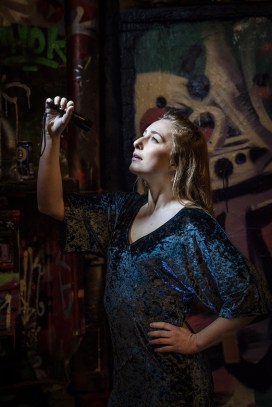
‘Fix’ is a play by ‘Worklight’ production company that started out life as a vehicle for highlighting the darker problems of addiction and drug abuse. When the doors open at its Underbelly venue, wone is guided into a room, an unexpectedly charming space with a very prominent stage already set for capturing us in our suspensions of disbelief. The three performing artists were positioned triangularly on boxes; the kind that you could tap on for a drum beat. They were playing chords on the guitar over and over, slow and melodic. We took our places on seats arranged around three sides of the stage, creating an aura of intimacy which took hold even before the action began. The darkened room was lit with blue and green spotlights that illuminated the back wall. The lights dimmed to darkness as the play began.

I found a great resonant sincerity in the way the actors shunned extravagant costumes in favour of casual clothing. The simplicity of this meant that the focus was on the performance rather than any gimmick or other extraneous irrelevance. From the trio, a focussed emotional dialogue began to expand in many ways; from heart-warming and loving wisdom, to telling a story about the active pains of addiction and its part in the world. A great many themes were explored throughout, aligning with the play’s subject, & circling around the contrast of bonds within brains and the bonds between brains. A smart example was given in one of the play’s first songs, dedicated to the natural stimulant dopamine that depicted the chemical sense of elation within the mind under its influence. Another early scene was a guide to issues of separation caused by addiction and neatly highlighted the chemical processes of the side-effects of drug use. Moments such as these elegantly illustrated and explained the life of the addict.
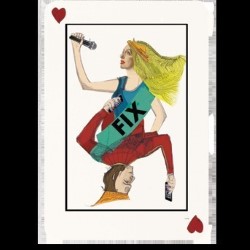 Worklight’s creation offers us examples of the feeling of love which comes from the heart, and yet in the end all this is in reality is a chemical response forged in the brain. The story was told with much accomplishment by three, very hard working actors; Fiona Whitelaw, Rianna Dearden and Finlay Cormack – both together and separately – in well-paced dialogue. The hard-hitting adult material gripped in a number of ways and was especially effective in the confines of the small stage, where softly spoken words created an incredible sense of intimacy. Among the impressive assemblage of scenarios, all cleverly knitted together, one very poignant scene stands out. This was a conversation held between the actor looking out to face the audience but sitting with an imaginary counter-part in front of her. The spotlight held her face as she engaged in a compelling conversation which held the audience enthralled.
Fix offers excellent and extremely thought provoking entertainment, though one needs an open heart to enjoy its fineries, & is delivered through a myriad of light, sound and dialogue. In the process, we are encouraged to peer deep into the soul and join in the debate on what it is to be human.
Reviewer: Daniel Donnelly

Joy Donze : 13 & Not Pregnant

Greenside @ Infirmary
Aug 4-26 (20.50)
Script:  Stagecraft: Performance:

Joy Donze has brought a relentlessly energized piece of one-woman, or rather one-teenage-girl, theatre across the Atlantic which transcends genres. I have seen my fair share of comedians this & Fringes past, few of which could match 13: And Not Pregnant for laughs – Joy Donze is absolutely hysterical. Her faces, her voices, & the sheer accuracy of the teenage love-angst contained in her diary if, ever published, would form part of a new self-confessional trinity alongside Adrian Mole & Bridget Jones. The son, the mother, & the holy ‘who-do-I-love-the-most?‘ In a recent interview with The Mumble, Joy describes her show as featuring;
Verbatim journal entries from my 6th grade diary. I always knew I wanted to turn my diary into a theatrical piece, and began working on it in a solo performance class in 2015
 So this is real life, & that’s what makes it beautiful. Joy Donze grew up in Perryville, she describes as being ‘located an hour and a half outside St. Louis. In other words, I’m from the heartland of America. The corn and the cows and the caves,’ & whether she has stuck to the same names or not (hello Stacey & Justin R if you exist) like a Homeric story-teller she brings them all to life in her arcane bedroom, from her antics down at ‘Wall-Fart’ to being kicked out of the Community Pool. Along the way, as she clutches her diary – or flings it to the floor in a screaming tantrum – we follow her love-gains & heart-losses from crush to crush. ‘I want a boy, an older boy?’ she sighs, then changes tack by praying ‘God, please let me be good at volleyball’
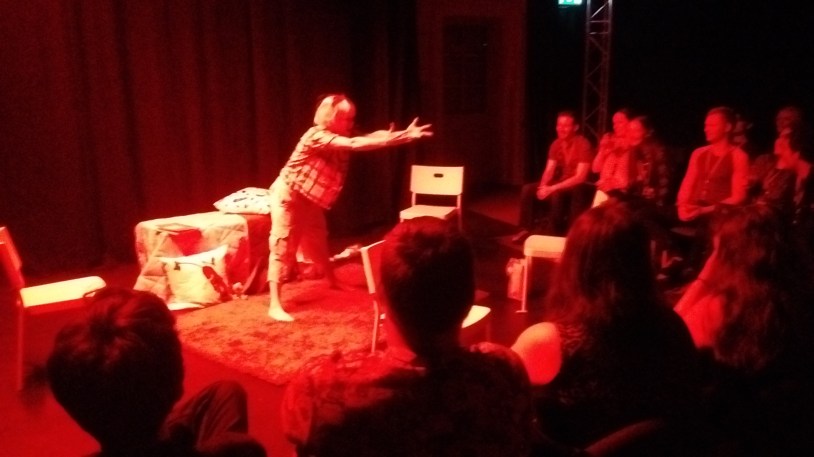
Watching Joy is like driving down an empty motorway on a summer’s night, in the fast lane, with your full beam on, listening to some bangin’ tunes. For the whole show! When I came to mark Joy, performance & script were easy touches – both were amazingly hilarious & animated with the reality of teenagerdom being eked out on the spot, rather than a nostalgic & hazy retrospective. As for stagecraft, we are offered a plain, not even so authentic a representation of a teenage girl’s bedroom, but stagecraft is not all about aesthetic, there is blocking & movement too & it is the way Joy commands her set, leaping on chairs, boogieing to rock tunes, staring the audience in their eyes, that beefs up the score, & I am happy to give the girl five stars. Here we see two time-divided Joys – the teenage archivist & the accomplished adult performer – segued together into theatre of unadulterated & contraputal perfection… as all those giving her a standing ovation at the show I witnessed would surely agree.
Reviewer : Damo

 Mumble Theatre